31 Garden Design Ideas
Published: November 7, 2025 · Updated:

Looking for lawn care advice for your city? Find your city's guide →
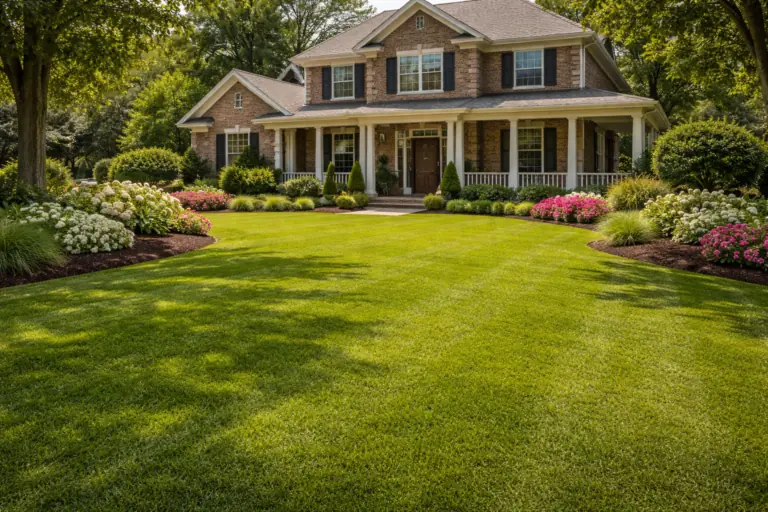
A well-designed garden does more than look good — it creates peace, purpose, and balance in your outdoor space. Whether you have a large yard, a small courtyard, or even a balcony, the right layout can transform it into a place to relax, grow, and enjoy nature.
Good garden design blends plants, structure, and flow. You don’t need a landscape architect or a big budget to make it work. With a few smart choices, you can turn any space into a thriving green corner. These garden design ideas for home focus on beauty, function, and simplicity, helping homeowners and DIY gardeners alike.
From small garden design ideas to large garden design ideas and vegetable garden design ideas , this guide offers 31 creative ways to plan your space. You’ll find ideas suited for UK , Australia , and even tropical regions like the Philippines. There are also garden design ideas for school and garden design ideas on a budget for educators and families who want to teach kids how to grow.
According to the Royal Horticultural Society , thoughtful design — even on a small scale — improves biodiversity, reduces water waste, and makes maintenance easier ( (1) ). In other words, good garden planning isn’t just for looks; it’s for the planet, too.
Whether you dream of a peaceful Zen retreat, a lush vegetable patch, or a colorful front yard, these 31 garden design ideas will help you build a space that grows with you.
Small Garden Design Ideas
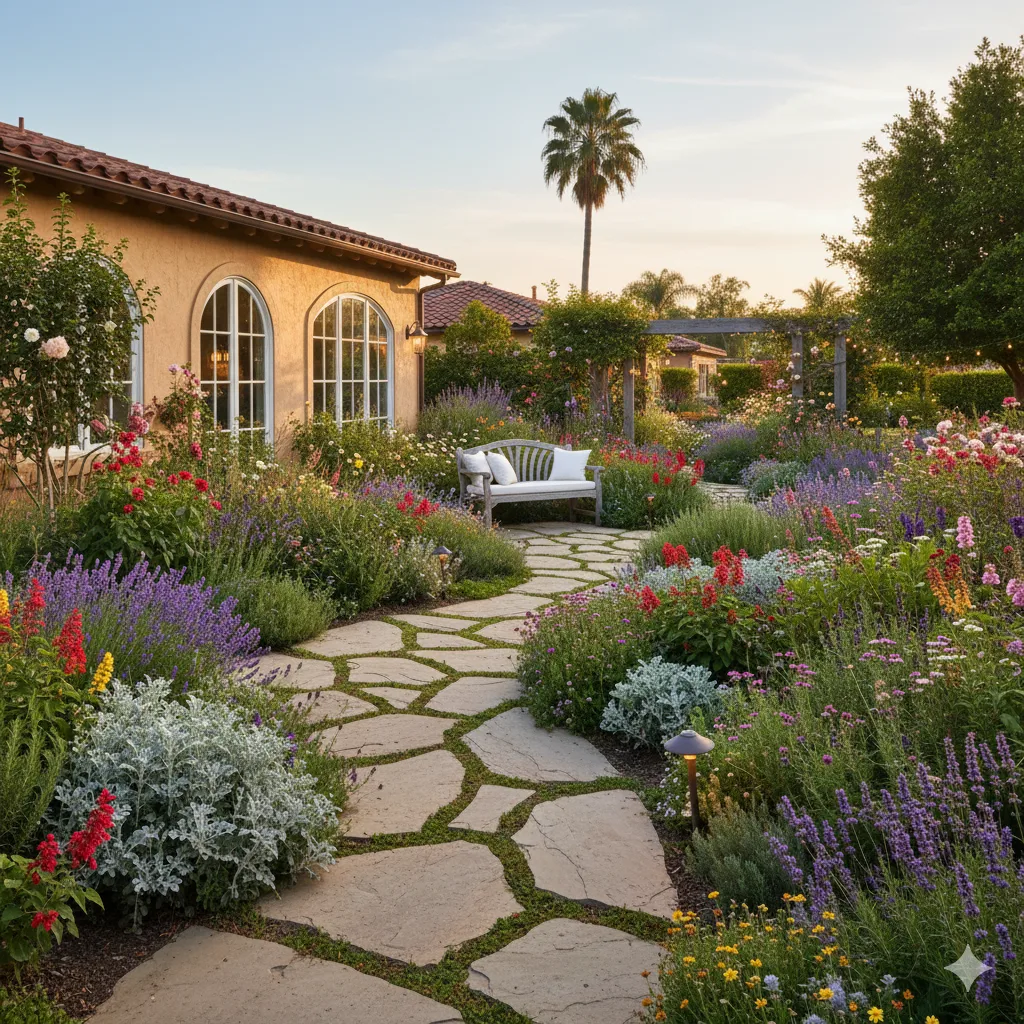
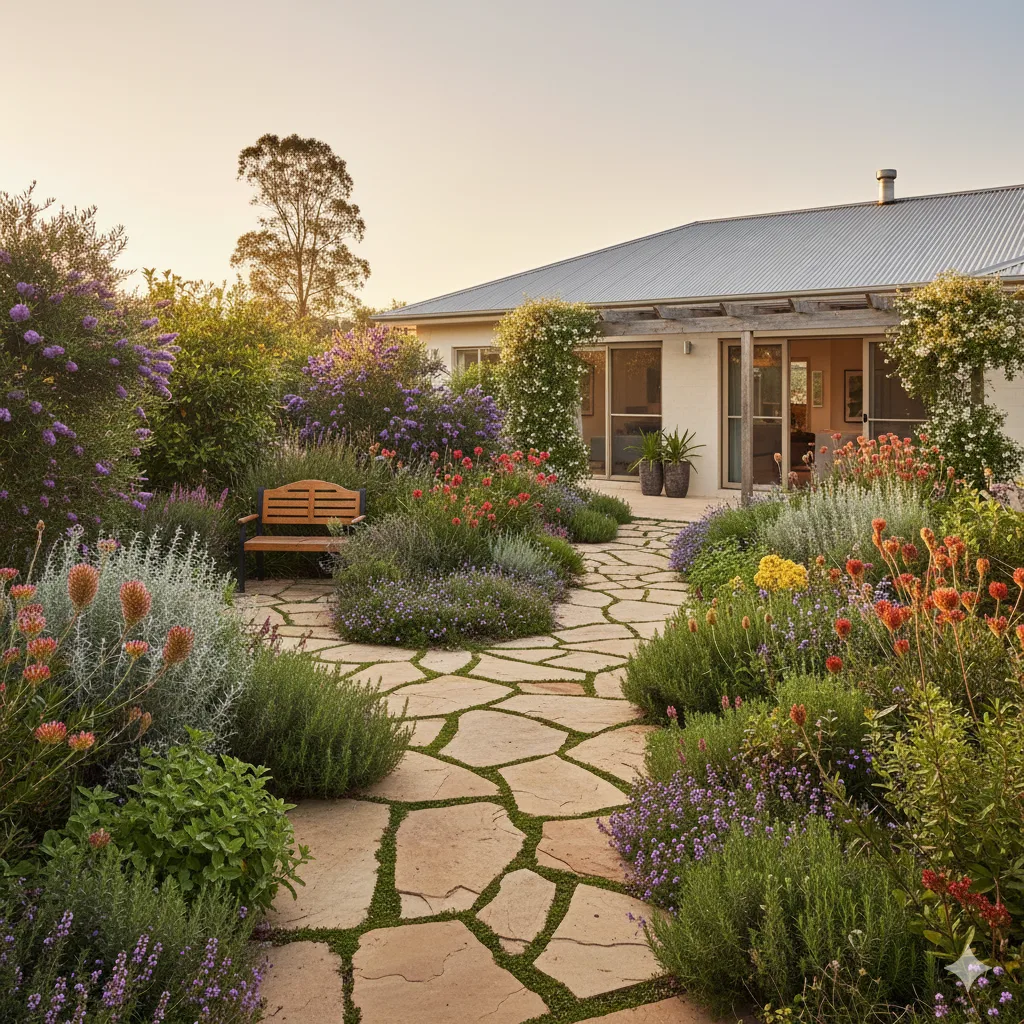
Small gardens prove that limited space doesn’t mean limited potential. With creativity and planning, even the smallest yard, patio, or balcony can become a thriving outdoor retreat. These small garden design ideas focus on smart use of space, height, and layout — perfect for homeowners, renters, or city dwellers.
1. Vertical Garden Walls
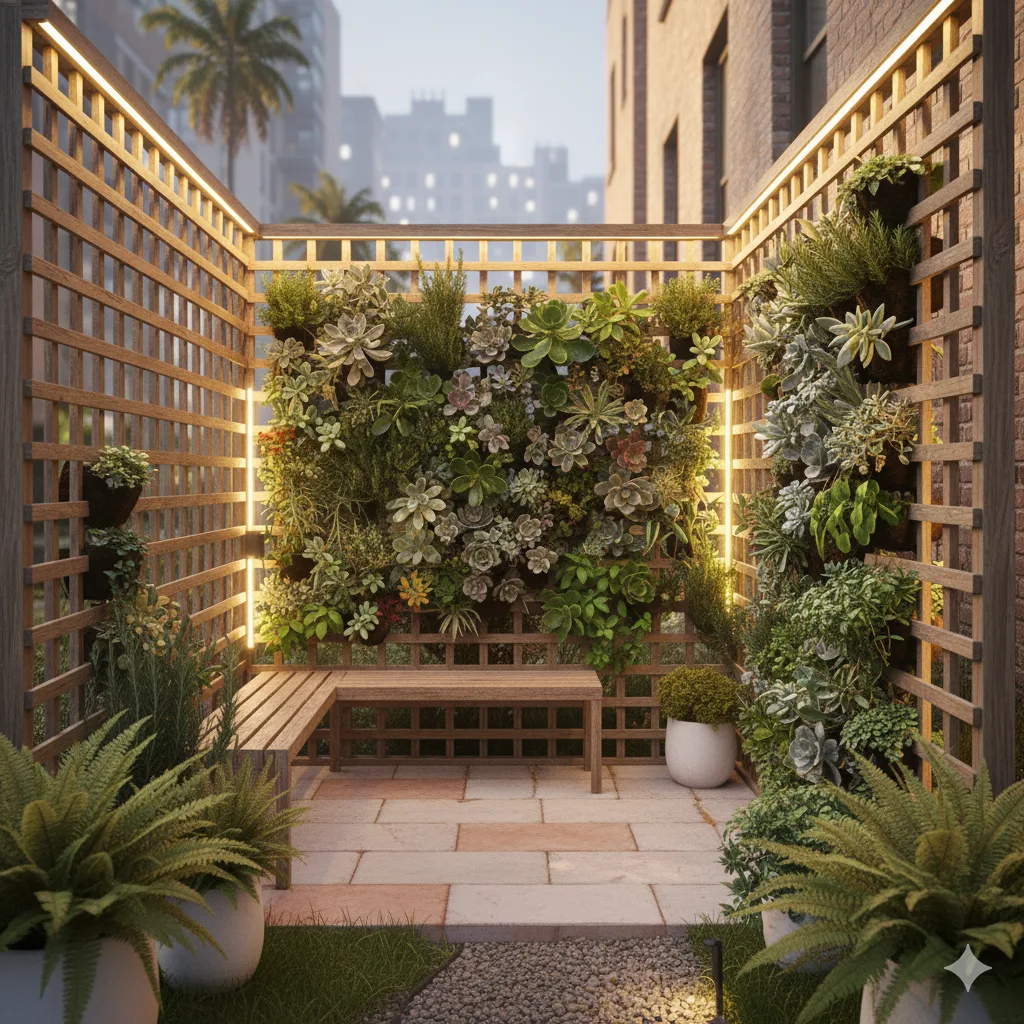
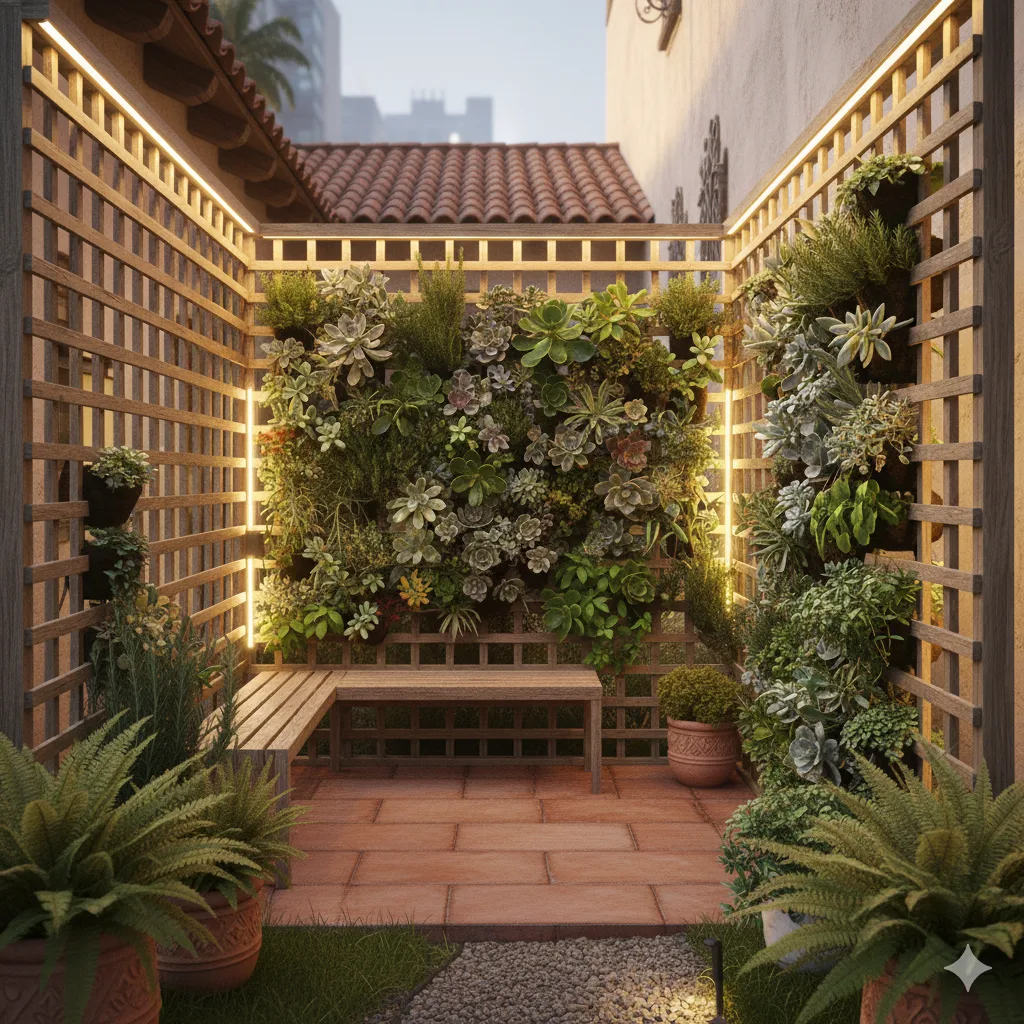
When space is tight, think upward instead of outward. Vertical gardens are one of the most effective garden design ideas for small gardens because they use wall space for planting instead of the ground.
You can install a modular wall planter, hang pots from wooden panels, or build a vertical frame using wire mesh and shelves. For apartment balconies, stackable planters or fabric pockets work beautifully. Choose light plants like ferns, herbs, or succulents that grow well in confined spaces.
Vertical gardens are also easy to water and maintain since everything is within reach. Plus, they double as natural privacy screens — ideal for small garden design ideas photos or courtyards that need a bit of seclusion.
In warmer climates like Australia or the Philippines , include hardy plants such as spider plants, jade, or snake plants that tolerate heat. For cooler areas like the UK , ivy, pansies, and small fuchsias add seasonal color.
2. Container Corners
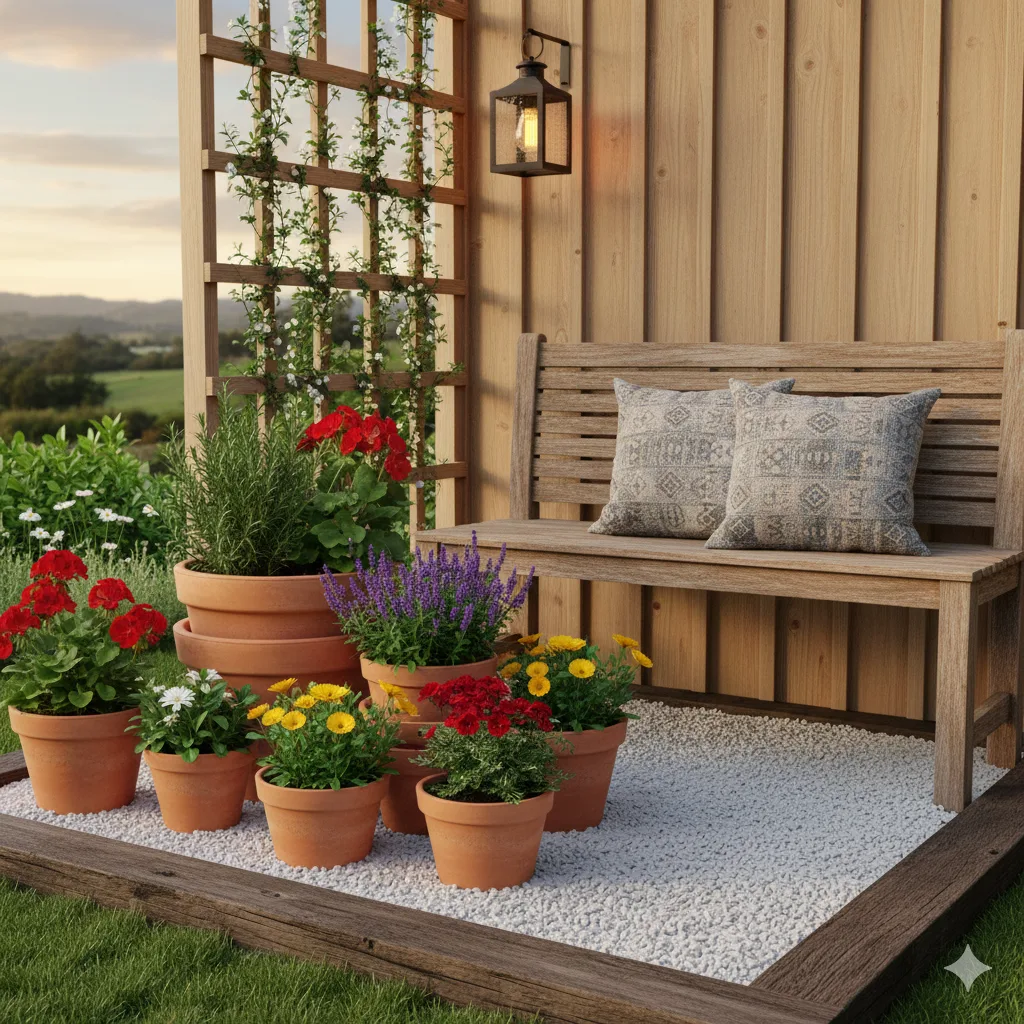
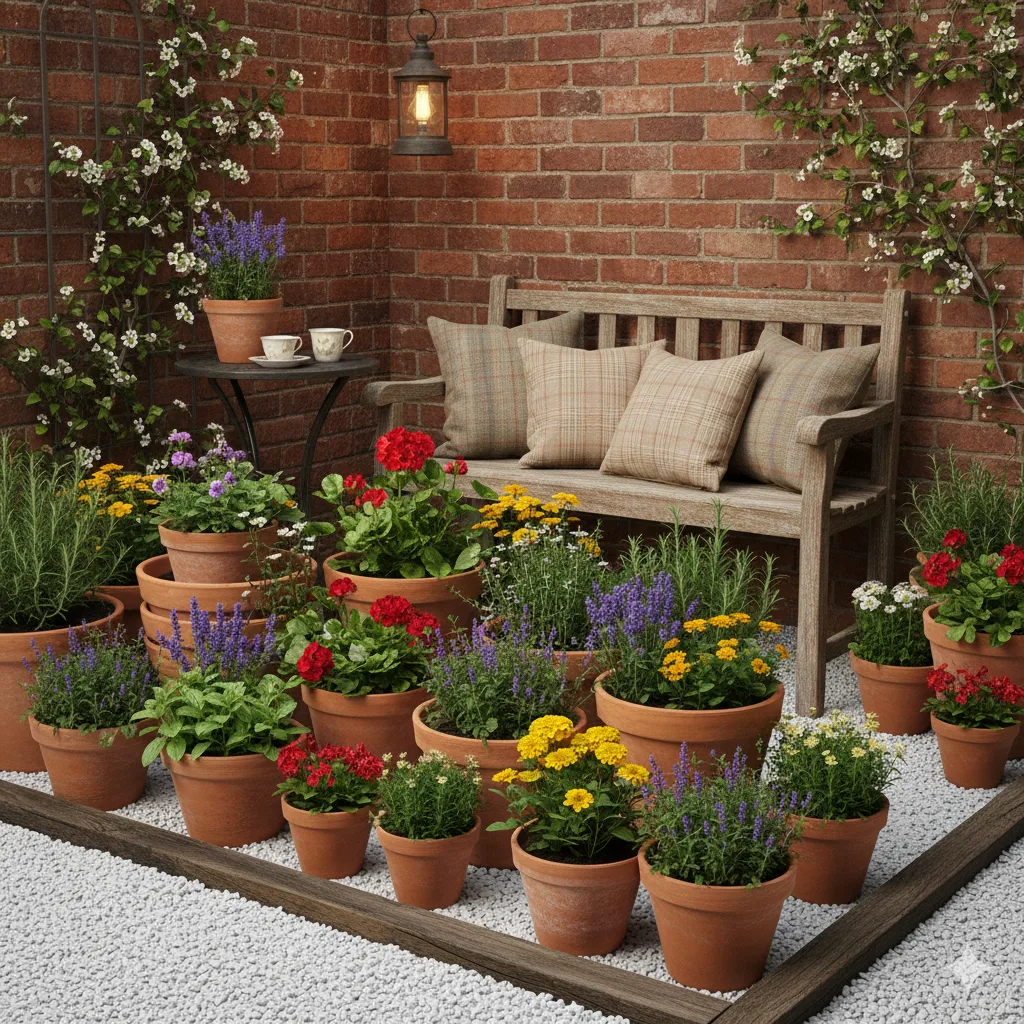
Containers are lifesavers in tight spaces. They’re flexible, portable, and easy to arrange in creative ways. Small garden design ideas UK often use container groupings to add structure and variety to patios or balconies.
Choose pots in different sizes and shapes for interest, but stick to a simple color palette — like terracotta, gray, or white — for a unified look. Use large pots for small trees or shrubs and smaller ones for herbs and flowers. Grouping them in corners or along walls creates depth without cluttering the center.
For garden design ideas Australia , try hardy plants like rosemary, bougainvillea, and ornamental grasses. In cooler regions, use evergreens or potted roses. Adding wheels to heavier containers makes rearranging easier when seasons change.
You can also tuck in decorative accents like small lanterns, garden statues, or stepping stones to make your setup feel intentional.
3. Multi-Level Planters
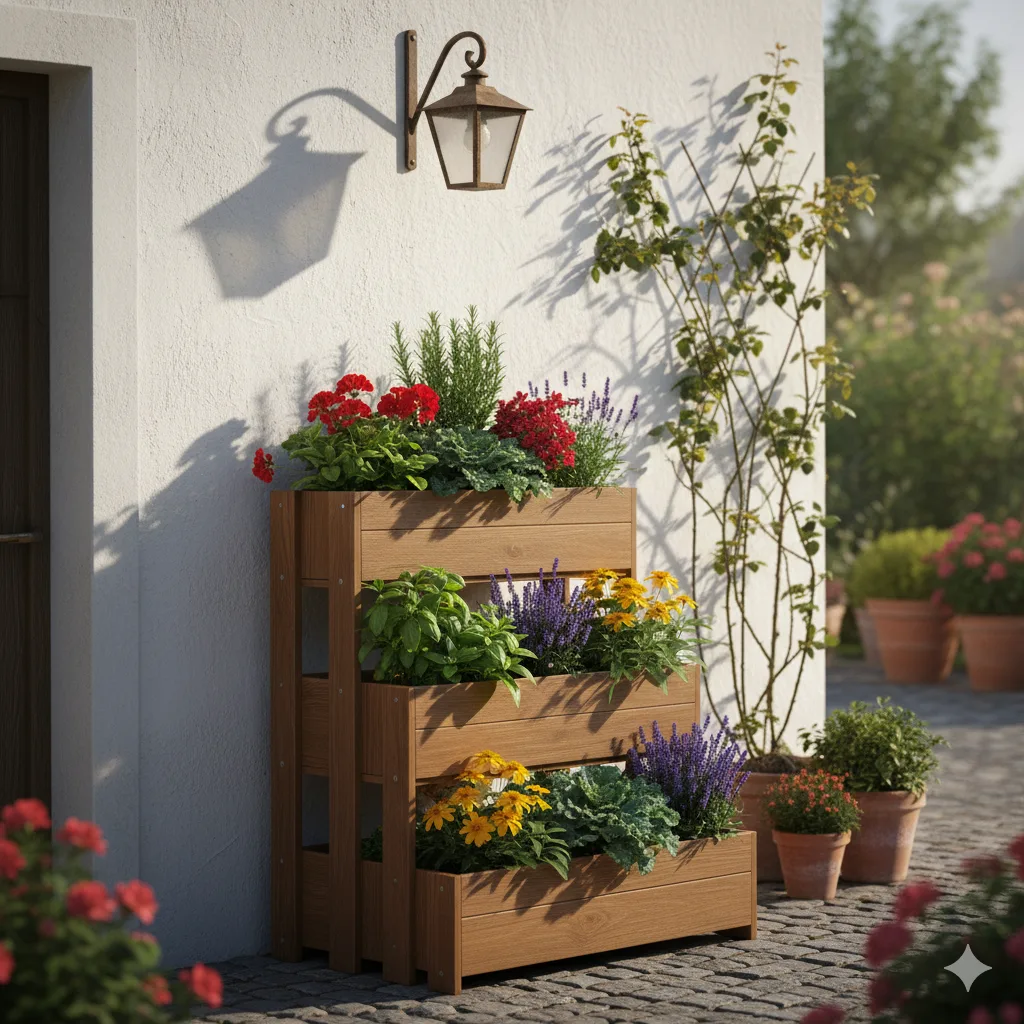
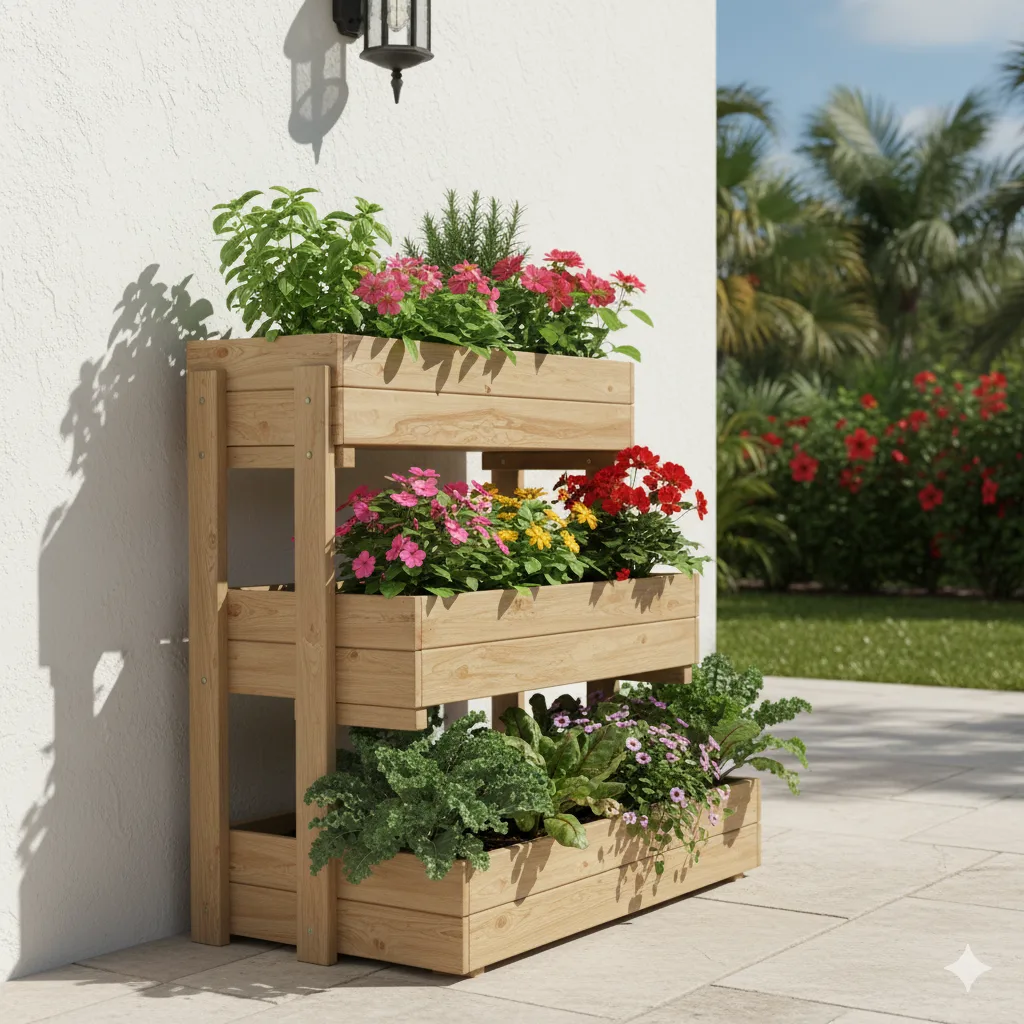
When horizontal space is limited, multi-level planters bring dimension and abundance. Stack raised beds, wooden crates, or tiered plant stands to create a layered garden that looks full but stays compact.
This idea works beautifully for garden design ideas for small gardens and garden design ideas on a budget. You can build the structure yourself from reclaimed wood, bricks, or metal frames. Use the top level for colorful flowers, the middle for herbs, and the bottom for ground cover or leafy greens.
The tiered setup also improves drainage and accessibility, making watering and harvesting easier. It’s perfect for vegetable garden design ideas in small backyards or patios.
If you love variety, mix edible and ornamental plants — basil beside petunias, or strawberries under marigolds. The layers make your garden visually rich and practical at once.
4. Pocket Patio Gardens
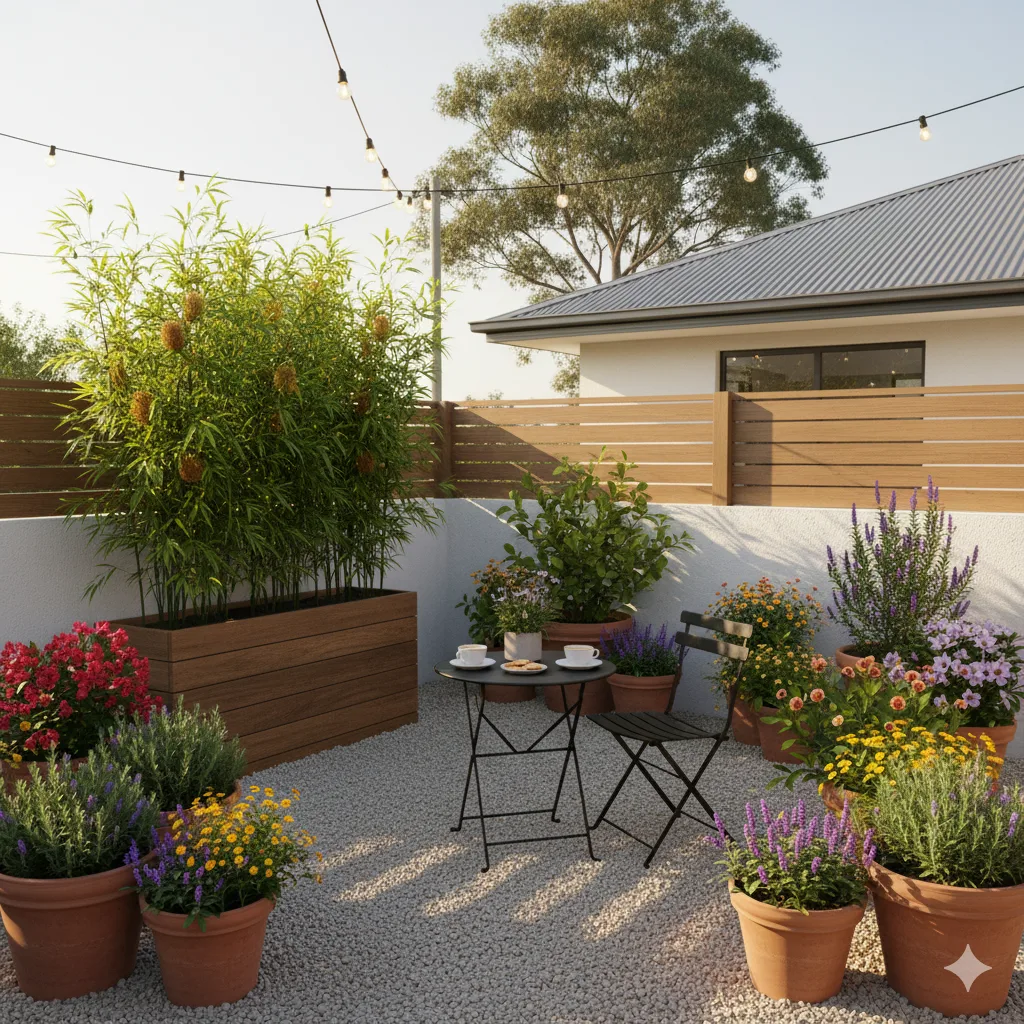
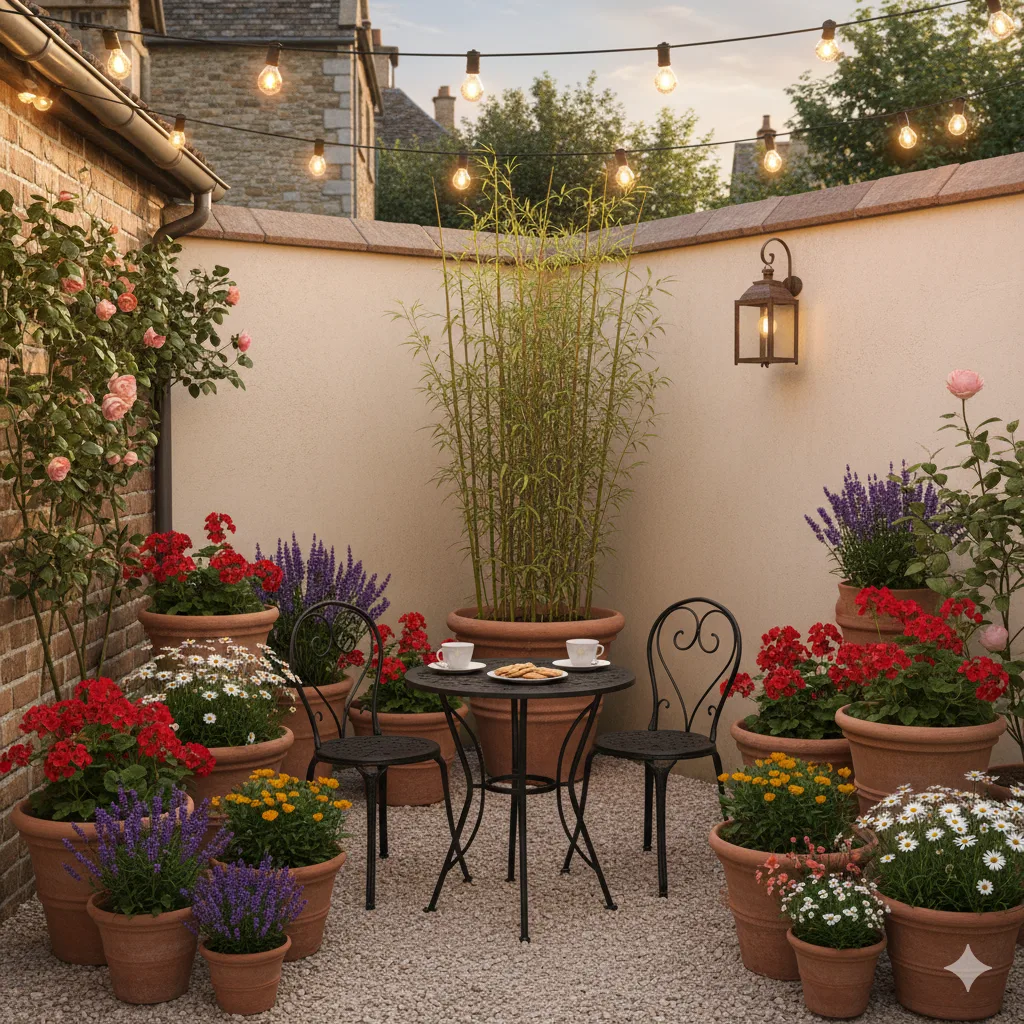
If your outdoor space is barely large enough for a chair, you can still create a garden worth admiring. Pocket patio gardens are perfect for garden patio design ideas and garden design ideas for small gardens.
Start by defining a small section — even a 6-by-6-foot square is enough. Use materials like brick, pavers, or gravel to form a clear border. This separates your “garden room” from the rest of your yard or balcony.
Then, add plants in layers. Keep the tallest greenery — like bamboo, dwarf trees, or trellised vines — at the back for privacy. In front, use pots of colorful flowers or aromatic herbs. The combination of height and texture makes the area feel lush, not cramped.
Furniture choice matters here. Use folding or stackable chairs, a small café table, and one feature element such as a lantern, water bowl, or statue. Small details like these give your pocket patio a personal touch without overwhelming the space.
This type of garden also suits garden design ideas Philippines , where tropical plants like palms or hibiscus thrive in partial shade.
5. Mirrored Garden Tricks
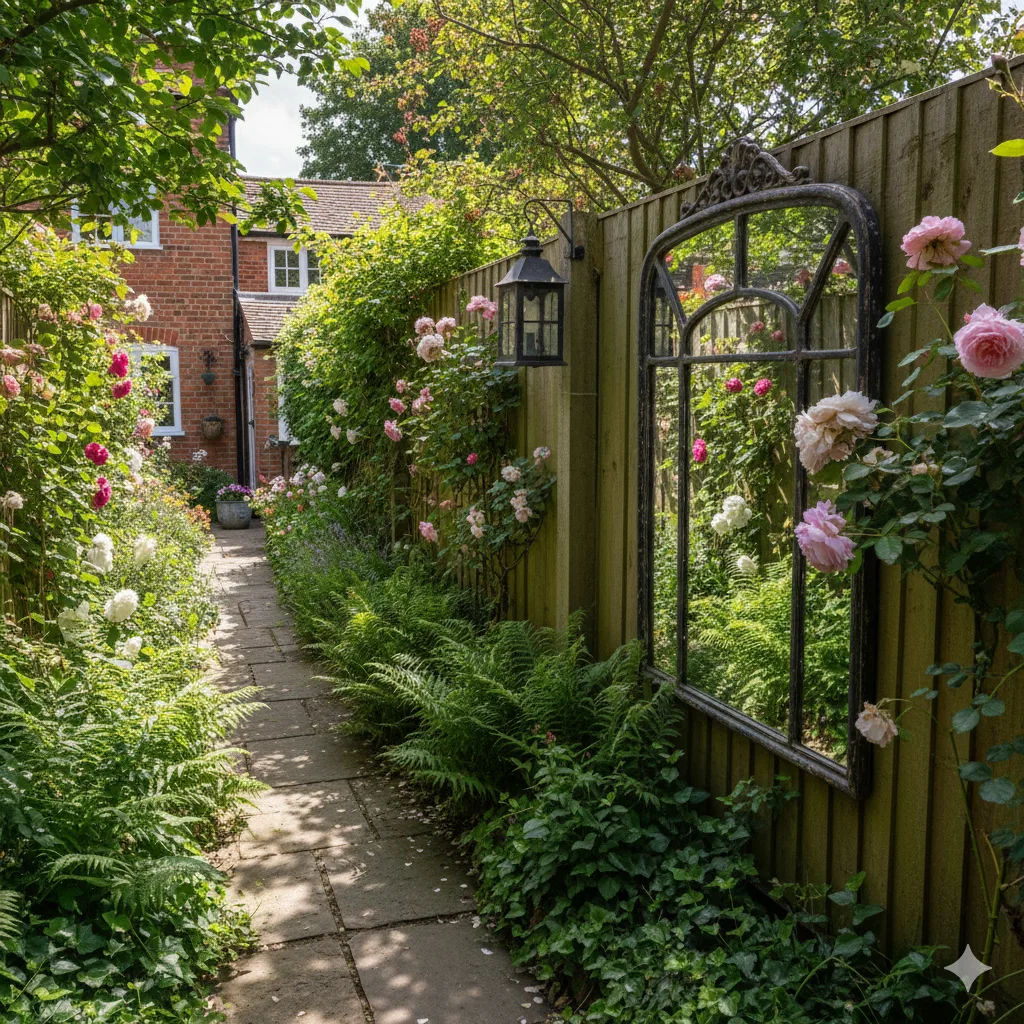
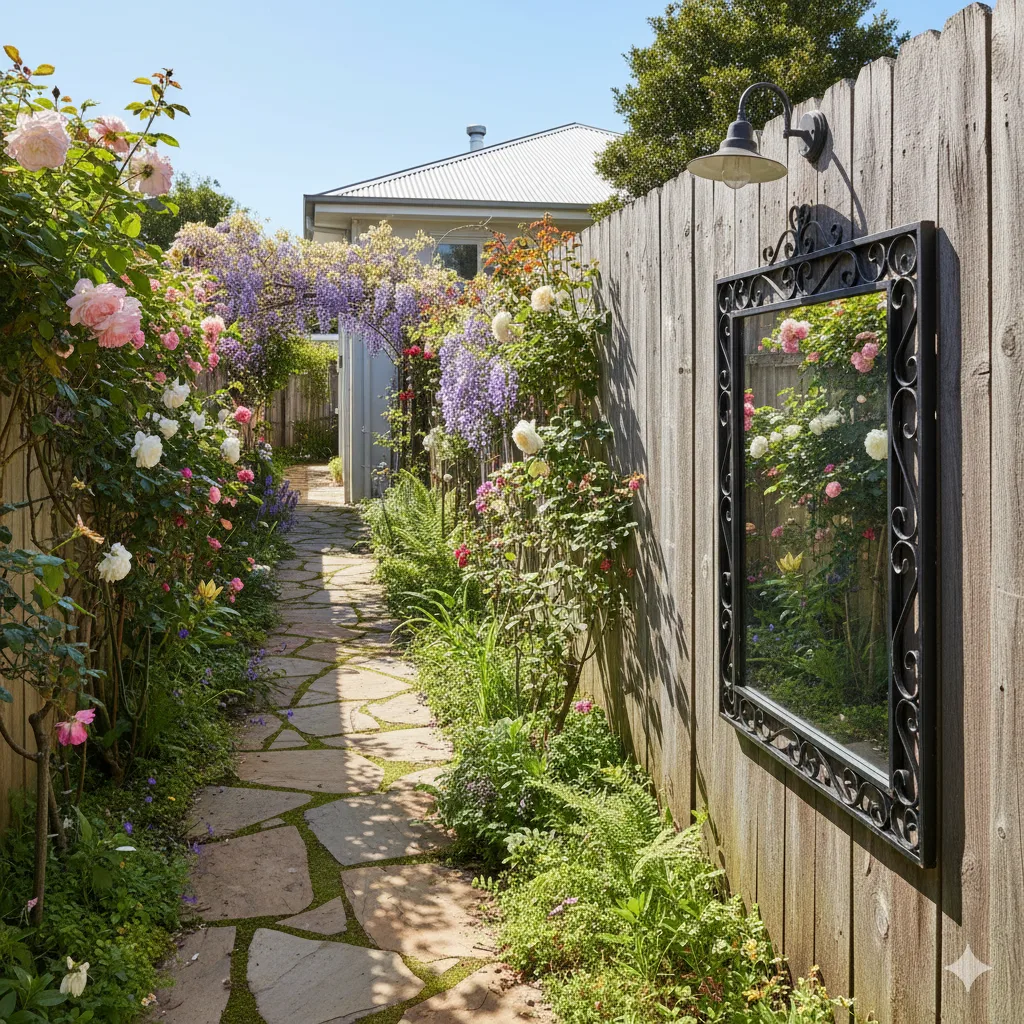
Mirrors aren’t just for indoors — they can transform outdoor spaces, too. Using reflective surfaces is one of the most clever small garden design ideas for creating depth and brightness in tight areas.
Attach weatherproof mirrors to fences, walls, or behind climbing plants. They reflect greenery and light, giving the illusion of a much larger garden. Choose mirrors with rustic wooden or metal frames for a natural look that blends with your plants.
For small garden design ideas photos , mirrors also enhance color. They bounce sunlight onto shaded plants and highlight vibrant flowers during the day. At night, they amplify soft lighting from lanterns or string lights.
If you’re trying garden design ideas UK where sunlight can be limited, place mirrors where they’ll catch afternoon light. In sunnier climates like Australia , use them sparingly to avoid glare.
Combine the mirrored effect with vines or tall grasses for a layered, airy appearance that feels almost magical.
Simple and Low-Maintenance Ideas
A low-maintenance garden doesn’t have to be plain. It’s about making smart choices — selecting plants and materials that thrive with little effort. These simple garden design ideas focus on reducing watering, pruning, and weeding while keeping your garden attractive year-round.
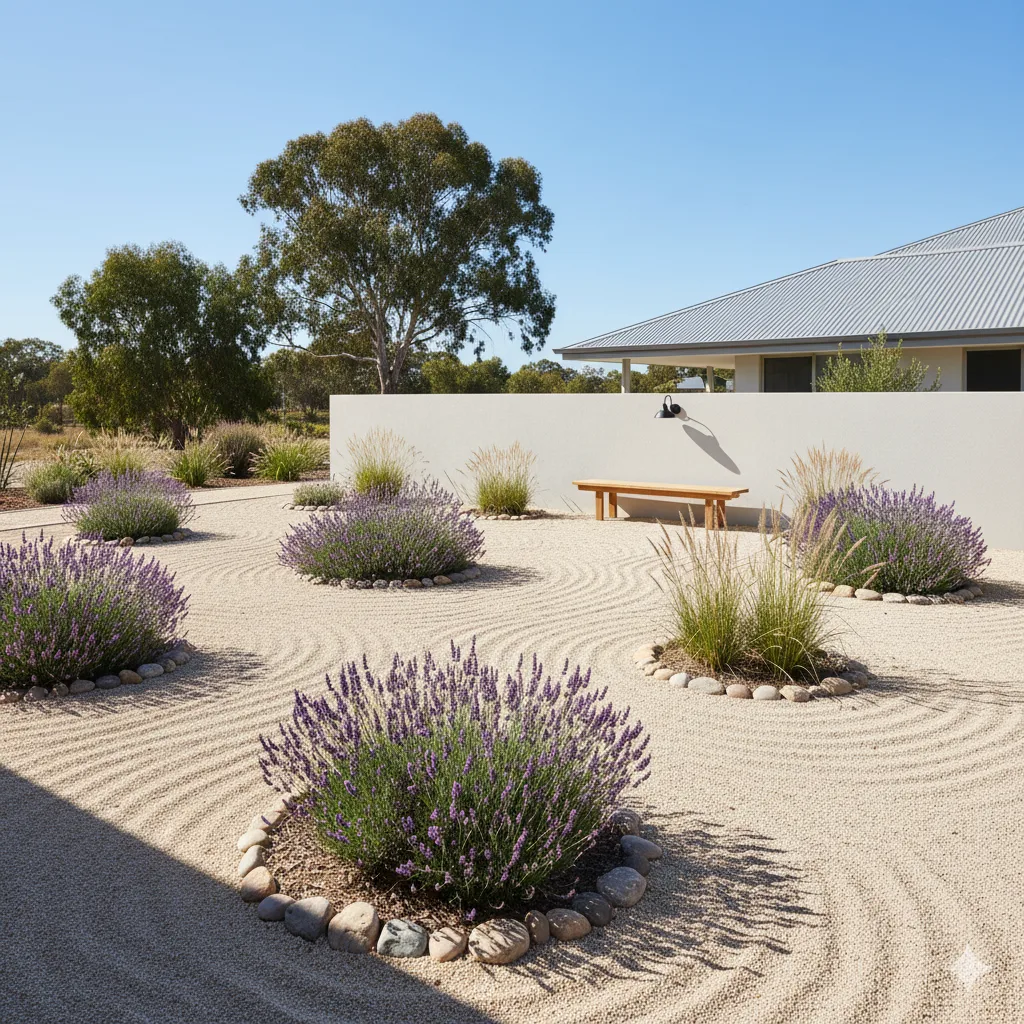
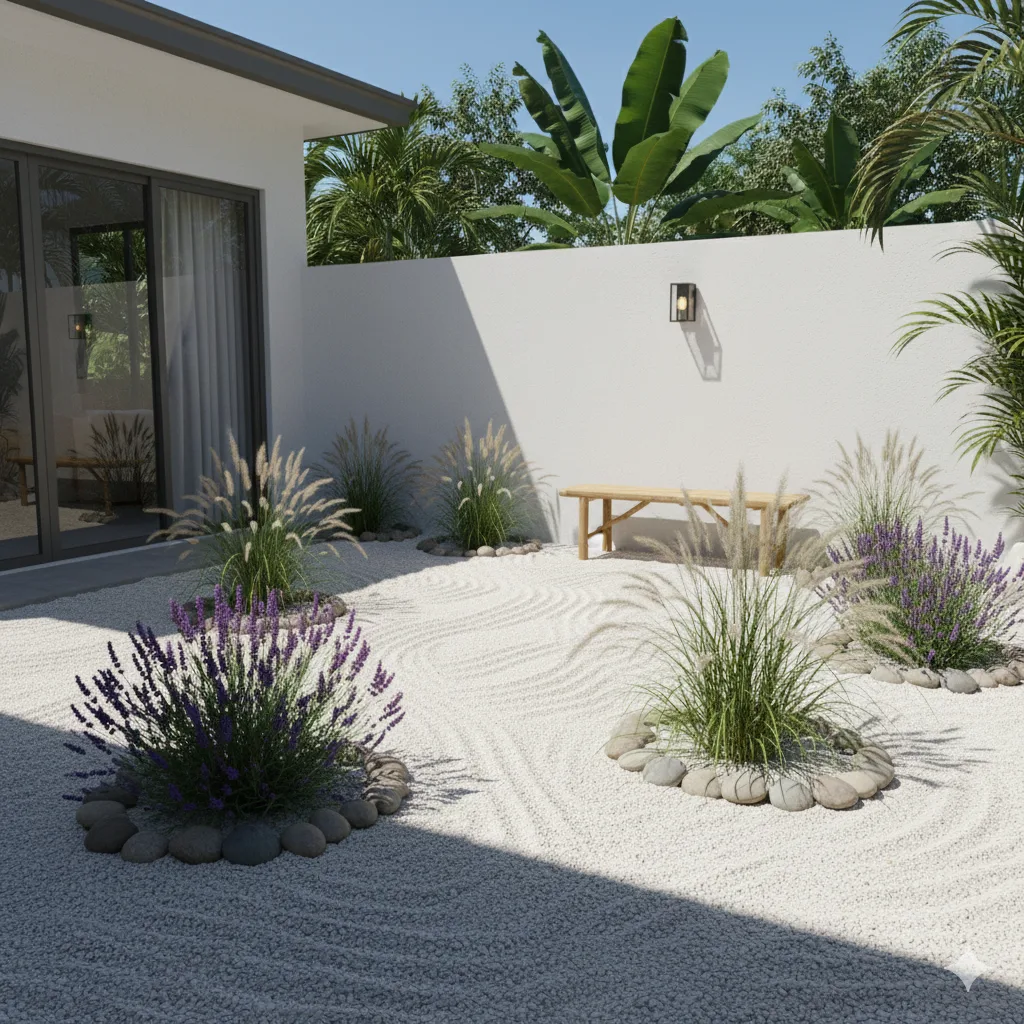
6. Gravel and Native Plant Beds
Gravel gardens are one of the easiest ways to create a lasting, low-upkeep landscape. They work beautifully for garden design ideas Australia , where drought conditions make water-saving designs practical and stylish.
Start by clearing the area and laying landscape fabric to prevent weeds. Spread gravel 2–3 inches deep across the surface. Choose native plants that thrive in your region without heavy watering — like lavender, kangaroo paw, or native grasses in Australia; thyme, sedum, and sage in the UK; or santan and bougainvillea in the Philippines.
Arrange plants in loose clusters to mimic natural growth. The gravel reflects sunlight, suppresses weeds, and keeps the soil cool. You can edge the area with wood or metal borders for a clean finish.
This design suits both large garden design ideas and small garden design ideas — it’s simple, elegant, and long-lasting.
7. Easy Lawn Borders
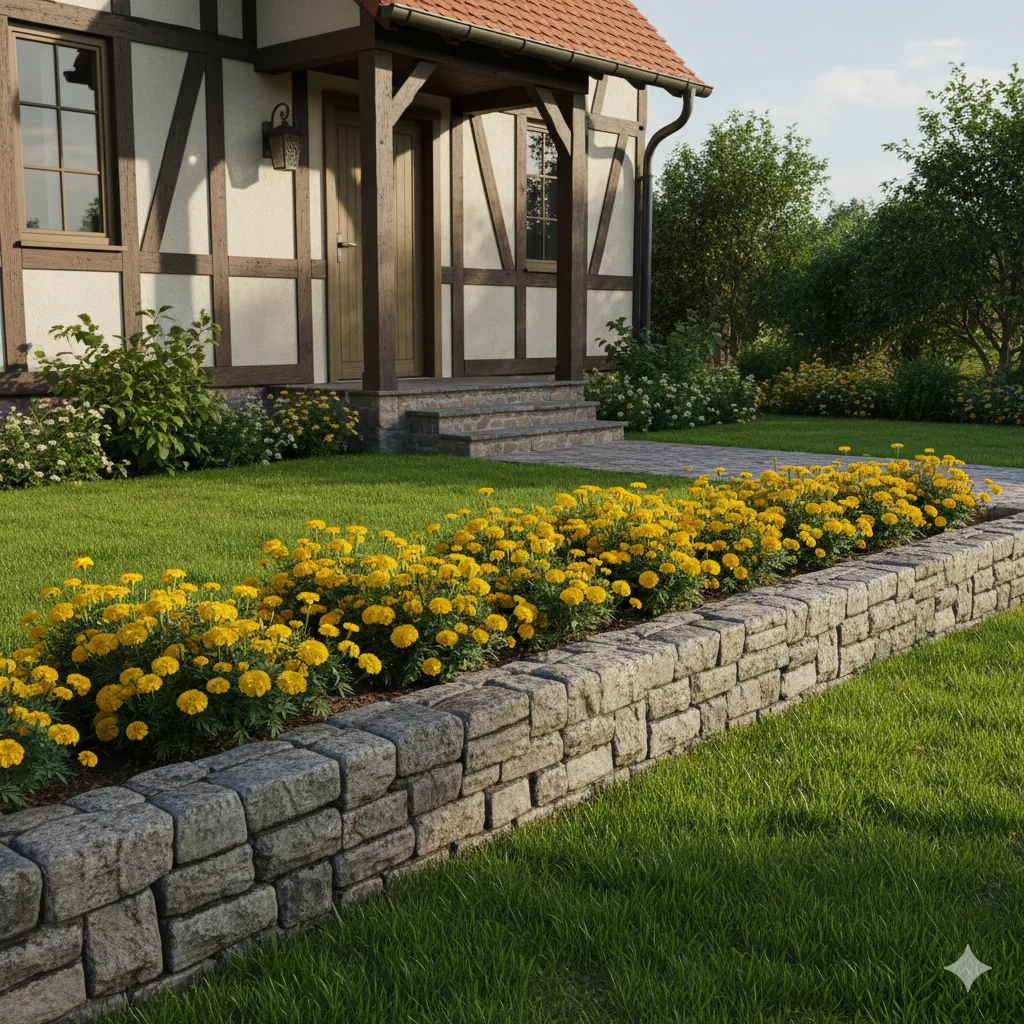
Borders define your garden and make maintenance faster. This idea works perfectly for garden border design ideas and simple garden design ideas.
Use materials like bricks, metal edging, or stone to frame your flower beds or pathways. This keeps grass from creeping into plant areas and creates a polished, professional look. In small spaces, curved borders soften hard lines and add movement.
Plant low-growing perennials like hostas, marigolds, or mondo grass along the edges. These provide color without much upkeep. If you prefer a clean, modern style, stick to one or two plant types for uniformity.
Lawn borders are also great for front garden design ideas — they frame the view of your home and keep the layout tidy. Once installed, maintenance is limited to trimming the edges and refreshing mulch once or twice a year.
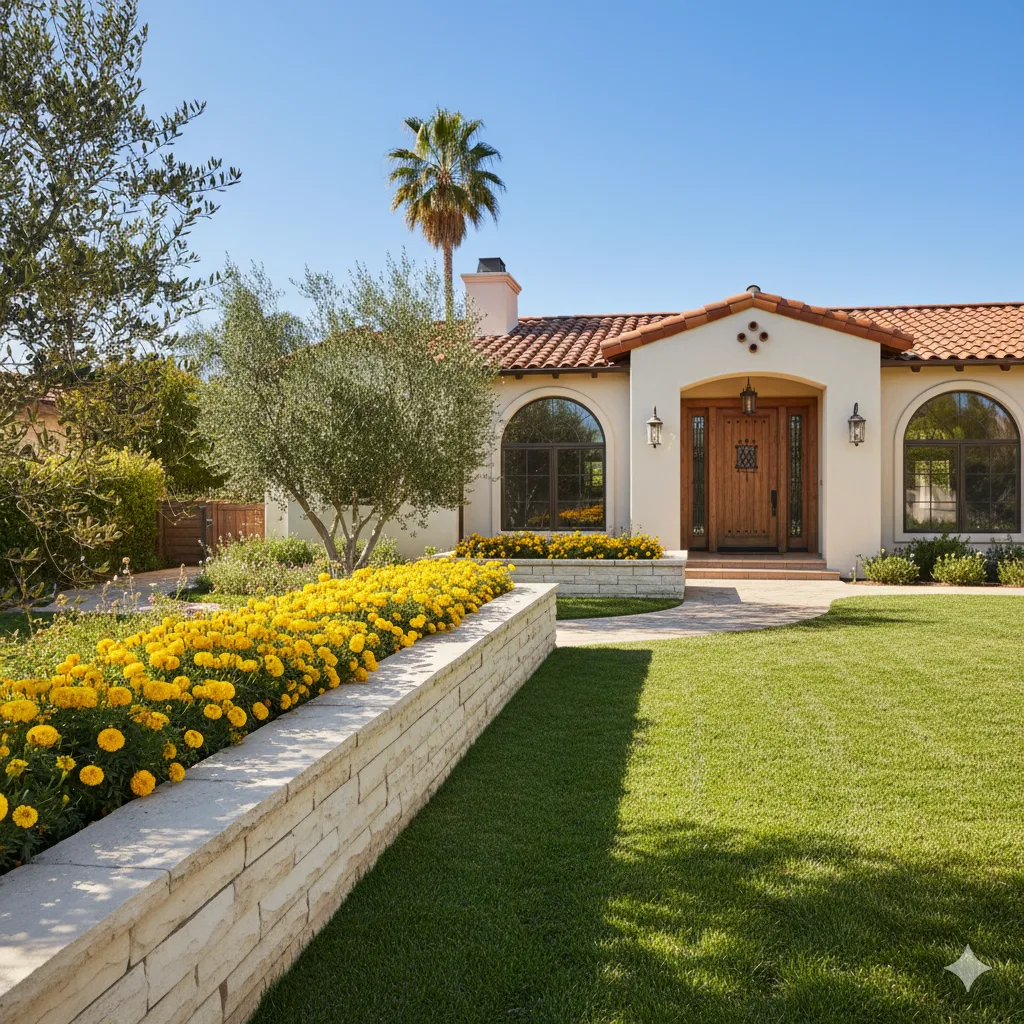
8. Stone Path Garden
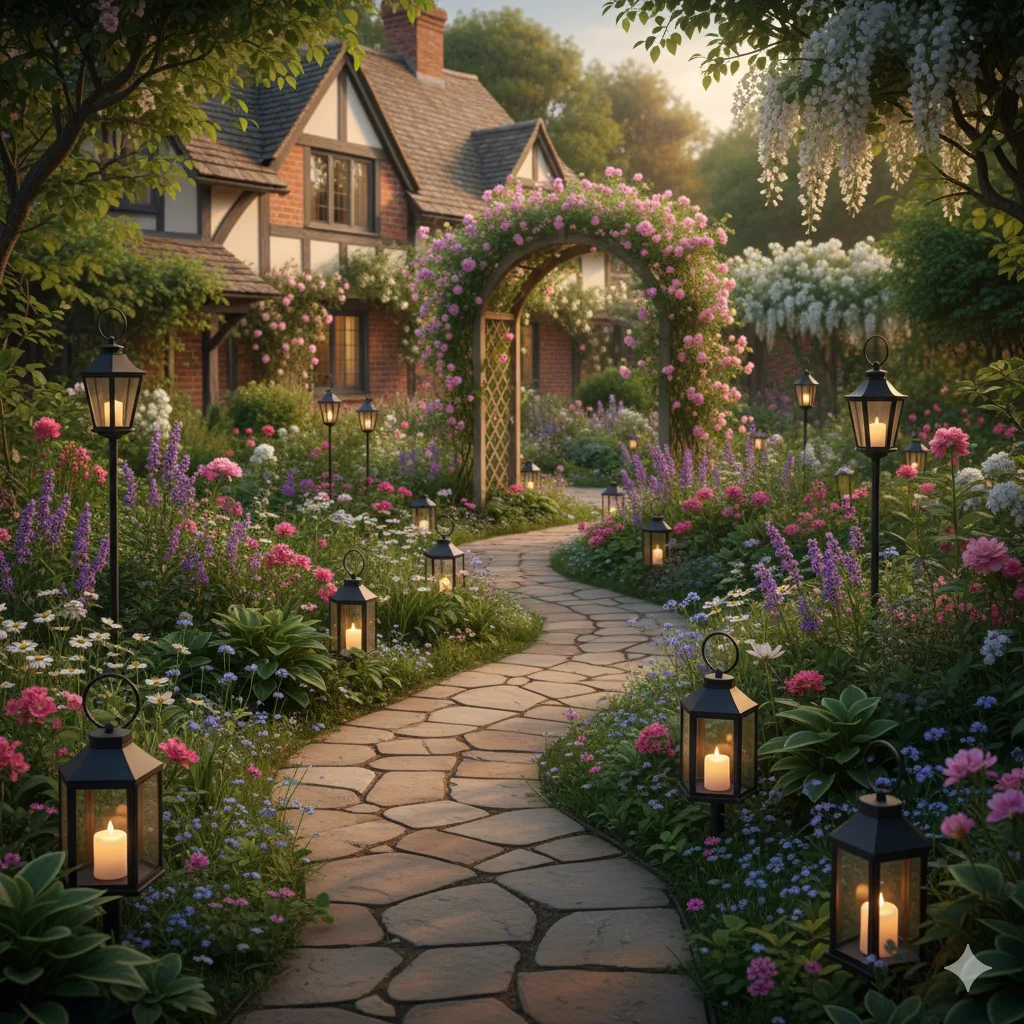
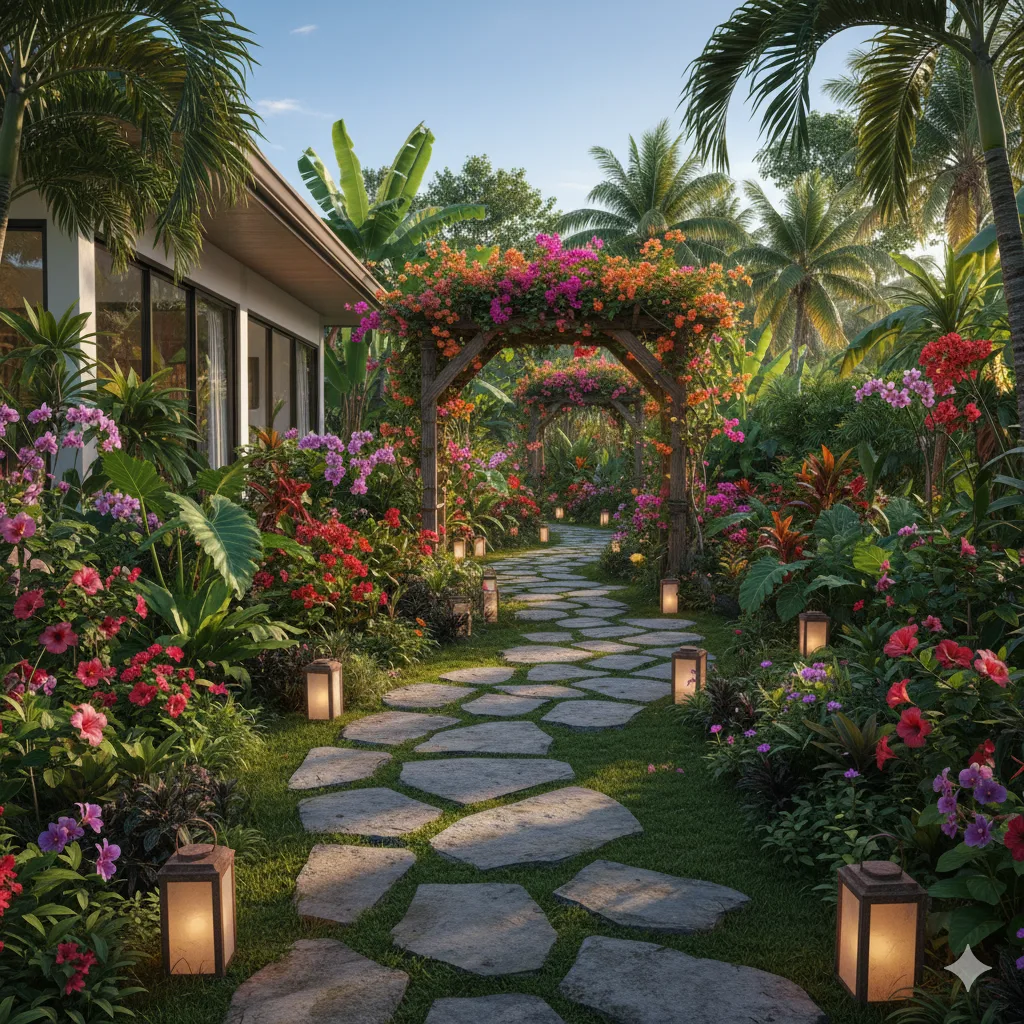
A stone path isn’t just practical — it’s one of the most classic garden landscape design ideas for connecting areas within your yard. It adds texture, structure, and a touch of timeless charm.
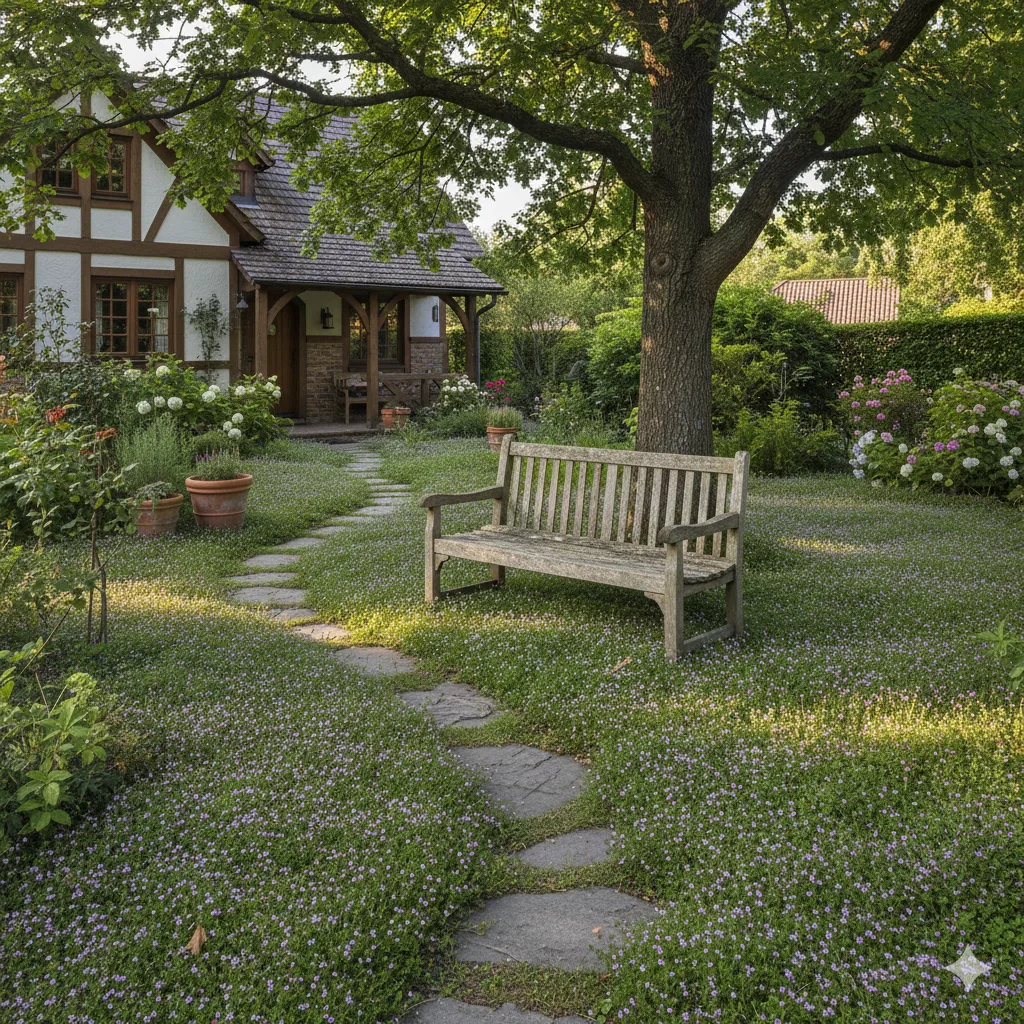
Mark a natural walking route from your home to the garden, shed, or patio. Lay flagstones, stepping stones, or pavers about a stride apart on compacted sand or gravel. Fill gaps with moss, creeping thyme, or small gravel for a finished look.
Stone paths work well for both garden design ideas UK and garden design ideas Philippines , where heavy rains can make soil muddy. The stones provide clean footing while letting water drain easily.
Add soft lighting along the path edges to highlight the stones at night. Border the walkway with low plants or decorative rocks to complete the design.
9. Low-Water Gardens
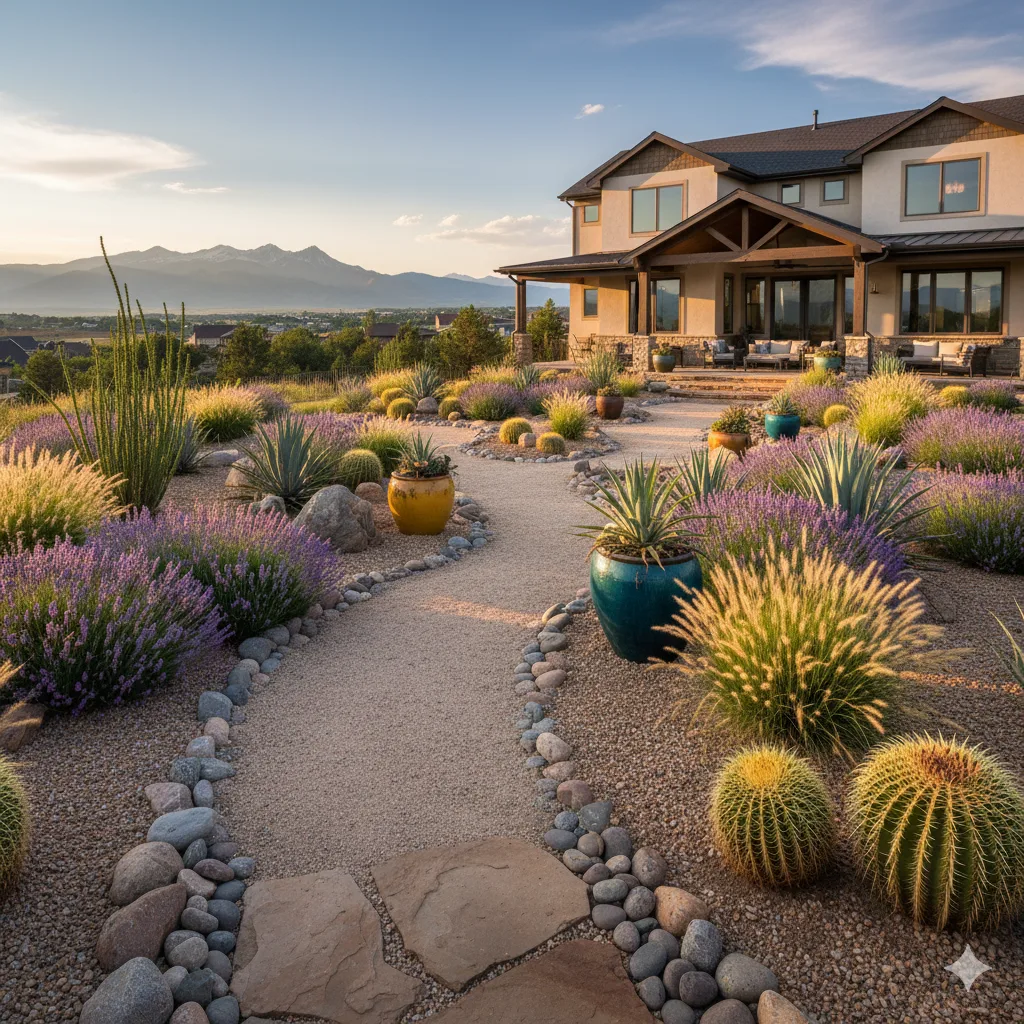
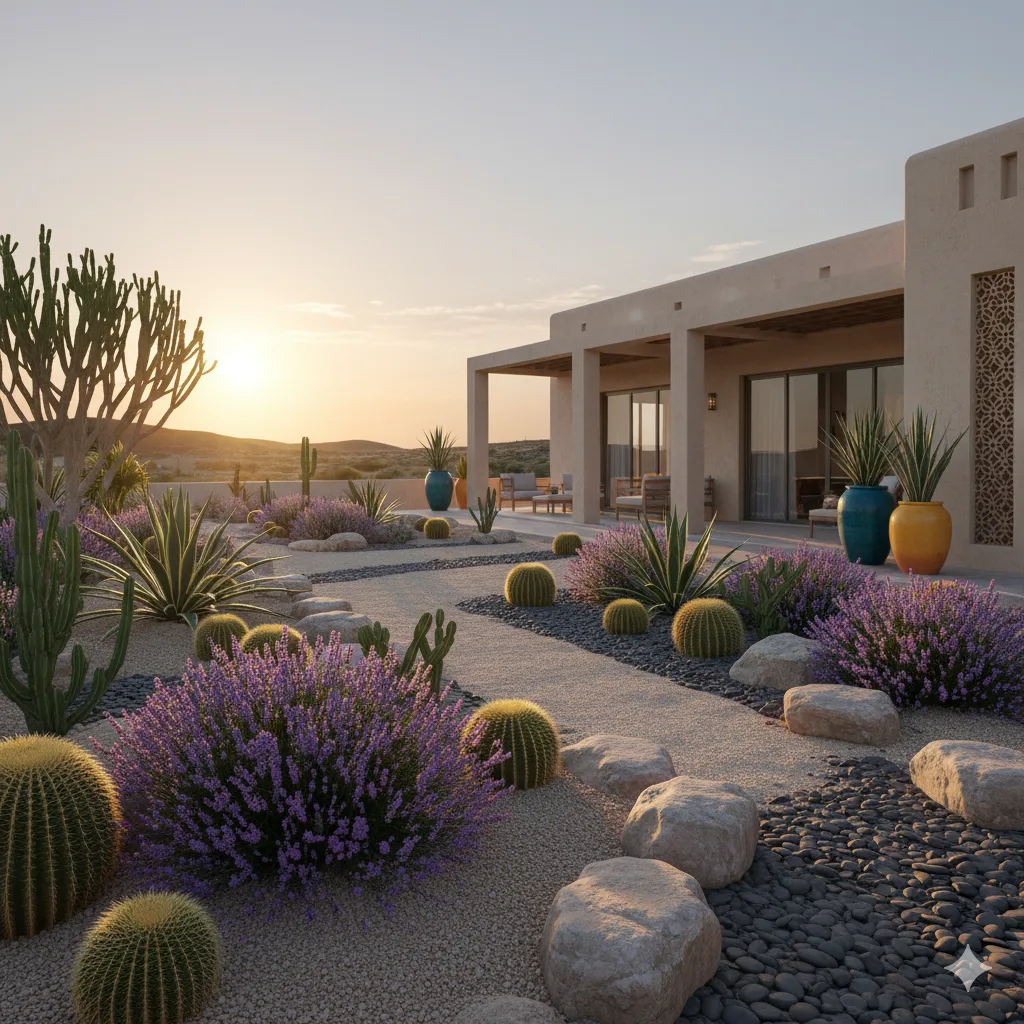
If you live in a hot or dry region, low-water gardens — also known as xeriscapes — are ideal. They save time, money, and resources while staying green year-round. This approach fits perfectly into garden design ideas Australia and garden design ideas on a budget because it eliminates most irrigation needs.
Start by grouping plants based on water needs — a principle known as hydrozoning. Place drought-tolerant varieties together so you can water only where needed. Great plant choices include agave, succulents, rosemary, lavender, or desert marigold. For a tropical touch in regions like the Philippines , consider bougainvillea or lemongrass, which handle heat well with minimal watering.
Replace thirsty lawns with gravel, bark mulch, or decomposed granite. These materials keep soil moist and add a polished finish. A simple drip irrigation system or soaker hose ensures efficient watering directly at the roots.
According to Colorado State University Extension , proper plant grouping and mulching can reduce outdoor water use by over 50% while maintaining a lush appearance ( (2) ).
Finish the look with native rocks, solar lights, and rustic pottery for texture. The result is a calm, sustainable garden that thrives naturally.
10. Ground Cover Gardens
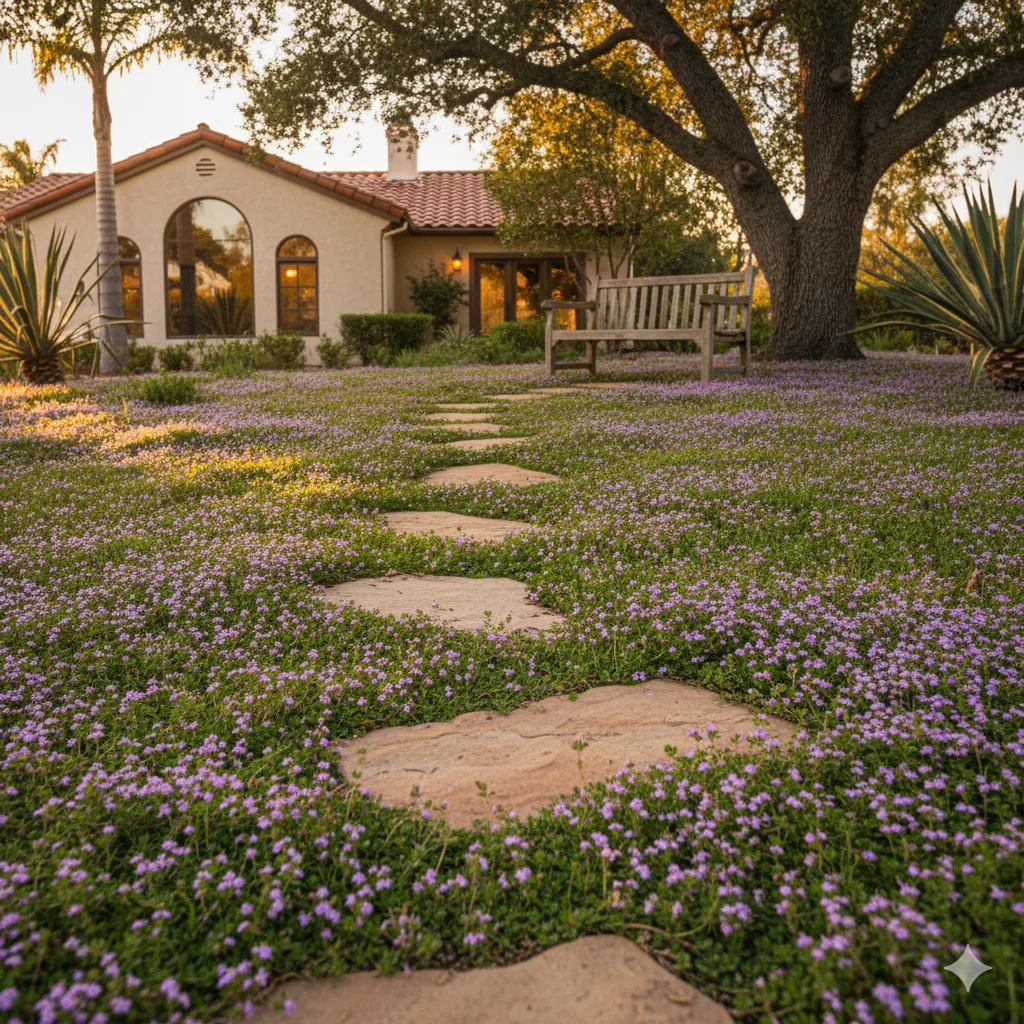
If mowing feels like a chore, replace your lawn with easy-care ground covers. This is one of the most practical simple garden design ideas for homeowners who want beauty without constant work.
Choose low-growing plants that spread quickly, need little water, and stay green most of the year. In garden design ideas UK , popular choices include creeping thyme, chamomile, and moss. In Australia , try native varieties like dichondra or woolly mat rush. For tropical climates such as the Philippines , opt for perennial peanut or zoysia grass.
Prepare the area by removing weeds, leveling the soil, and laying organic compost. Plant ground covers 8–12 inches apart so they’ll fill in naturally over a few months. Add stepping stones or a small bench to create a finished look.
Ground covers also prevent erosion on slopes and improve soil health by reducing evaporation. They can even be combined with stepping-stone paths or flower borders for contrast.
Once established, these gardens need little more than occasional trimming and seasonal feeding — no mowing, no re-seeding.
Front and Home Garden Ideas
Your front garden is the first thing people see, so it should make a warm impression. A thoughtful design can turn even a narrow strip of soil or a modest lawn into a welcoming entrance. These garden design ideas for home and front garden design ideas work for different house types — from suburban lots to city terraces.
11. Symmetrical Front Gardens
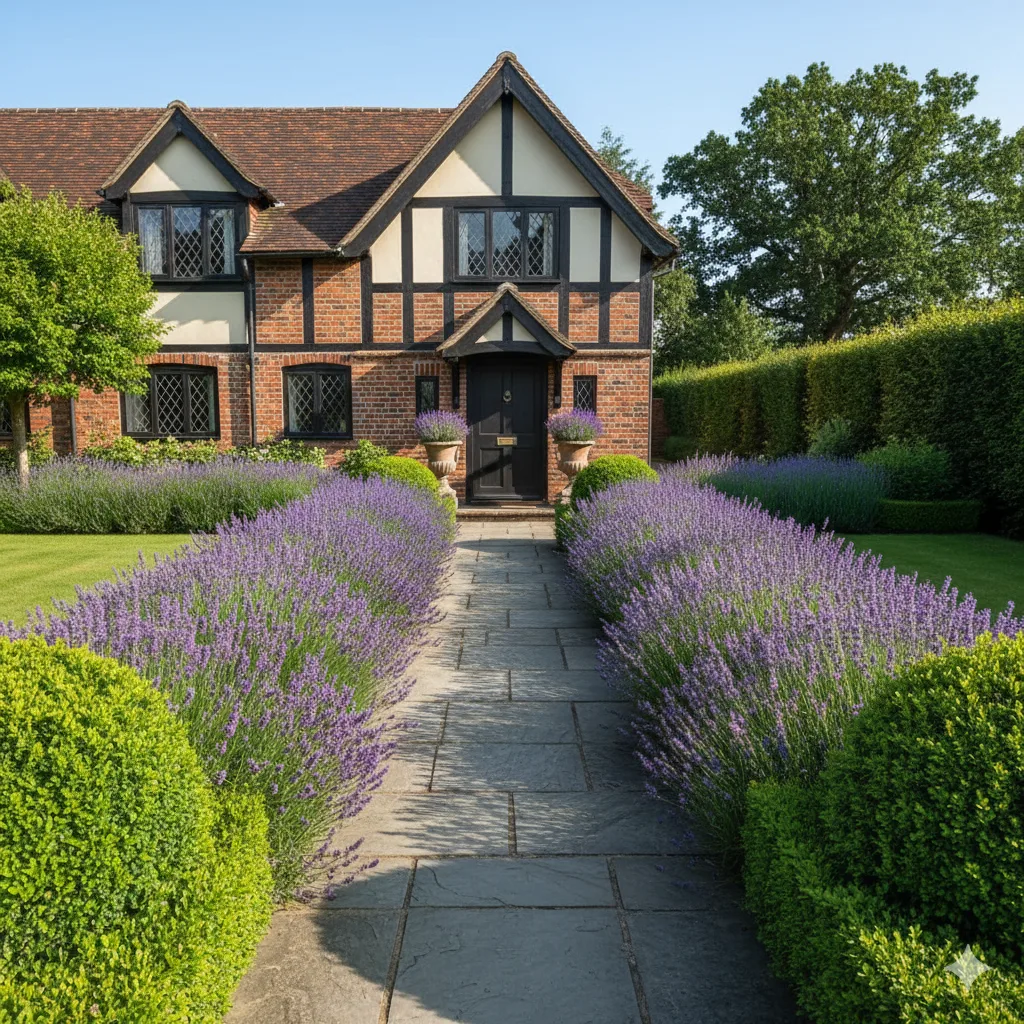
Symmetry brings order and elegance to your front yard. It’s a timeless look often seen in garden design ideas UK , but it works just as beautifully anywhere.
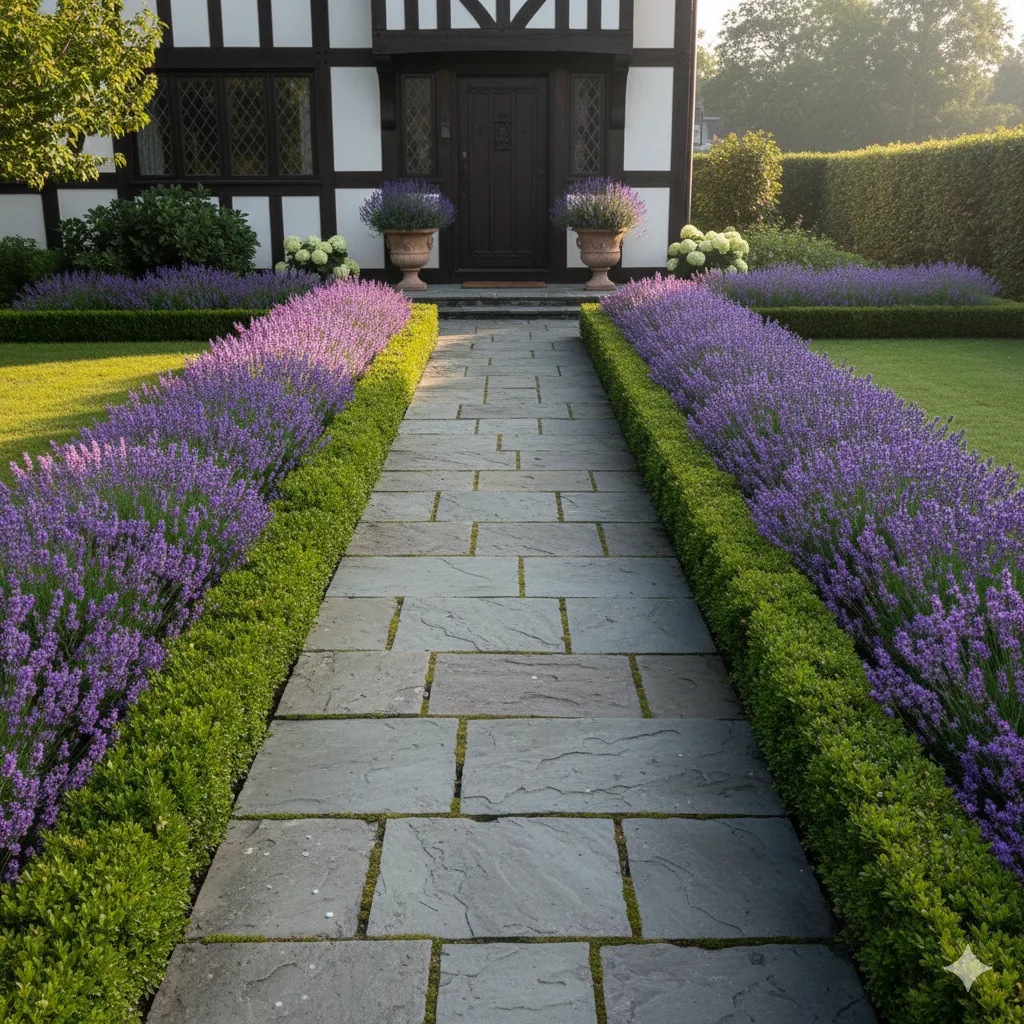
Start by dividing your space into mirrored halves — the same shrubs, flowerbeds, or pathways on both sides. Boxwoods, lavender, and hydrangeas make great symmetrical planting choices. Add a central focal point, such as a birdbath, large planter, or water feature, to anchor the layout.
Keep your hardscape materials consistent — if you use brick for your walkway, repeat it in your edging or planters for harmony. Regular trimming maintains the clean lines and formal balance.
This design gives homes a classic, structured look that feels welcoming yet refined.
12. Cottage Garden Charm
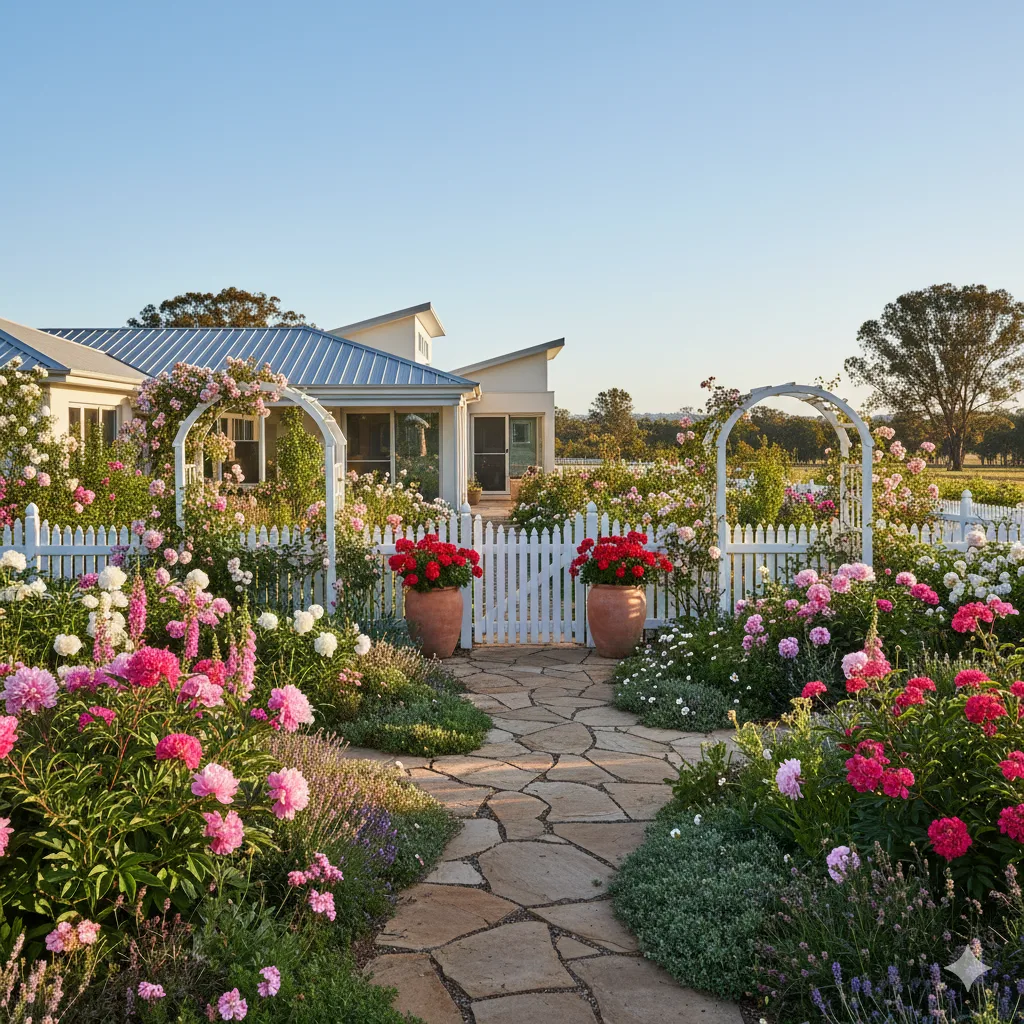
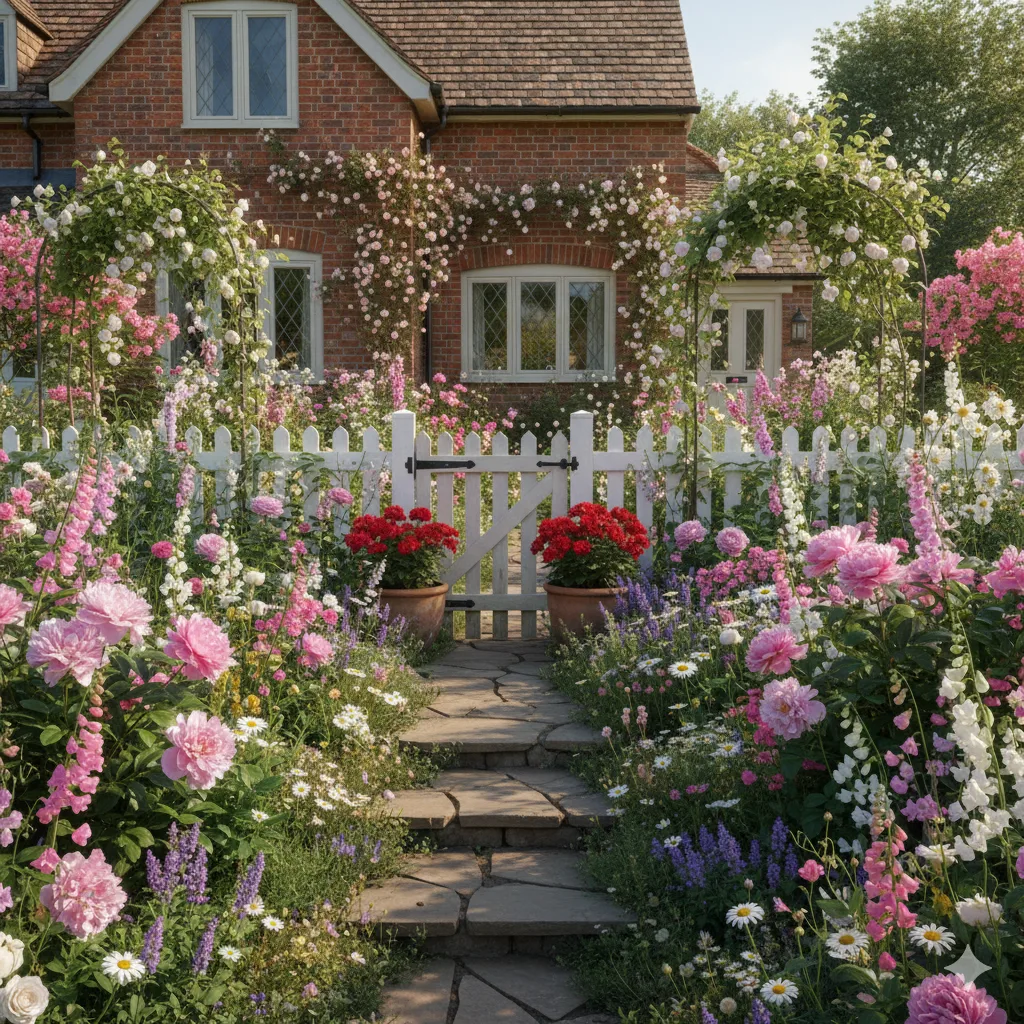
For something softer and more playful, embrace the informal beauty of a cottage garden. These garden design ideas for home blend flowers, herbs, and shrubs in loose, colorful layers.
Start by mixing tall and low plants — roses, delphiniums, and hollyhocks in the back; daisies, lavender, and thyme in front. Add curved paths and a few rustic touches like wooden fences or arched gates for that storybook feel.
Cottage gardens suit garden design ideas UK and garden design ideas Australia alike. The secret lies in balance: variety without chaos. Use repetition — a few of the same plants or colors throughout — to tie everything together.
For maintenance, choose perennial plants that return each year, and let them grow freely with occasional pruning.
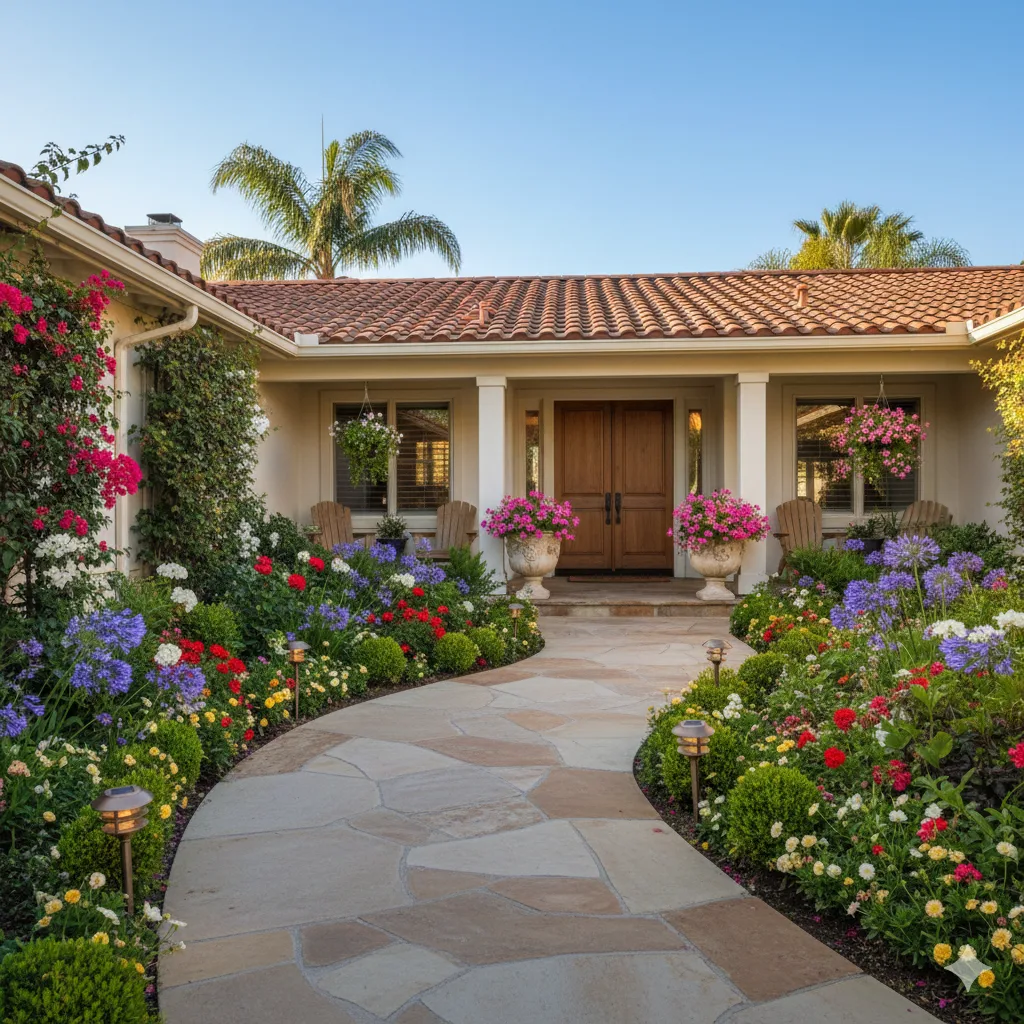
13. Welcoming Entryway Beds
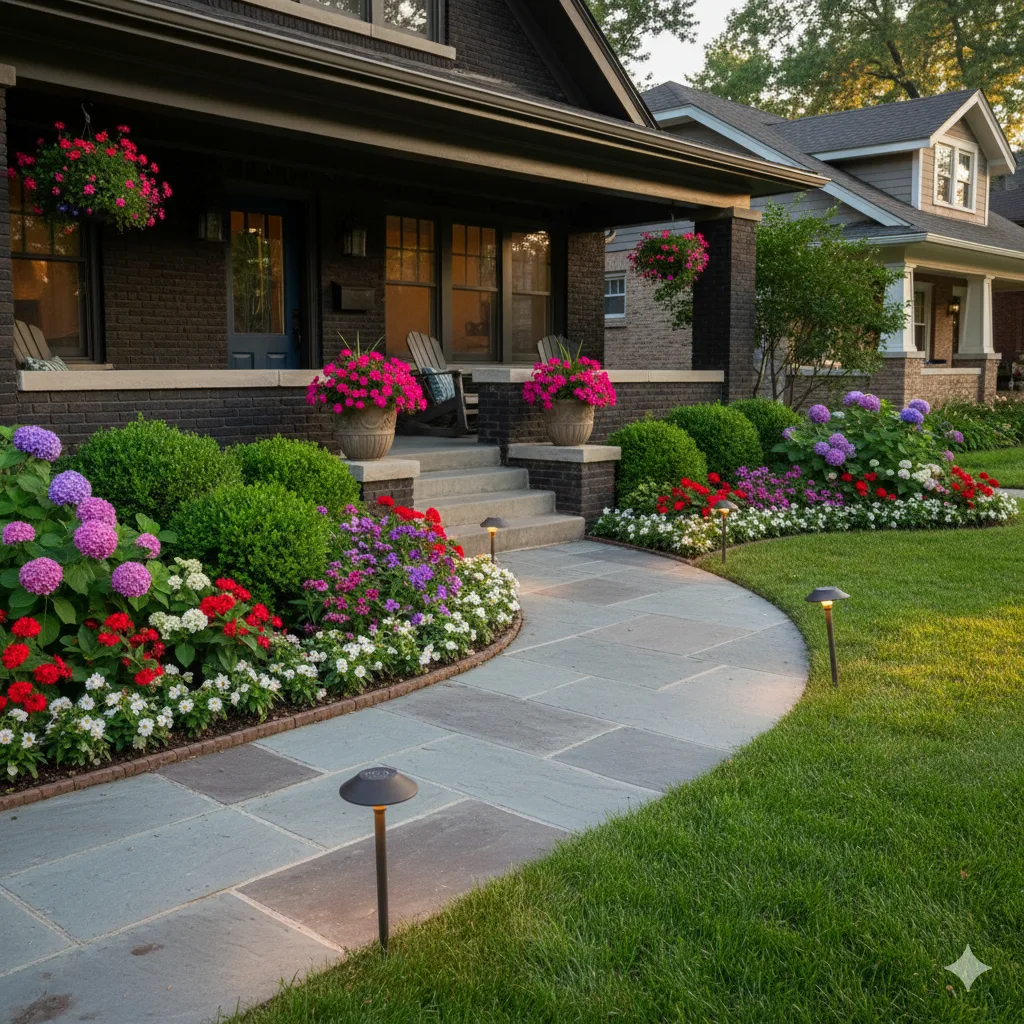
Entryway beds make a home feel instantly inviting. They’re one of the easiest front garden design ideas for homeowners who want curb appeal without heavy upkeep.
Create planting beds on either side of your walkway or front steps. Choose plants that bloom in rotation — like tulips in spring, daisies in summer, and chrysanthemums in fall — so your entrance stays colorful through the seasons.
Add evergreen shrubs or ornamental grasses for structure during winter. To tie the look together, use mulch or decorative gravel around the plants. Solar path lights make it practical and safe for evening use.
In tropical regions like the Philippines , bright flowering shrubs such as hibiscus or crotons add vivid color year-round.
14. Formal Garden Paths
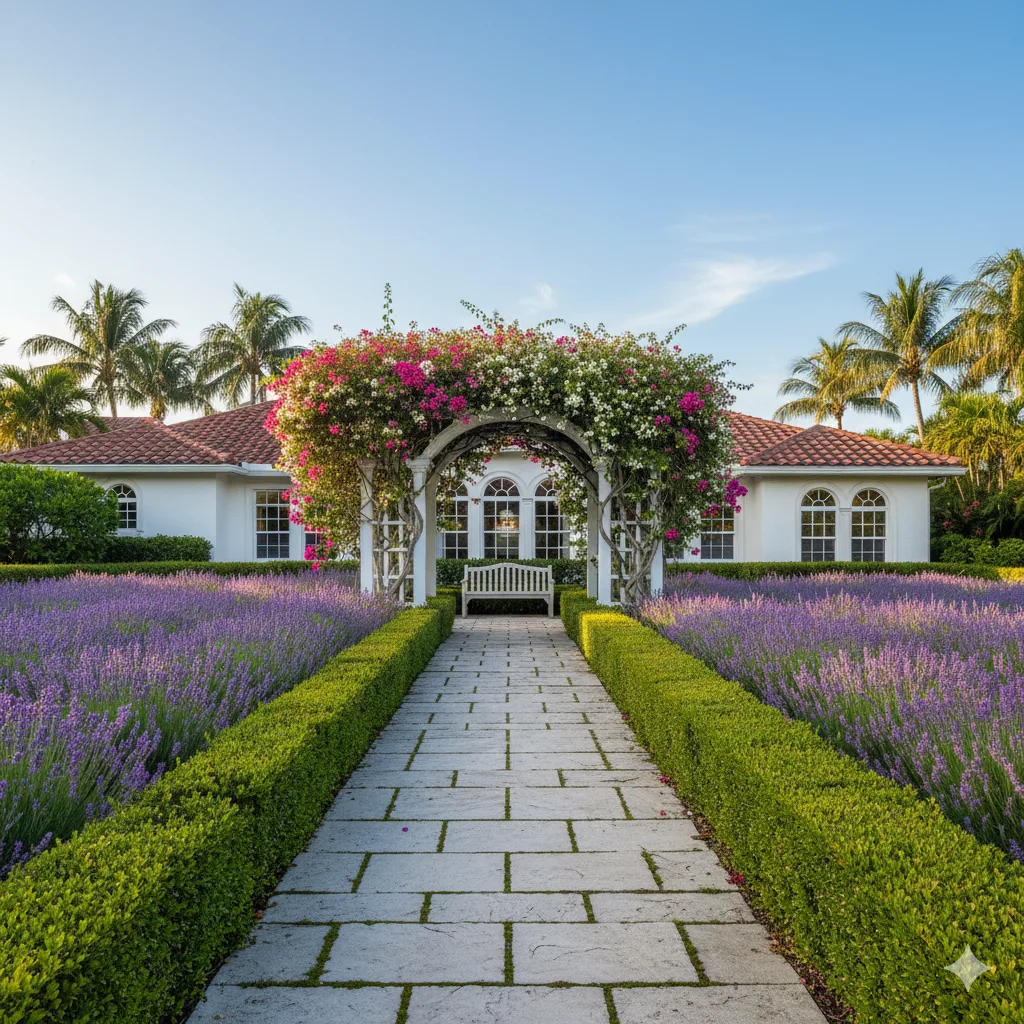
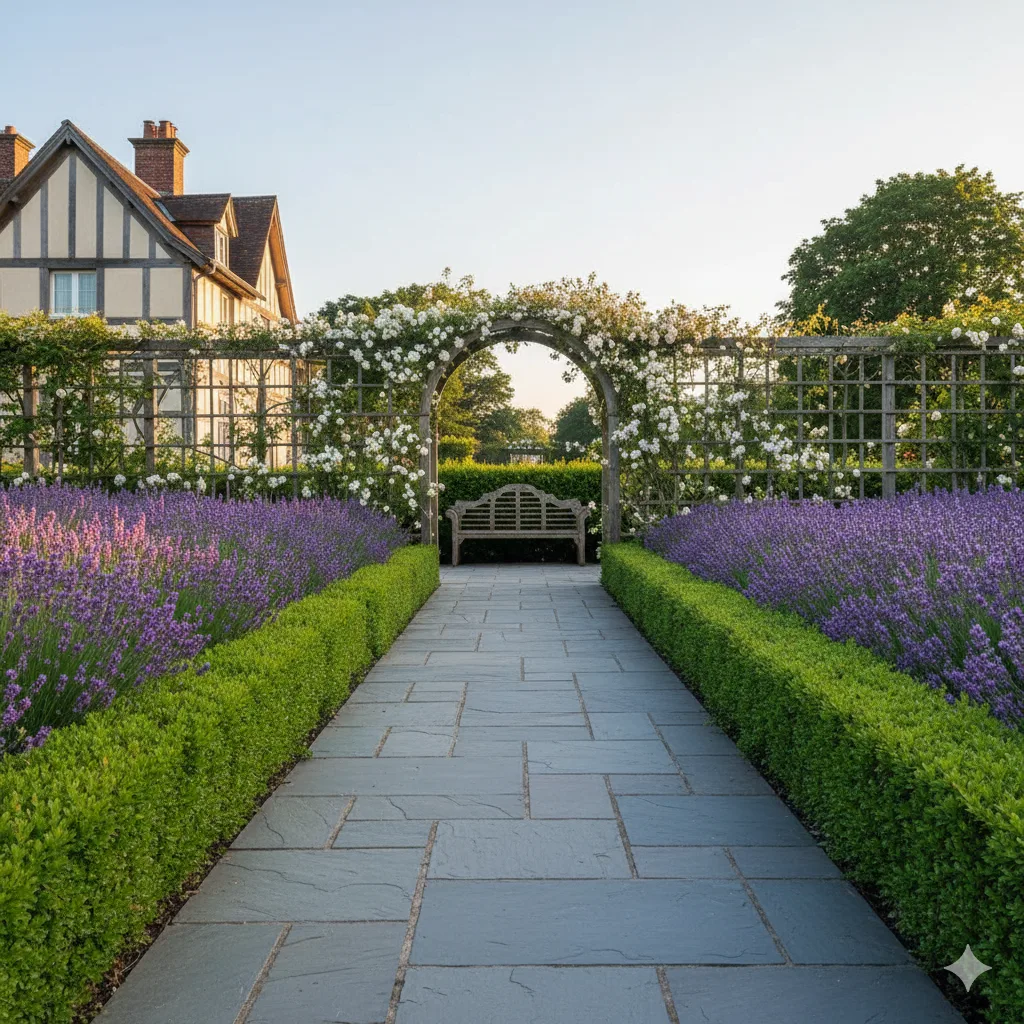
Formal paths define space and guide visitors through your garden. They’re a classic feature in garden design ideas UK and garden landscape design ideas that add instant sophistication.
Use straight or gently curving lines for your path layout. Materials like brick, stone, or concrete pavers provide structure and durability. Frame the path with low hedges, lavender borders, or symmetrical flowerbeds for balance.
If your yard allows, end the path at a focal point — a statue, a bench, or a flowering tree — to draw the eye. For a softer, more modern twist, plant ornamental grasses along the edges instead of traditional hedges.
This layout pairs beautifully with both large garden design ideas and small front gardens , offering elegance with little maintenance.
Vegetable and Edible Garden Designs
Vegetable gardens don’t have to look like plain rows of soil. With thoughtful planning, they can be both productive and beautiful. These vegetable garden design ideas blend form and function, showing how to grow food while enhancing your landscape.
15. Raised Bed Gardens
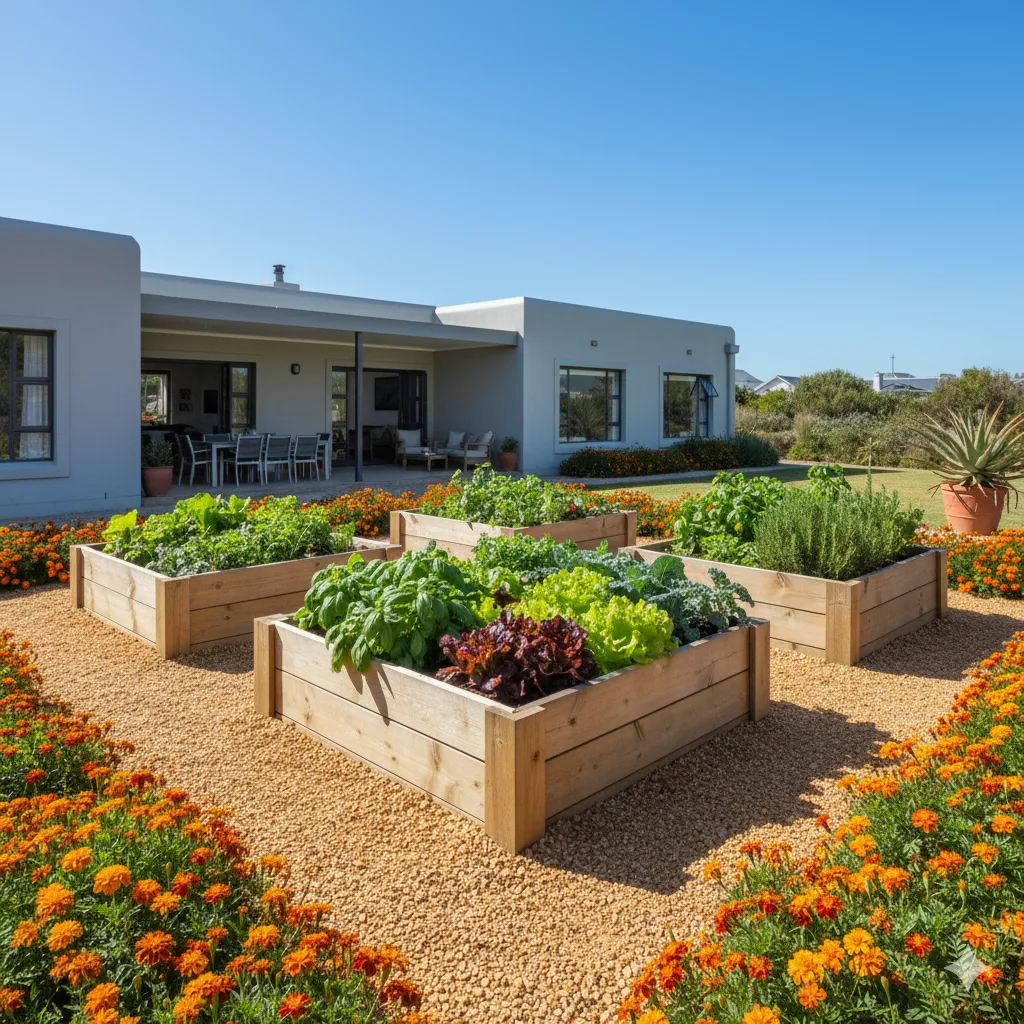
Raised beds are one of the most practical ways to grow vegetables, especially for beginners. They offer better drainage, warmer soil, and less bending while you work. These setups fit neatly into both small garden design ideas and large garden design ideas alike.
Build beds from wood, brick, or corrugated metal. A height of about 12–18 inches allows deep root growth. Arrange several beds in neat rows or geometric shapes to create a clean layout. Fill them with a mix of compost and soil for healthy growth.
For visual appeal, edge the beds with stone or plant herbs along the borders. Mixing edible plants like lettuce, kale, and strawberries with flowers adds color and attracts pollinators.
In garden design ideas Australia , raised beds also help manage water runoff in dry conditions. For the Philippines , they keep crops elevated during rainy seasons.
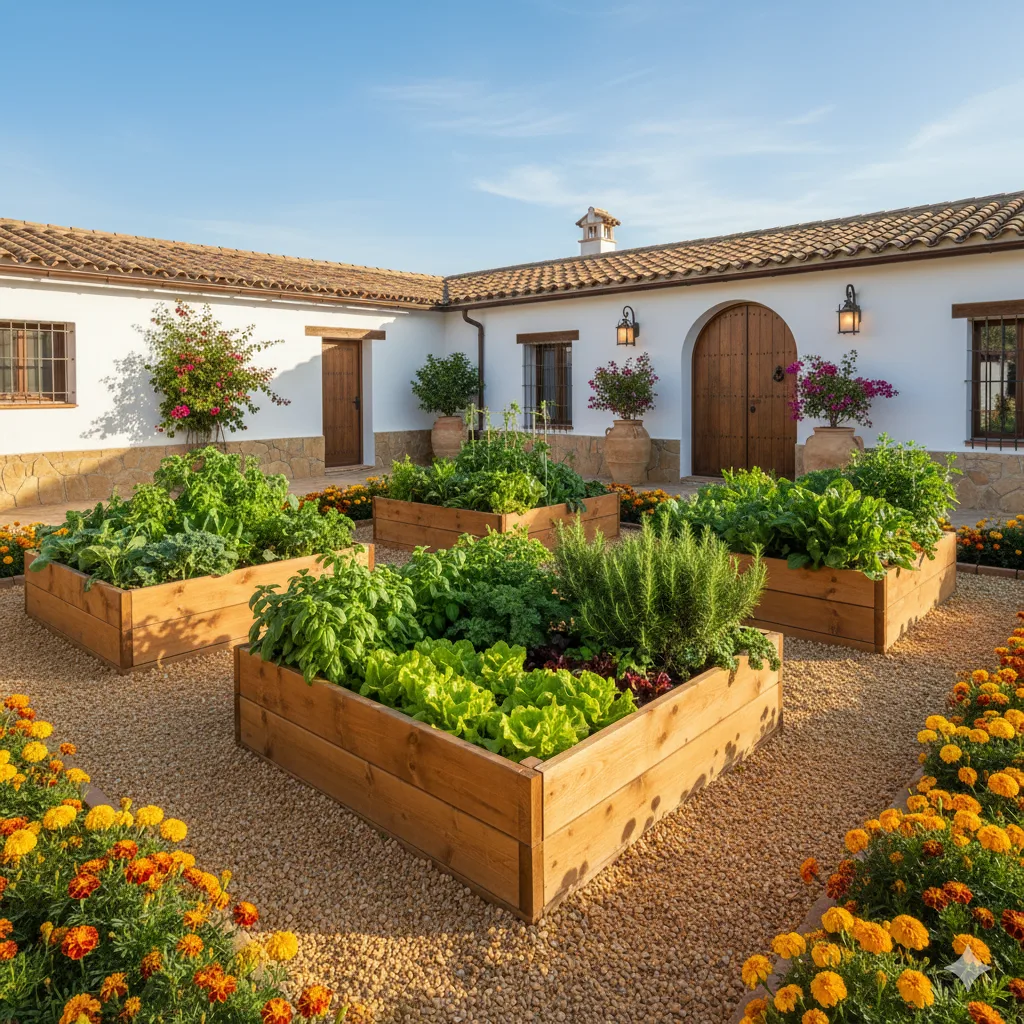
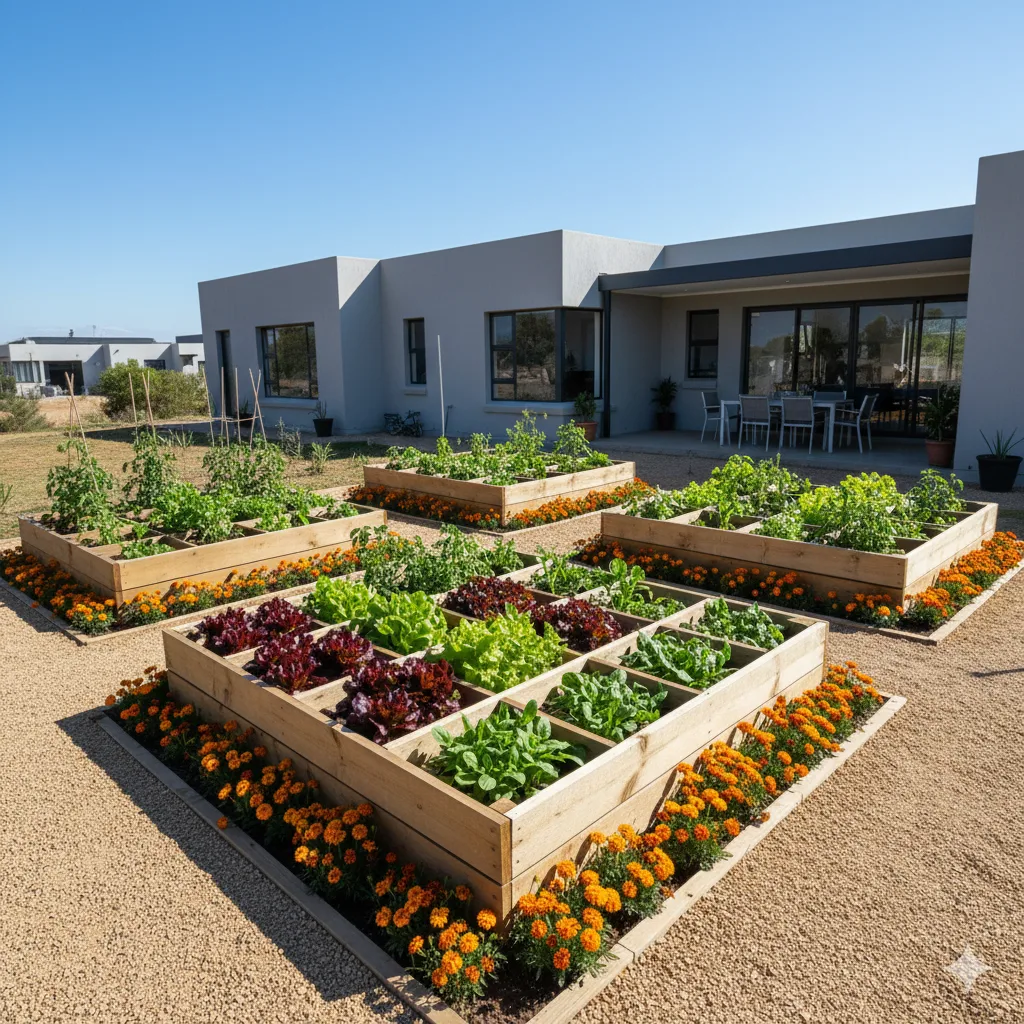
16. Square-Foot Gardening
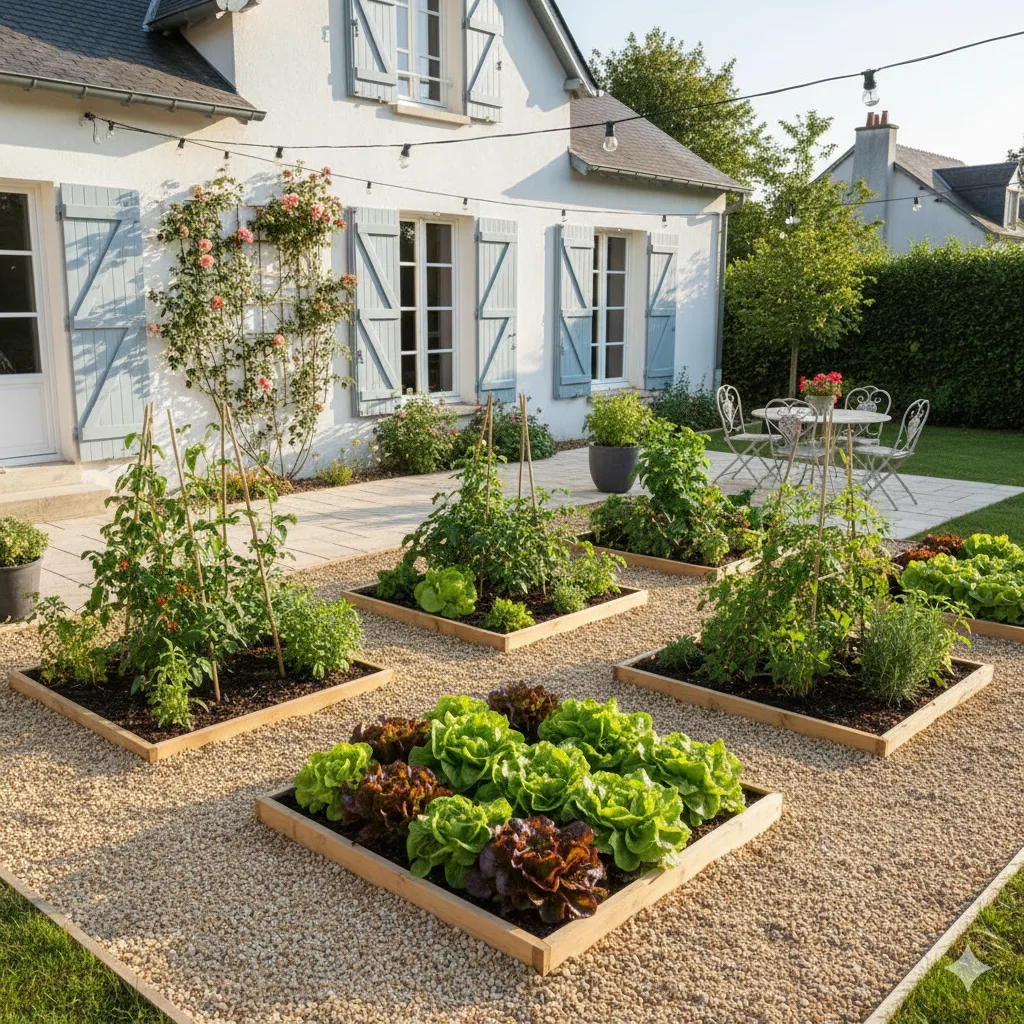
Square-foot gardening is a brilliant space-saving method that works for both new gardeners and urban dwellers. It divides each raised bed or planter into small squares, letting you grow many crops in minimal space.
Mark your bed into a grid of 1x1-foot sections. Plant one crop per square — for example, one tomato, four lettuces, or nine onions. This makes planning, watering, and harvesting simple and efficient. It’s perfect for garden bed design ideas where neatness and productivity matter.
This layout also prevents overcrowding and improves airflow, keeping plants healthier. Add vertical supports for climbing vegetables like beans or cucumbers to maximize space.
For a decorative touch, surround your square-foot garden with mulch paths and small stepping stones.
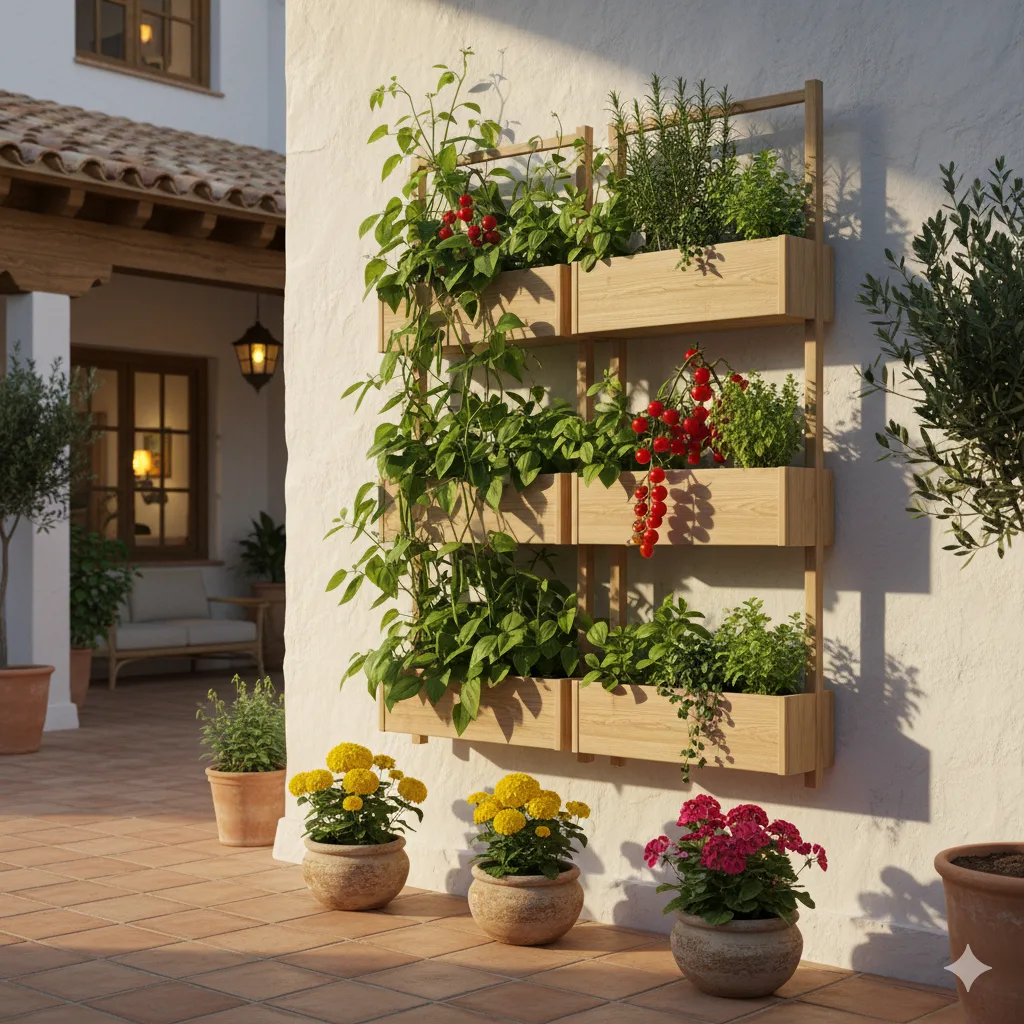
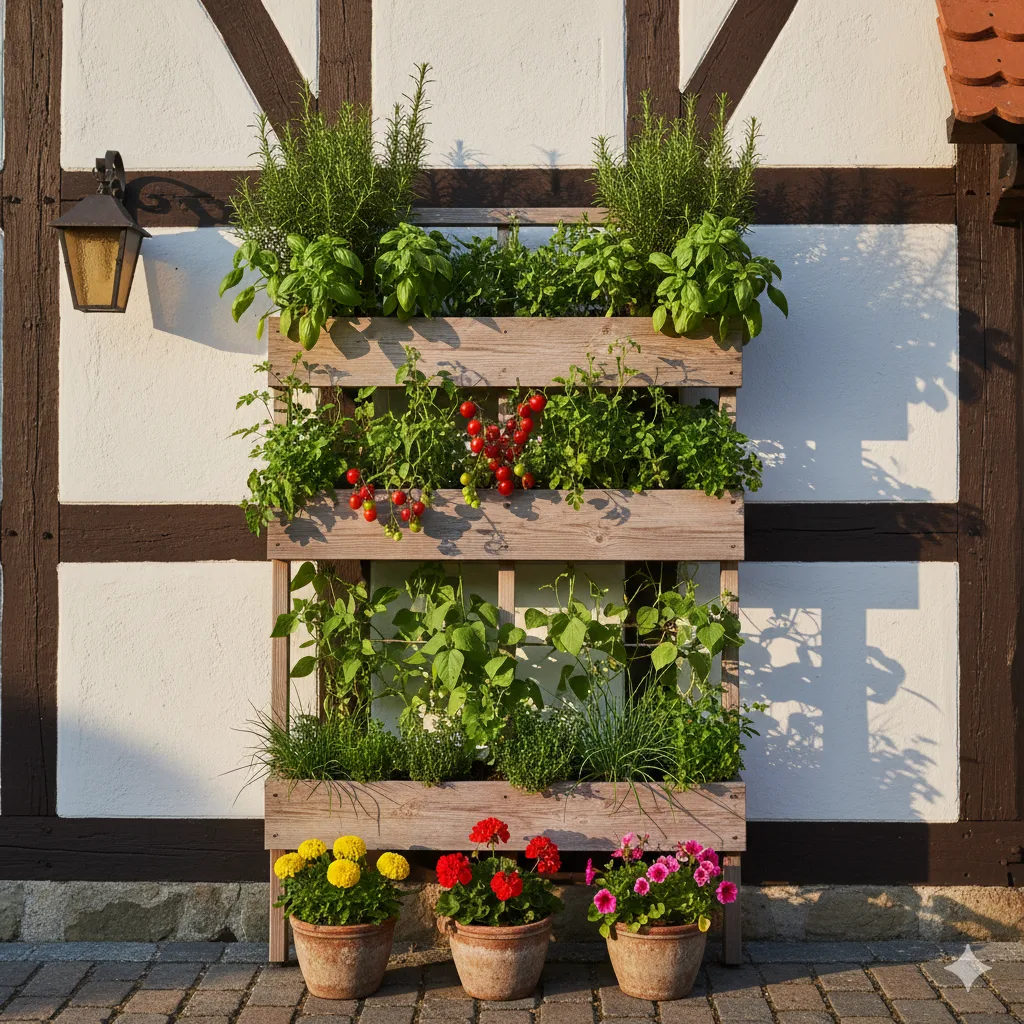
17. Vertical Veggie Walls
When ground space is scarce, go vertical. Vertical veggie gardens are creative garden design ideas Philippines and garden design ideas for small gardens that produce plenty in tight spaces.
Use trellises, wall-mounted planters, or stacked crates to grow climbing and trailing plants. Ideal crops include cherry tomatoes, pole beans, cucumbers, and even strawberries. A drip irrigation line can keep them watered efficiently.
This setup doubles as living décor — perfect for patios, balconies, or side yards. Mixing edible plants with ornamentals like nasturtiums or marigolds adds beauty while deterring pests.
In tropical climates, locate your wall on a side that gets morning sun but avoids harsh afternoon rays. In cooler regions, aim for maximum light exposure to boost growth.
18. Kitchen Garden Nook
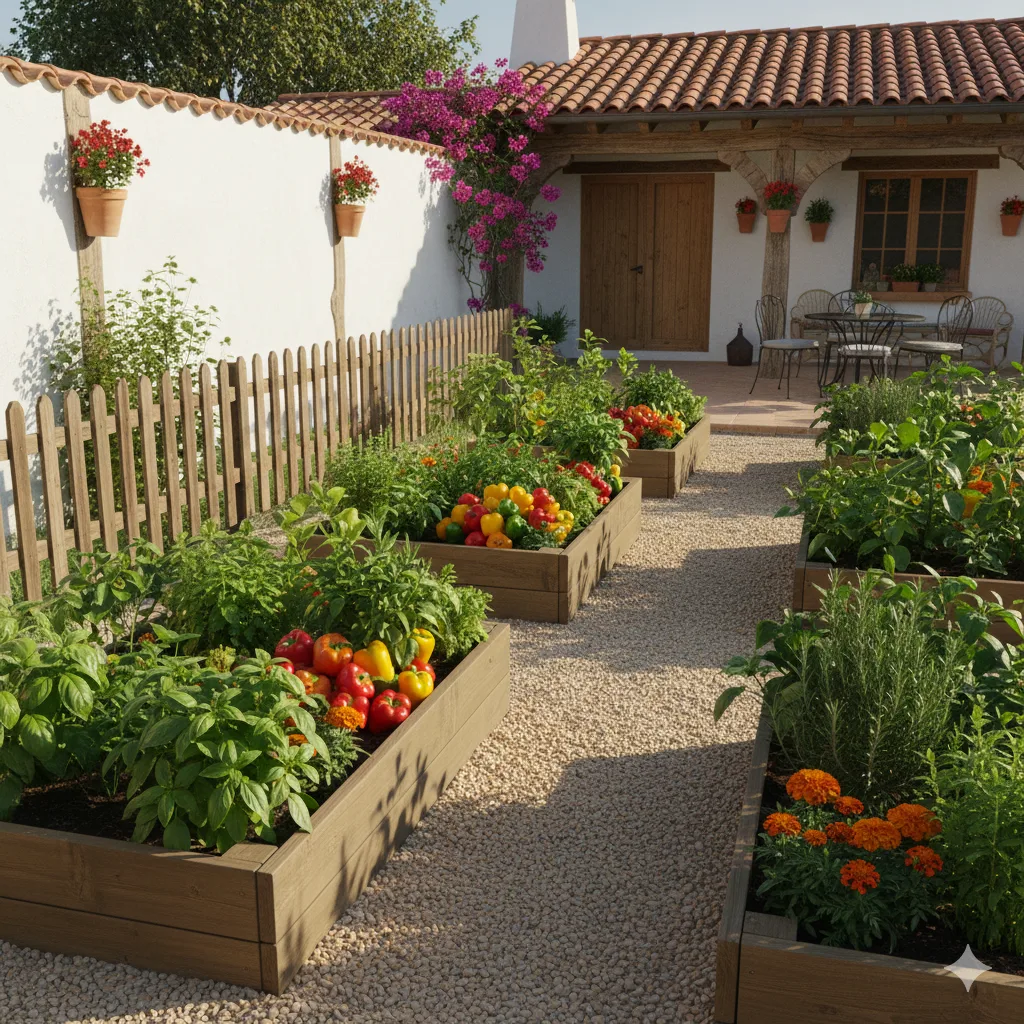
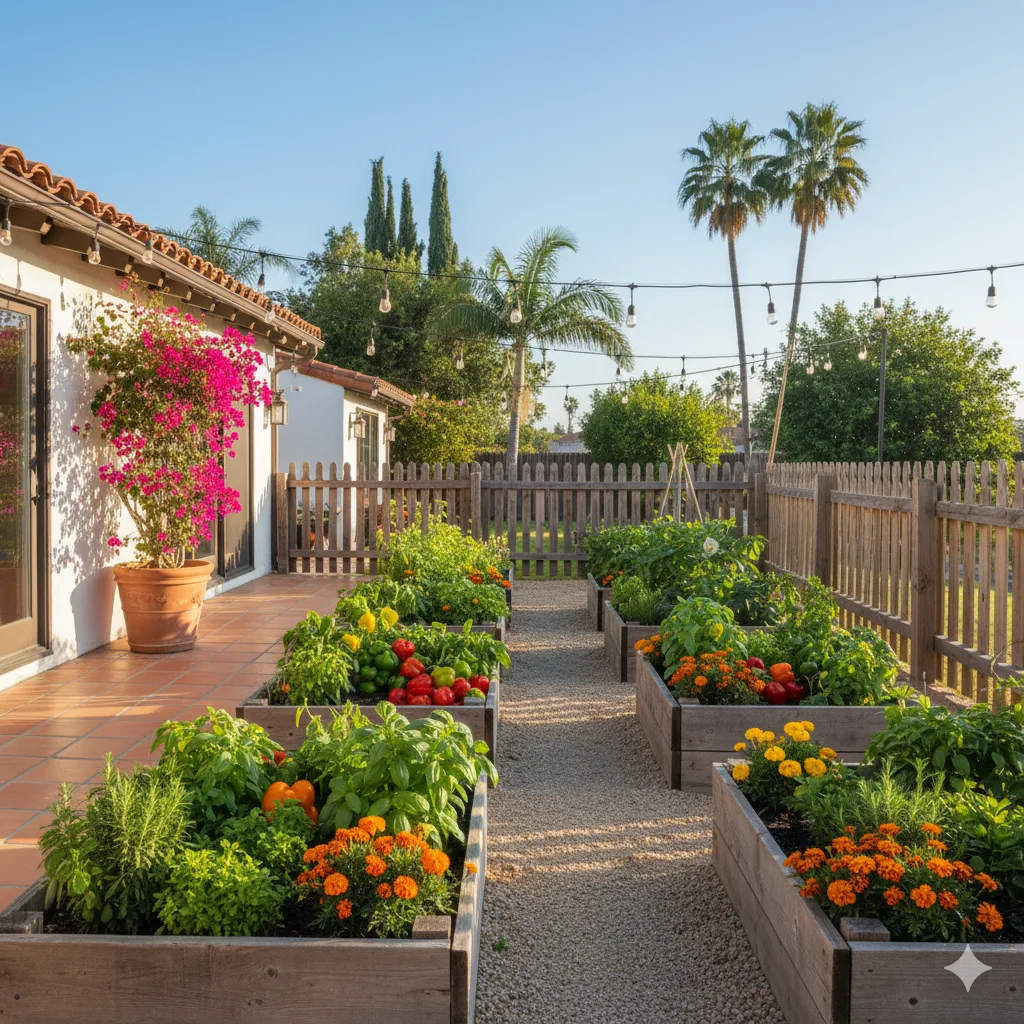
A kitchen garden — or “potager” — combines beauty and utility right outside your door. It’s one of the most elegant vegetable garden design ideas and a great fit for garden design ideas for home.
Design it near your kitchen or patio for easy access to fresh herbs and vegetables. Create a simple layout with curved beds or symmetrical rows divided by stepping stones. Mix herbs like basil, mint, and parsley with colorful vegetables such as peppers or chard for a decorative look.
For added charm, border your kitchen garden with boxwood hedges or wooden edging. In smaller yards, use tall containers and hanging baskets to save space.
According to the University of California Agriculture and Natural Resources , integrating edibles into ornamental gardens improves soil health, reduces pests, and encourages pollinators ( (3) ).
Finish with rustic touches — a small watering can, lanterns, or trellises for climbing beans — to make the area feel lived-in and welcoming.
School and Community Gardens
Gardens aren’t just for homes. Schools and communities can use them to teach, connect, and grow food sustainably. These garden design ideas for school and public spaces focus on hands-on learning, teamwork, and environmental awareness.
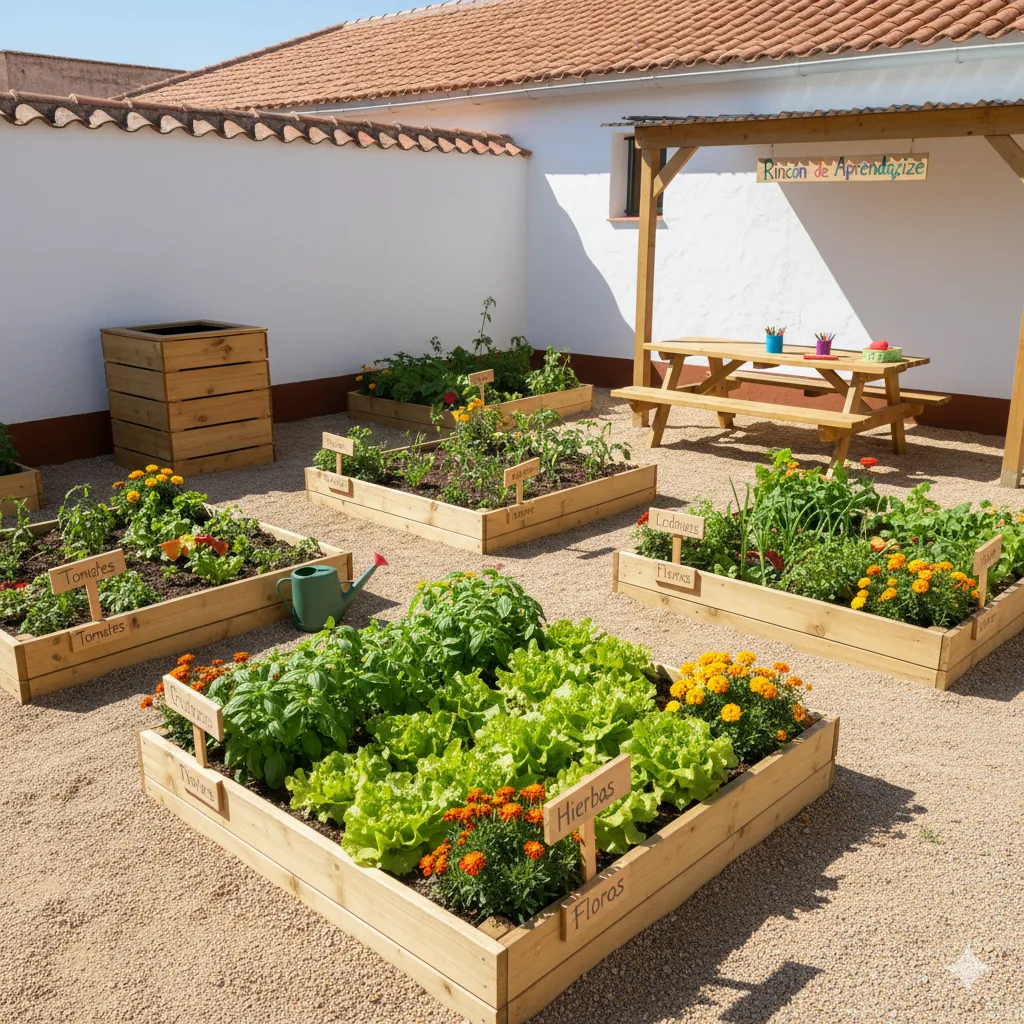
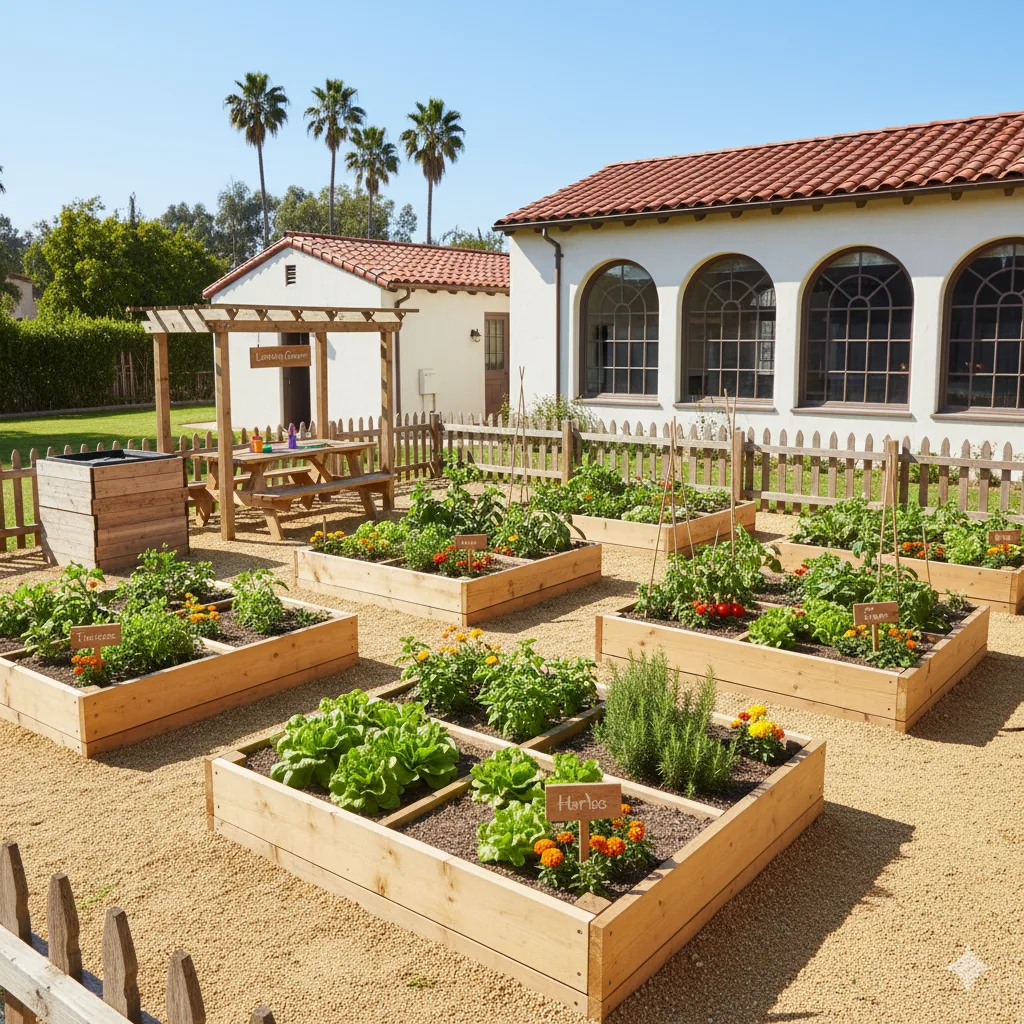
19. Educational Plant Zones
School gardens thrive when organized by purpose. Creating separate “zones” makes it easier for students to learn and explore. These zones can include vegetable beds, flower plots, compost areas, and small pollinator gardens.
Start with clear walkways using gravel or stepping stones so children can move safely between sections. Label each zone with colorful signs explaining what’s growing — herbs, flowers, or vegetables — and their uses. Include a shaded seating area or a small gazebo for outdoor lessons.
In garden design ideas drawing projects, teachers can involve students in sketching the layout before planting. This builds ownership and understanding of how space, sunlight, and soil all interact.
Educational zones also work in community settings, helping neighbors share both work and harvests.
20. Butterfly and Bee Gardens
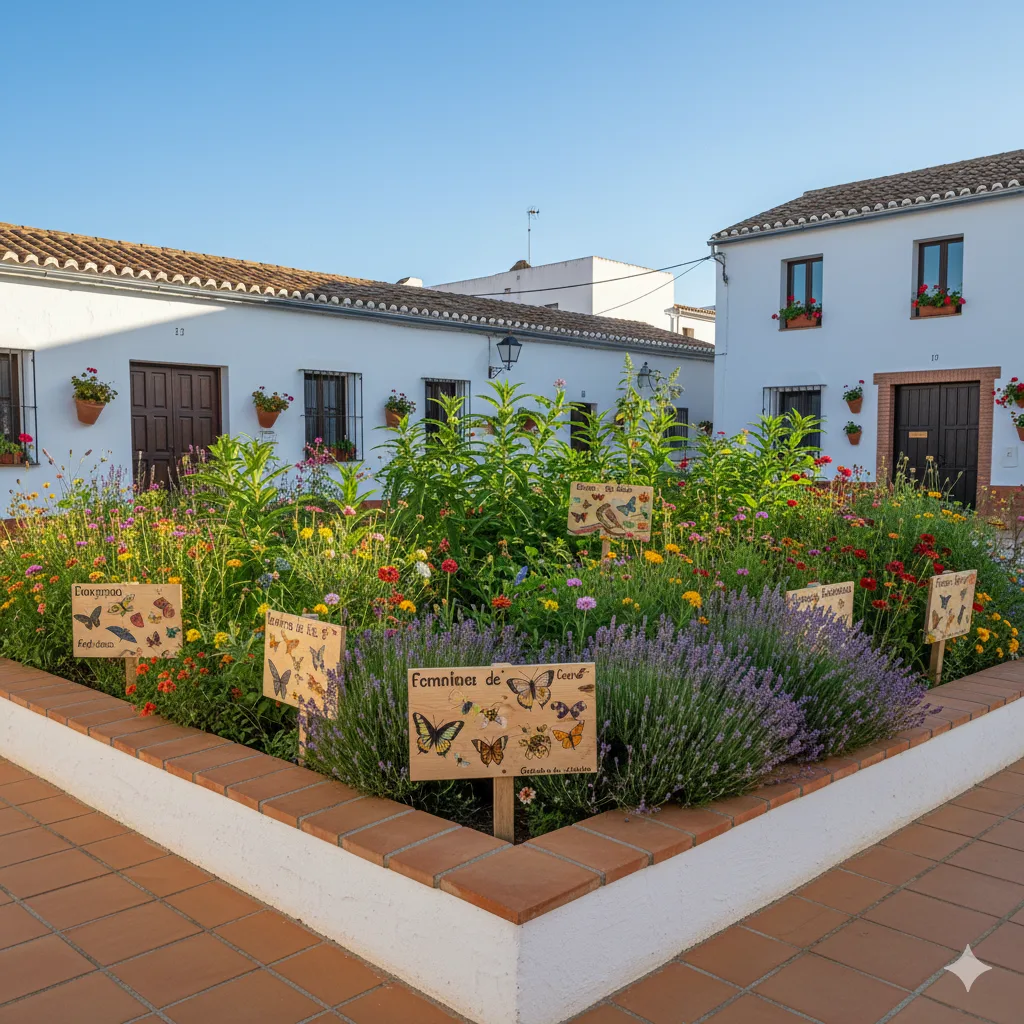
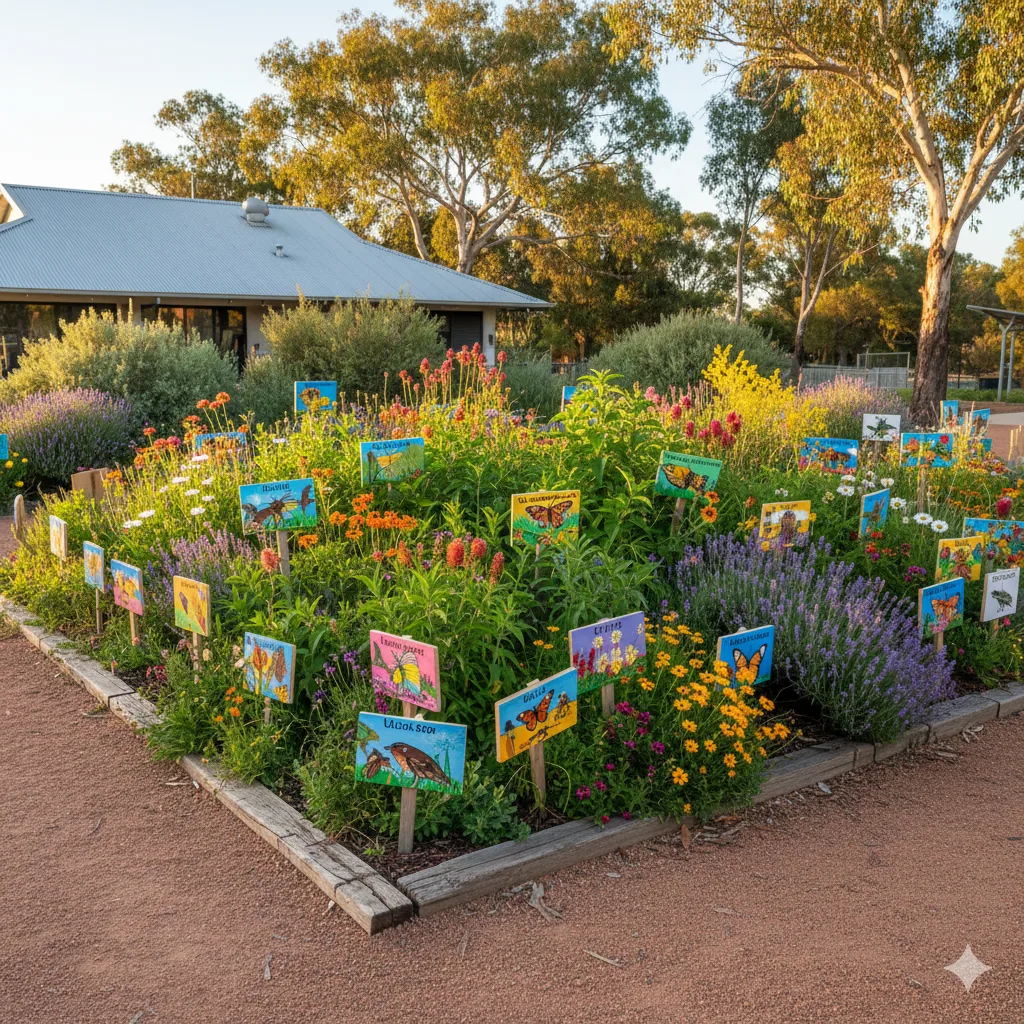
Pollinator-friendly gardens are one of the most rewarding garden design ideas for school or neighborhood spaces. They attract butterflies, bees, and hummingbirds while teaching about ecology.
Choose nectar-rich flowers like milkweed, lavender, and marigolds. Add flowering shrubs and native wildflowers to keep blooms going across seasons. Avoid pesticides to protect the visiting pollinators.
A small water dish or shallow pond with stones provides safe drinking spots for insects. Surround the area with signs or educational posters explaining how pollination supports food production.
In garden design ideas Philippines , use tropical species such as ixora, hibiscus, and santan. In Australia or the UK , native daisies, bottlebrush, and foxgloves work well.
According to the Xerces Society for Invertebrate Conservation , diverse pollinator gardens improve fruit yield and support biodiversity even in urban settings ( (4) ).
21. Recycled Material Gardens
Recycled gardens teach both creativity and sustainability. These are wonderful garden design ideas for school projects or community programs that encourage environmental responsibility.
Use old tires as colorful planters, turn plastic bottles into vertical gardens, or repurpose wooden pallets as raised beds. Broken pots, tin cans, and scrap wood can all find new life as garden features.
Arrange these materials in sections by color or plant type for visual order. Kids and volunteers can paint and decorate the containers, turning the project into a collaborative art piece.
To make the garden educational, include composting stations or rainwater collection barrels. It’s a hands-on way to teach about recycling, soil care, and sustainable food growing.
Recycled gardens are also great for garden design ideas on a budget , since most materials can be gathered for free.
Image: A colorful school garden made from painted tire planters, bottle walls, and wooden pallet beds filled with vegetables and flowers, surrounded by mulch paths.
Structural Garden Elements
Every great garden needs structure — the bones that hold everything together. Elements like gates, borders, walls, and sheds define space, add charm, and make maintenance easier. These gardening design ideas balance hardscape and plants, helping your garden feel organized yet natural.
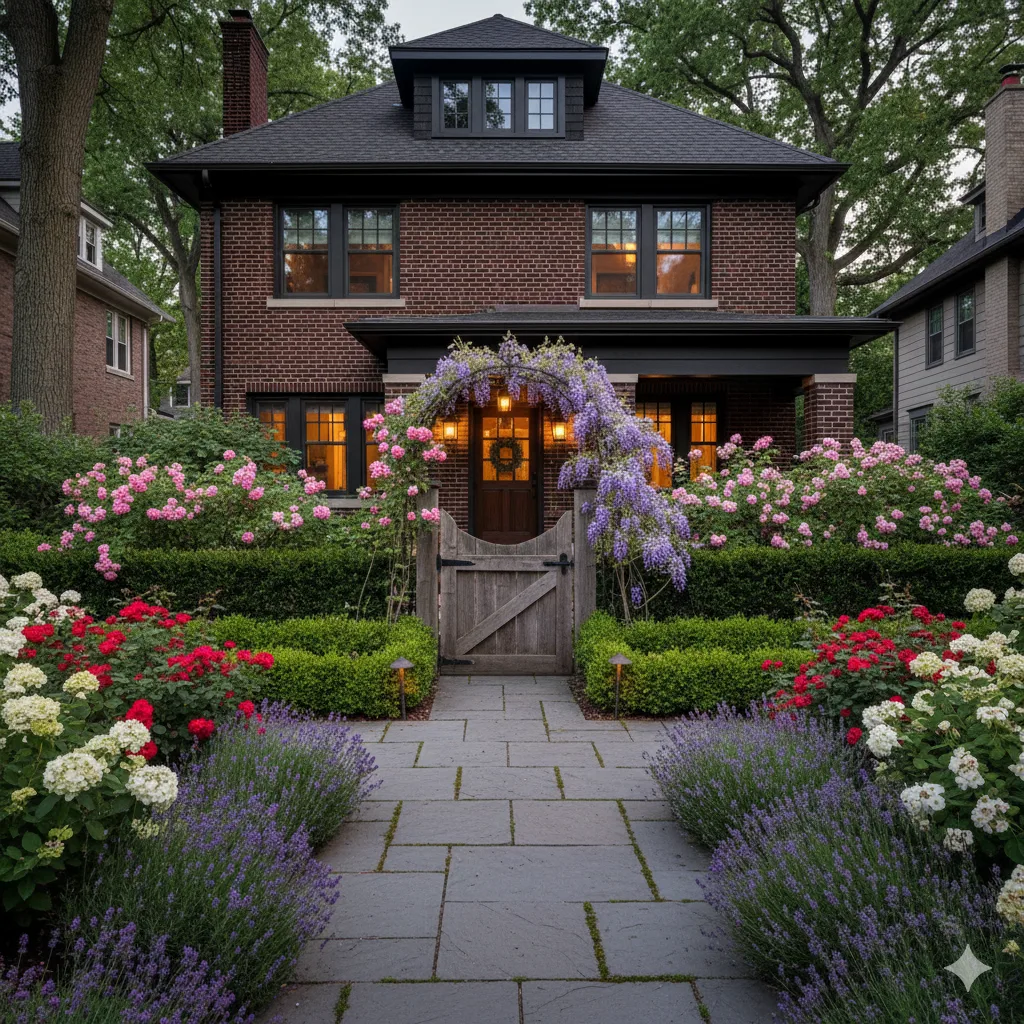
22. Garden Gate Focal Points
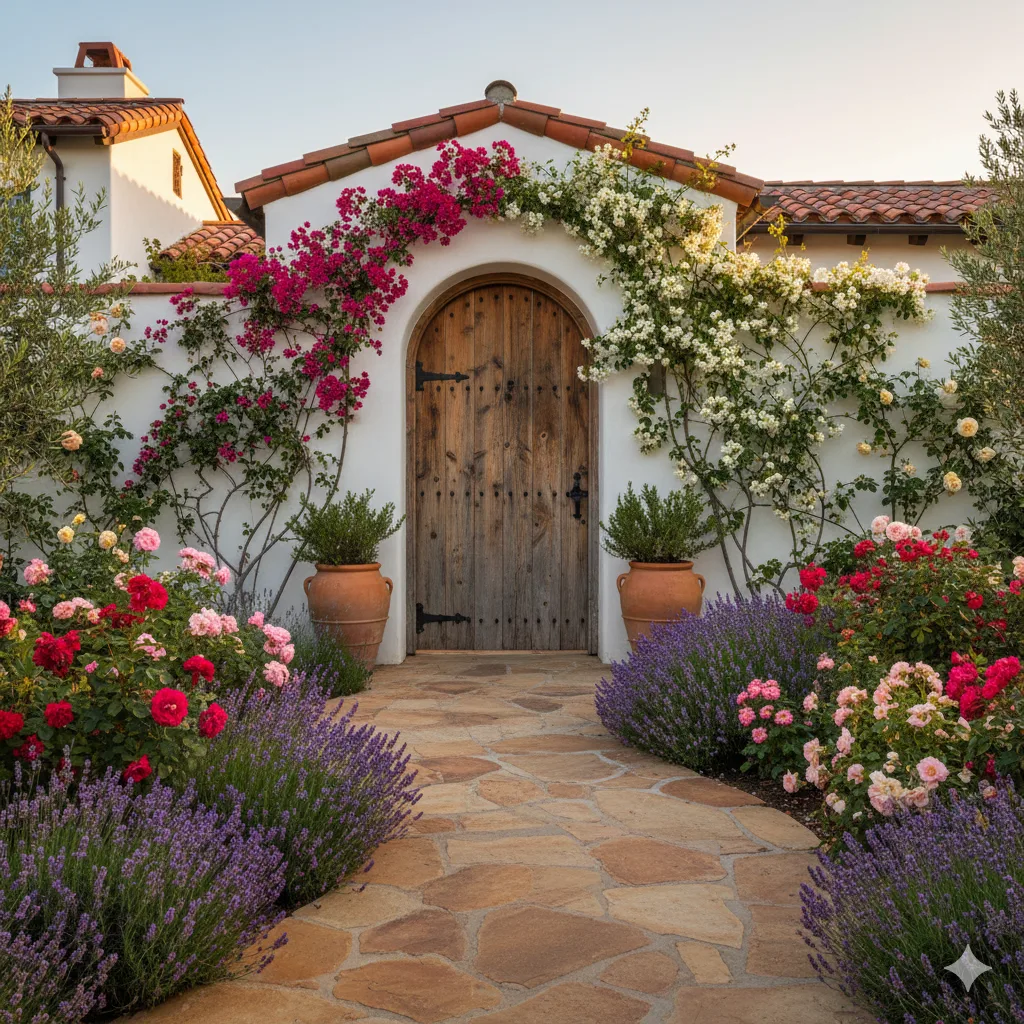
A beautiful garden gate sets the tone before anyone steps inside. It’s not just an entrance — it’s a statement. Garden gate design ideas range from rustic to modern, depending on your space and personality.
Start by choosing a gate material that complements your garden’s overall style. Wooden gates suit cottage or traditional gardens, while wrought iron or metal gates fit modern landscapes. For small gardens, a simple arch gate surrounded by climbing roses or ivy creates instant charm.
You can also paint the gate in bold colors — soft sage green for a countryside feel, or black for a sleek, contemporary look. Framing the gate with shrubs or trellised vines turns it into a living piece of art.
In larger spaces, pair your gate with a pathway leading to a central focal point like a fountain, bench, or tree.
23. Creative Garden Borders
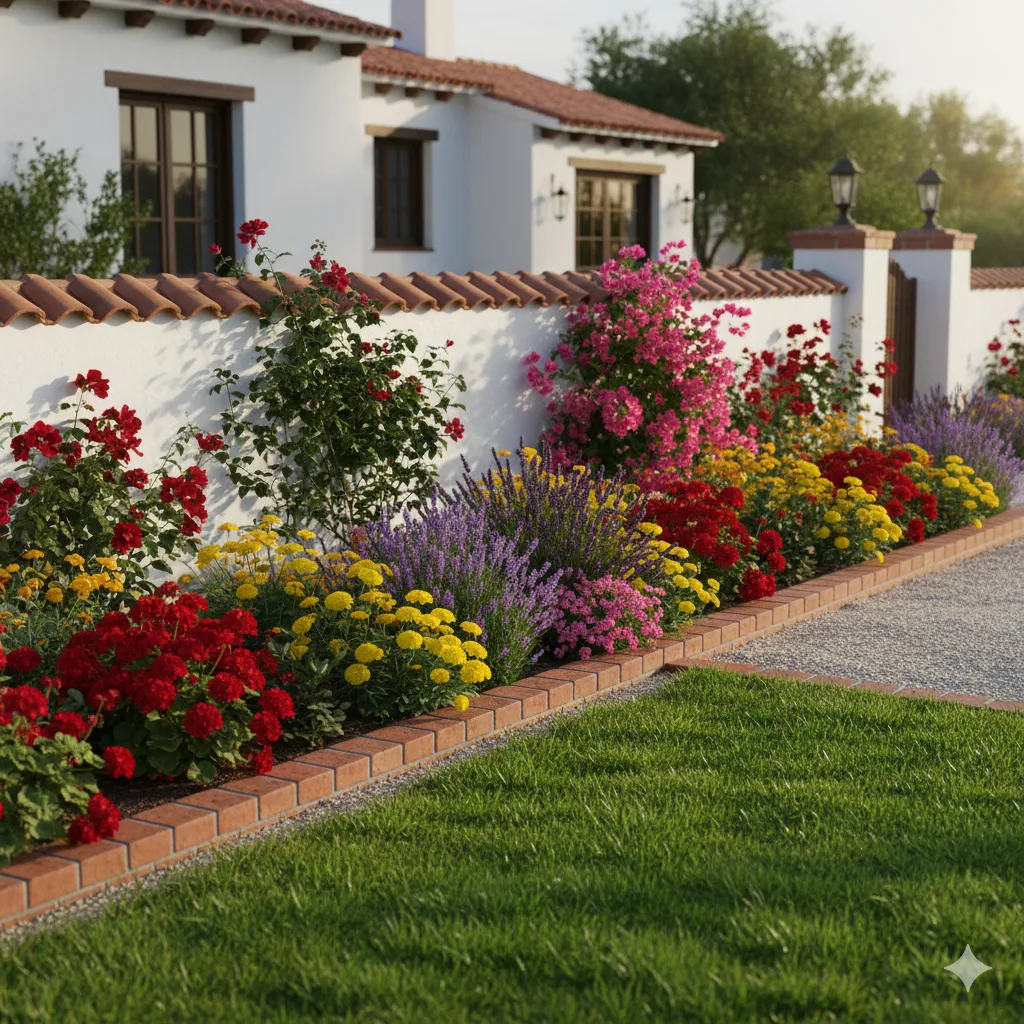
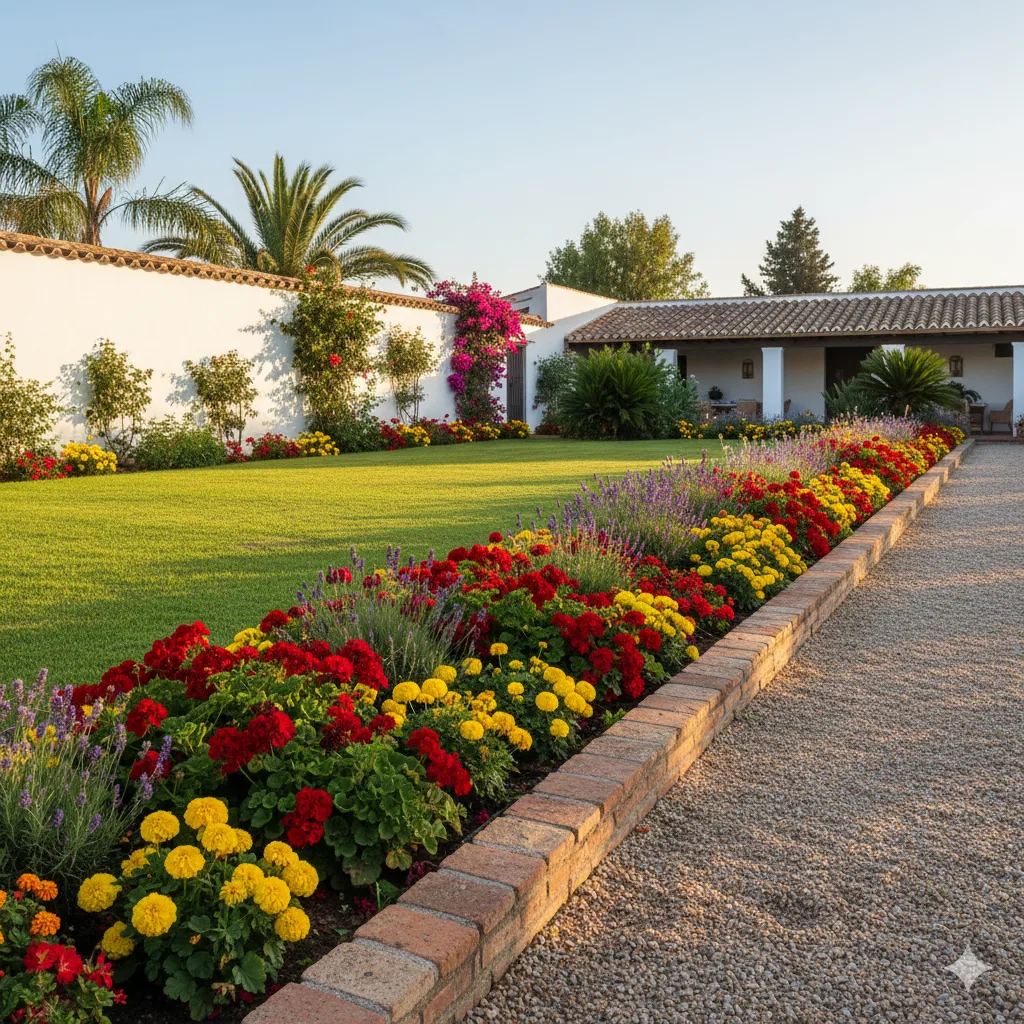
Borders define boundaries and bring order to your garden layout. They separate lawns from flowerbeds, guide movement, and keep plants contained. Garden border design ideas can be elegant, modern, or purely functional.
Start by choosing materials that complement your garden style. Use natural stone for a rustic look, metal edging for modern lines, or reclaimed bricks for a vintage touch. In garden design ideas UK , curved borders soften formal gardens, while in Australia and the Philippines , straight edges suit tropical layouts.
Plant along your borders to add color and texture. Low hedges, ornamental grasses, or creeping flowers like alyssum and thyme work beautifully. Adding a thin layer of mulch or gravel helps highlight the border and keeps weeds down.
Creative edging doesn’t just look good — it simplifies mowing and maintenance, too.
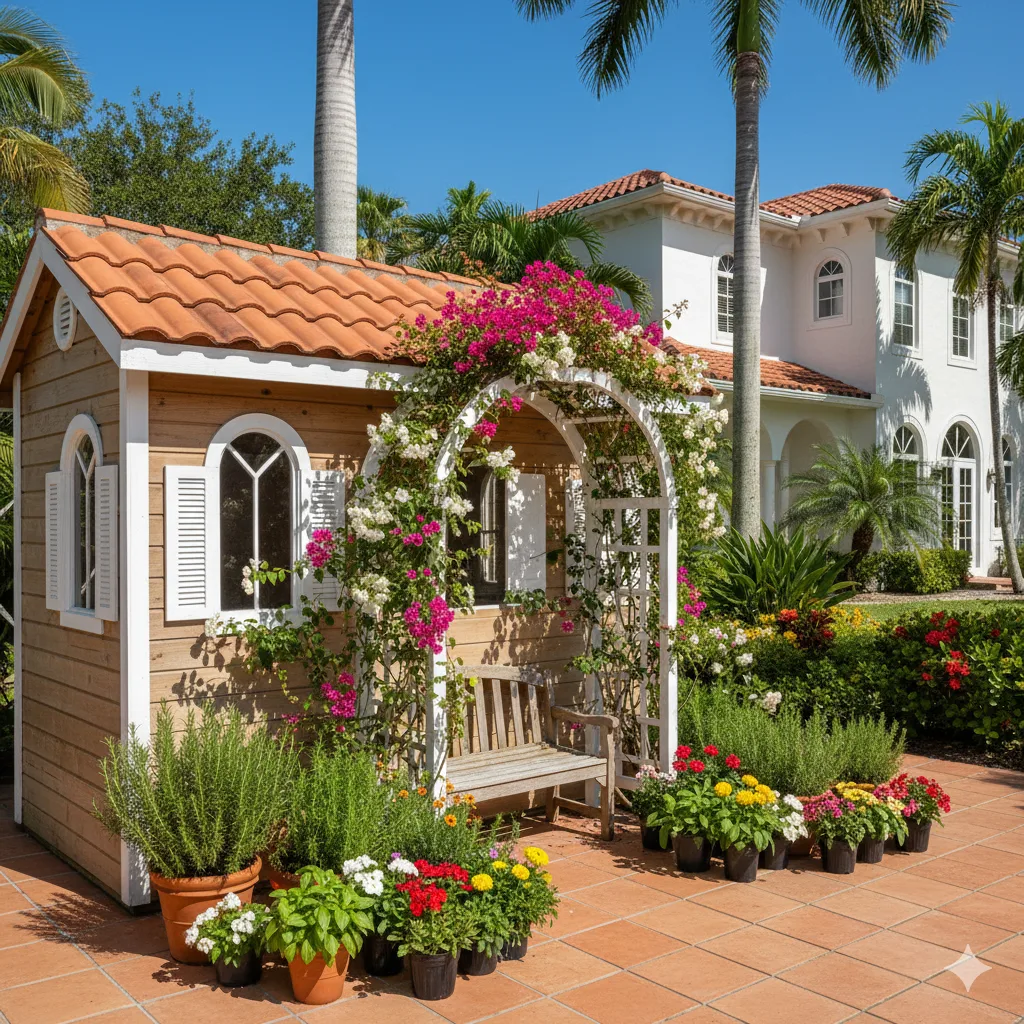
24. Charming Garden Sheds
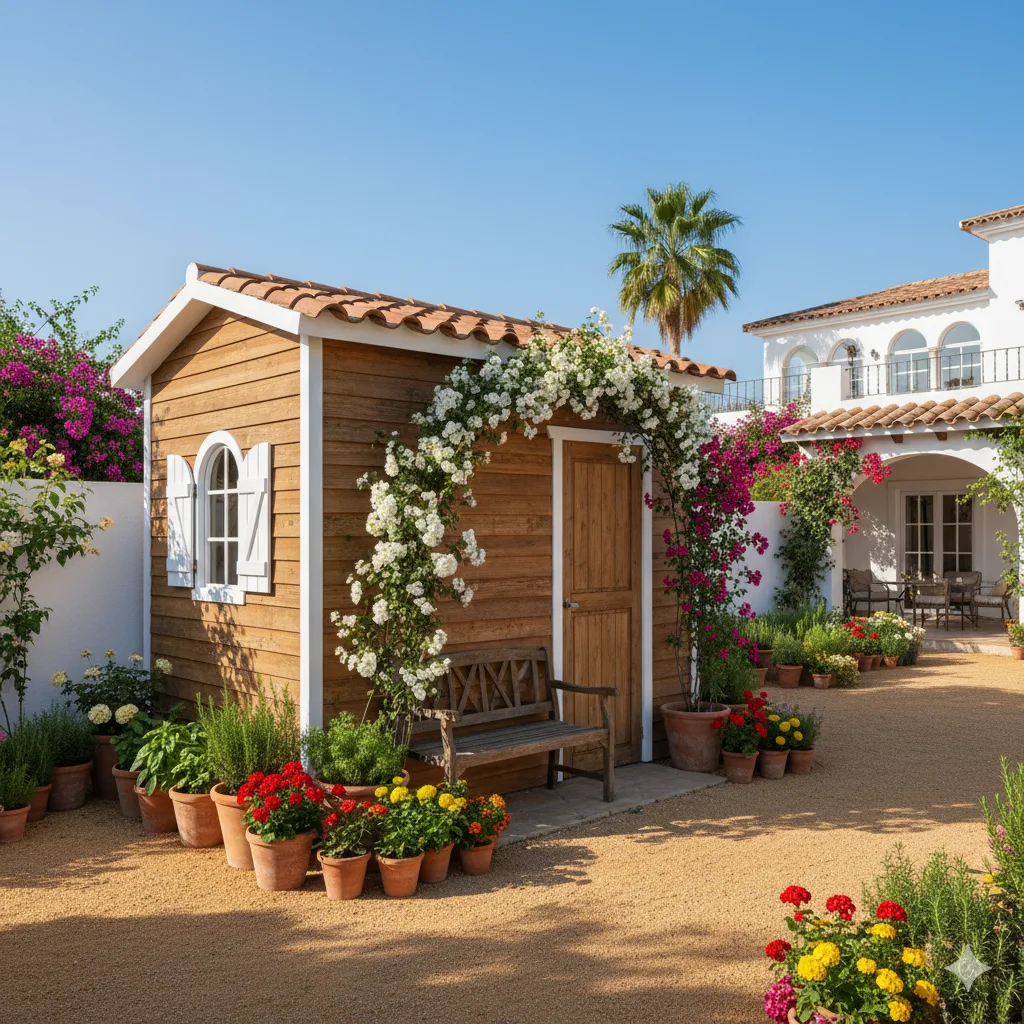
A garden shed can be much more than a storage unit — it can serve as a design centerpiece or cozy retreat. Garden shed design ideas let you combine function with style.
If space allows, build a small shed with a pitched roof and windows for natural light. Paint it to match your house or give it a pop of personality with cheerful colors. Surround it with climbing plants or trellises to help it blend into the garden.
Inside, use shelves and hooks for efficient storage of tools, seeds, and pots. You can even convert part of the shed into a potting station or mini greenhouse. For large garden design ideas , add a small porch or seating area outside for reading or morning coffee.
In garden design ideas Australia or the Philippines , use weatherproof materials like treated wood or metal siding to withstand heat and humidity.
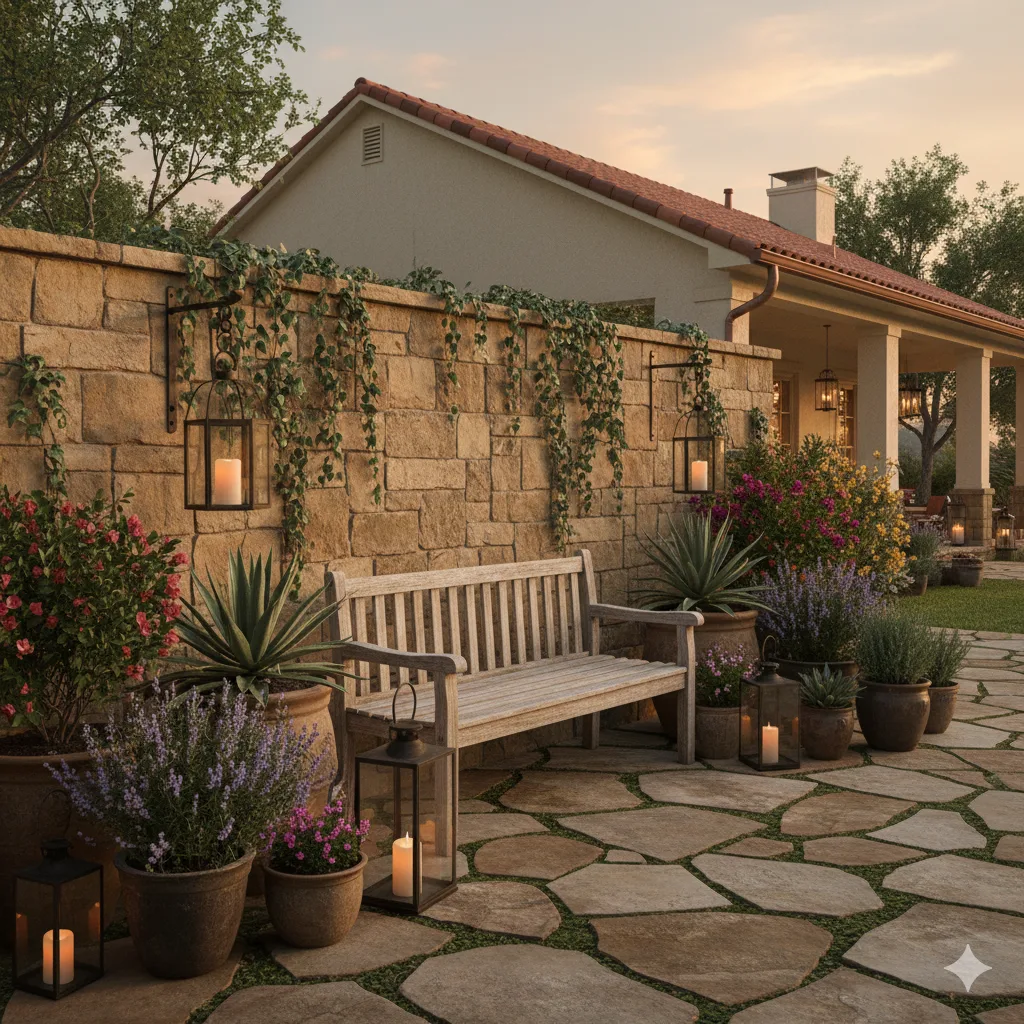
25. Decorative Garden Walls
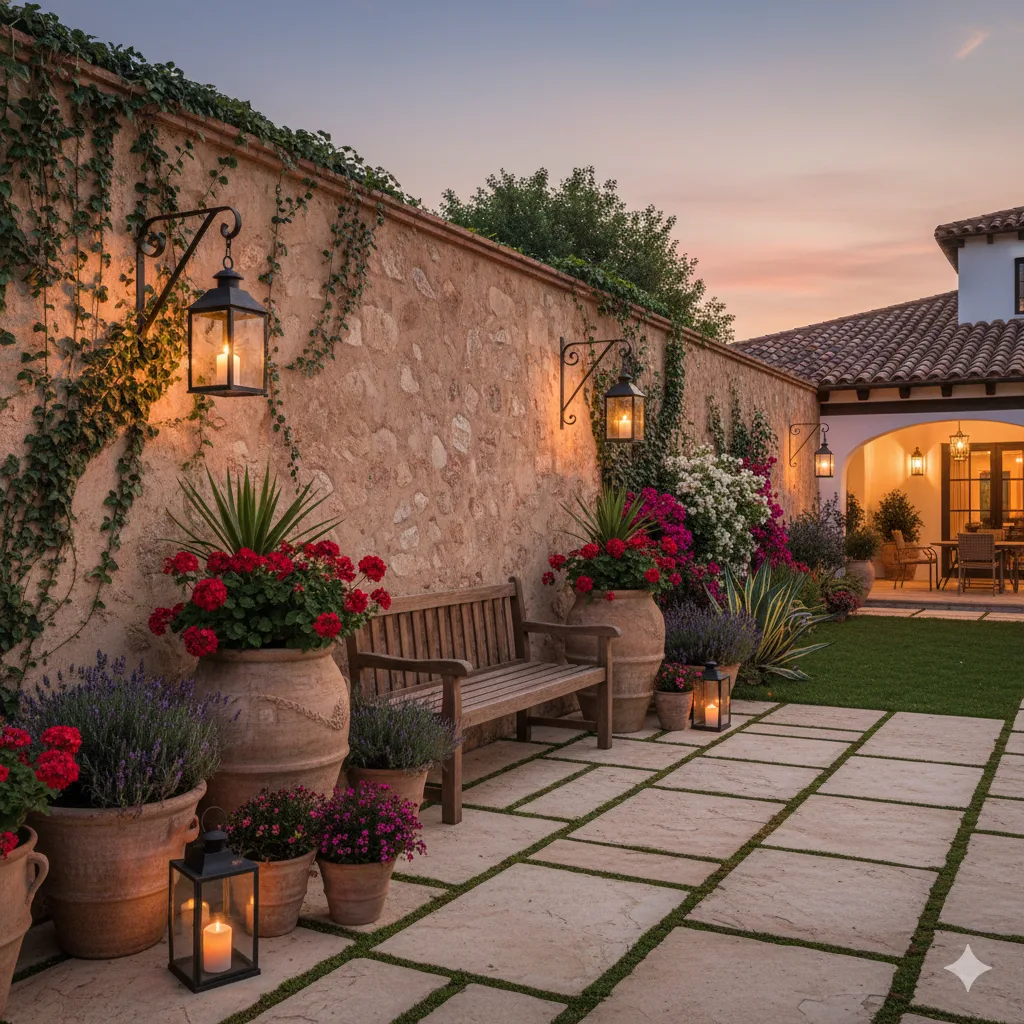
Garden walls define boundaries and add texture to outdoor spaces. They can serve as privacy screens, retaining walls, or simply aesthetic backdrops for plants. Garden wall design ideas can range from sleek concrete finishes to rustic stone or brickwork.
For smaller gardens, keep walls low and light-colored to prevent the space from feeling enclosed. In larger gardens, higher walls can create cozy, private sections for dining or lounging. Adding creepers like ivy, jasmine, or bougainvillea turns plain walls into living features.
You can also use walls as a design opportunity — include built-in seating, shelves for potted plants, or even water features. For modern garden design ideas , smooth rendered walls paired with dark wooden furniture create a stylish contrast.
According to the University of Melbourne’s School of Design , garden walls improve microclimates by regulating temperature and providing wind protection, helping plants thrive in both hot and cool regions ( (5) ).
8. Modern and Artistic Garden Features
Modern gardens combine clean lines, functional design, and artistic flair. They often use structure, contrast, and texture instead of heavy planting. These modern garden design ideas and gardening design ideas show how to add personality and elegance to any space — from minimalist courtyards to large open yards.
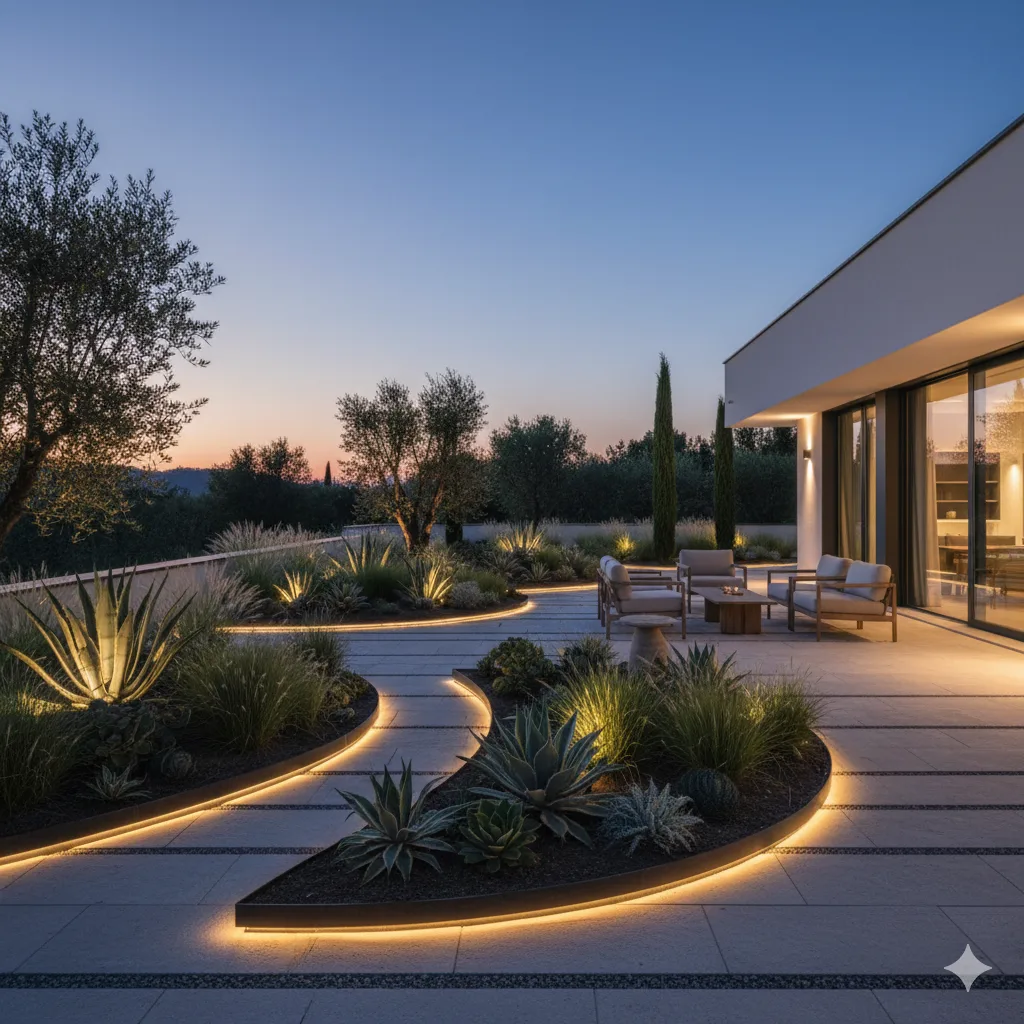
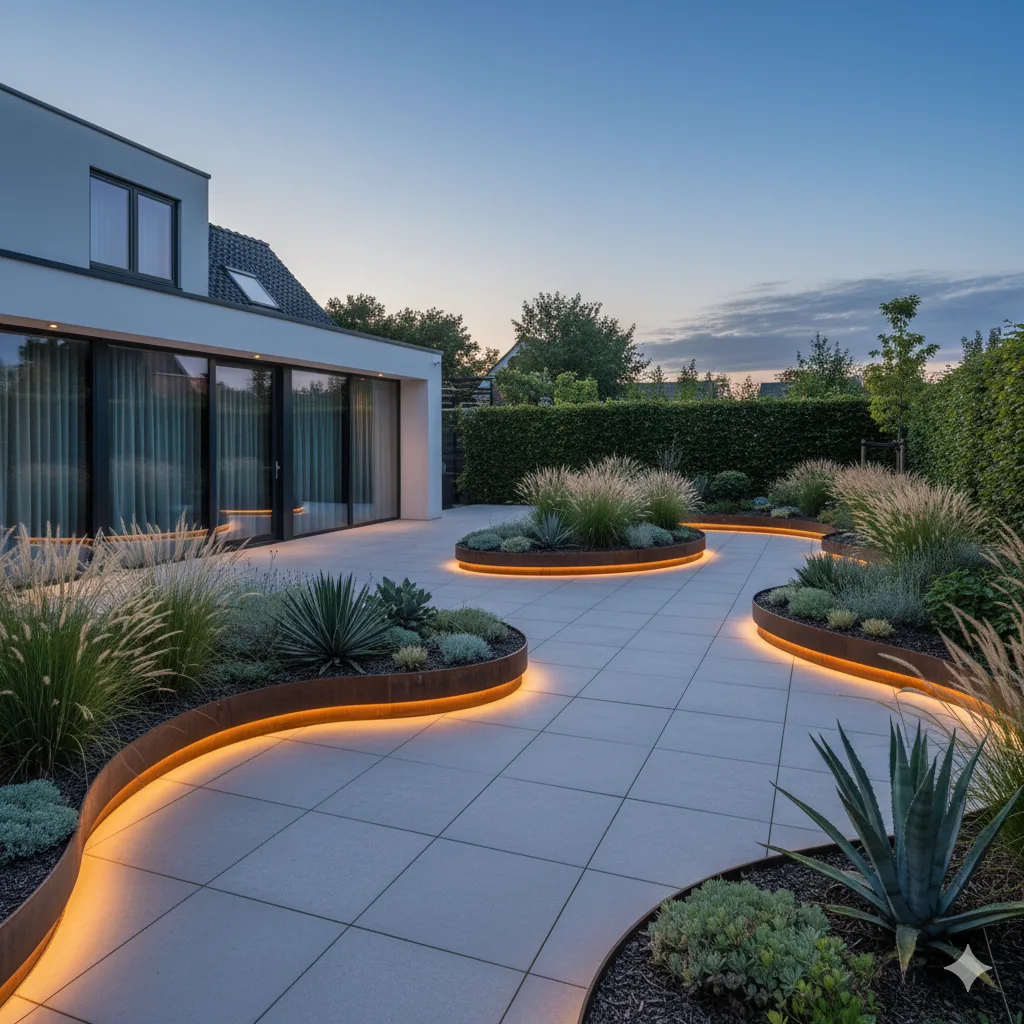
26. Sculptural Garden Beds
A sculptural garden bed turns planting into art. Instead of traditional rows or squares, use bold shapes — curves, waves, or geometric angles — to give your garden flow and character. These garden landscape design ideas work beautifully in modern homes and larger gardens that need visual structure.
Start by sketching your layout on paper or using a simple garden design ideas drawing app. Raised steel or concrete planters can define sharp lines, while curved beds edged in stone feel softer and more natural.
Choose plants that match the form. Tall ornamental grasses or columnar shrubs accentuate vertical shapes; cascading plants like ivy or creeping thyme soften edges. Add contrasting textures — smooth gravel beside leafy greens or polished stone next to tall reeds — for dimension.
Lighting enhances sculptural beds dramatically at night. Use ground lights or uplighting to highlight plant forms and shadows.
27. Lighting and Pathway Design
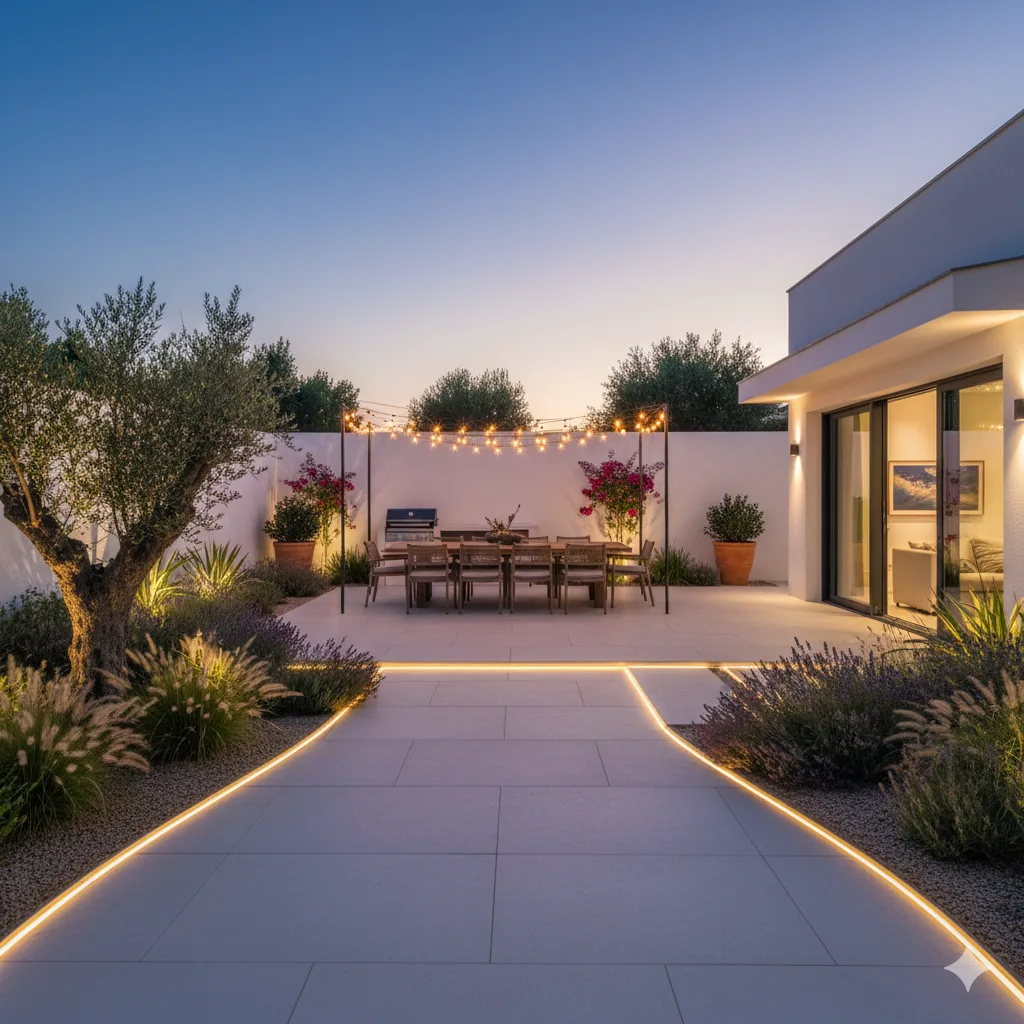
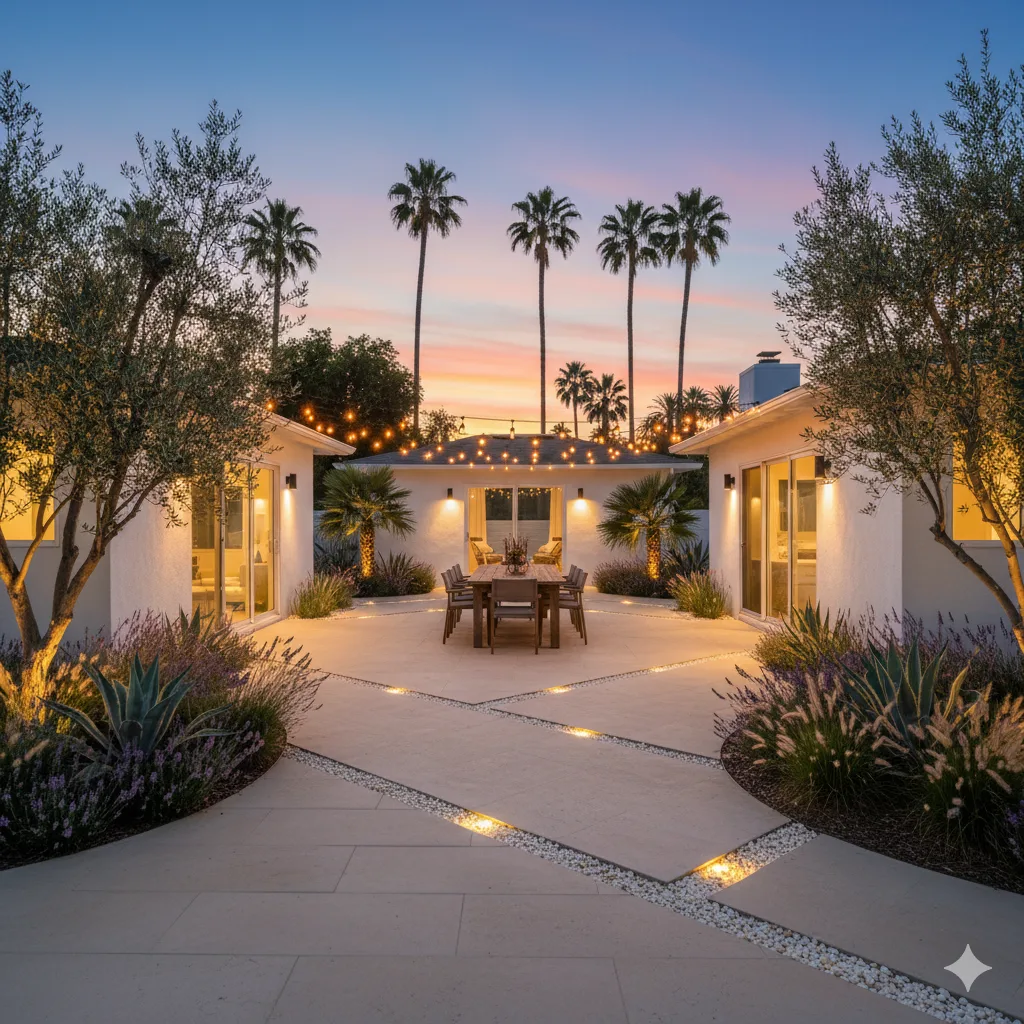
Outdoor lighting transforms your garden after dark, turning it into a tranquil and usable space. Properly designed paths and lights also improve safety and highlight your garden’s best features — a must for garden landscape design ideas and garden patio design ideas.
Use a mix of lighting types:
- Path lights to guide movement.
- Spotlights to accent trees, sculptures, or water features.
- String lights or lanterns to add warmth and ambiance.
Solar options are budget-friendly and energy-efficient, while LED fixtures last longer and can be easily hidden among plants.
In modern garden design ideas , paths often feature geometric paving — large square stones or smooth concrete slabs with gravel joints. Consider aligning lights along both sides for a sleek, symmetrical look.
For small gardens, indirect lighting (like hidden LED strips under steps or planters) creates the illusion of depth. In larger gardens, mix brighter zones with darker ones for visual contrast.
According to the University of Nevada Extension , layered outdoor lighting increases both nighttime safety and property value, while extending outdoor usability well beyond daylight hours ( (6) ).
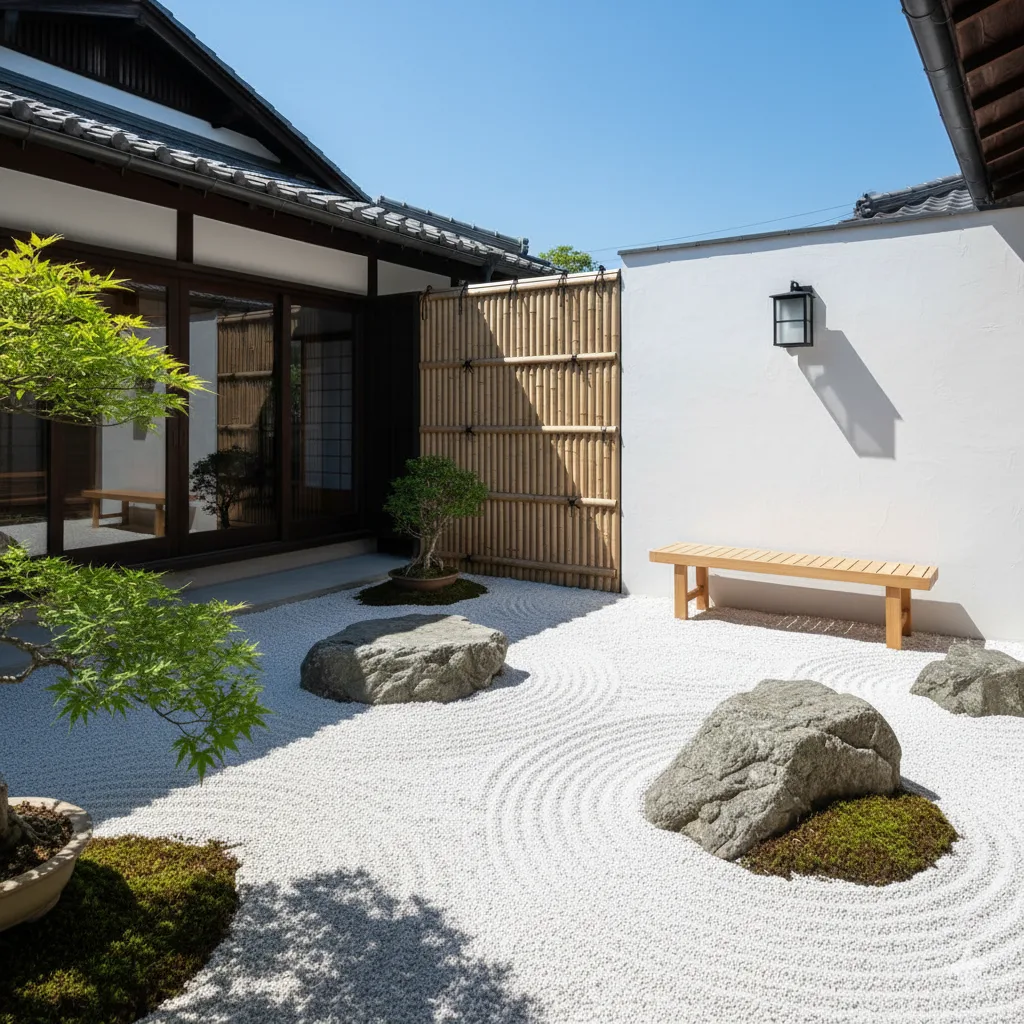
28. Minimalist Zen Gardens
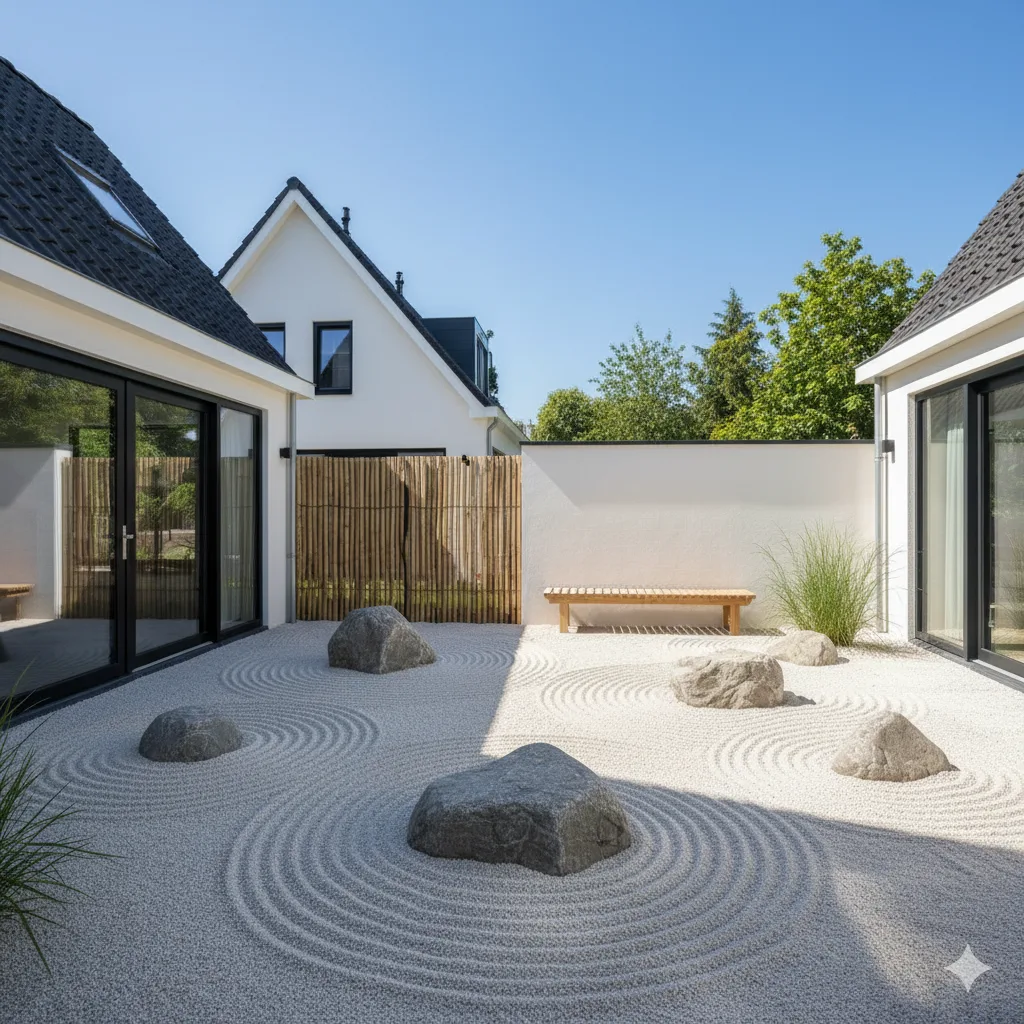
A Zen garden emphasizes simplicity, balance, and calm. It’s one of the most timeless garden design ideas photos and works especially well for small garden design ideas or rooftop retreats.
Start with a foundation of fine gravel or sand. Rake it into smooth ripples that mimic flowing water. Add a few carefully placed rocks or boulders to represent islands or mountains — these are the visual anchors of the space.
Incorporate minimal plant life: dwarf pines, bamboo, moss, or ornamental grasses. Fewer elements create a stronger sense of focus. Use wood, stone, and natural textures for benches, edging, or lanterns to maintain harmony.
Zen gardens are perfect for garden design ideas Australia and garden design ideas UK because they adapt to various climates. They also make excellent small roof garden design ideas — low weight, low maintenance, and endlessly peaceful.
Enhance the serenity with a small water feature or a wind chime to create soft background sound.
9. Large and Specialty Gardens
Big gardens offer space to explore ideas that blend beauty, relaxation, and sustainability. But even specialty gardens — like rooftops or garden houses — can create a lasting impression when designed thoughtfully. These large garden design ideas and garden design ideas for home show how to create outdoor spaces that feel both grand and personal.
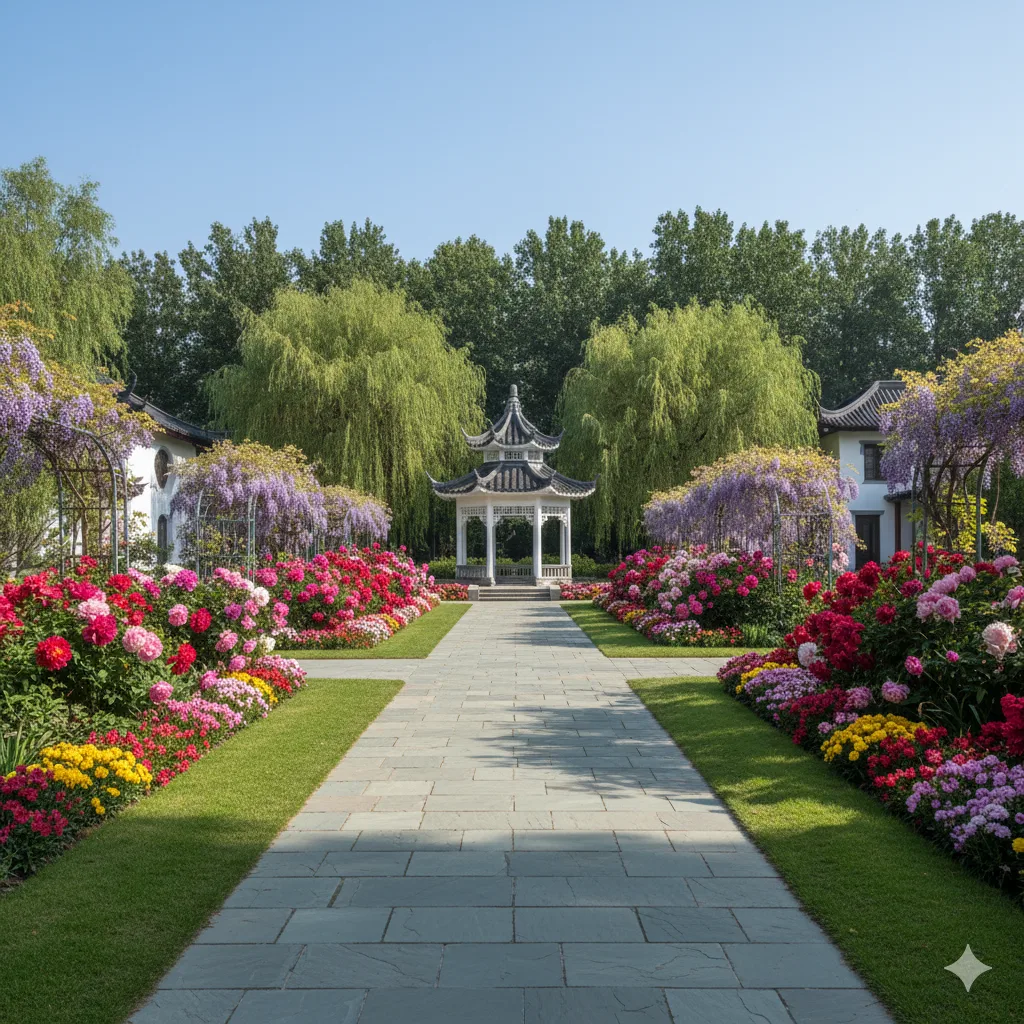
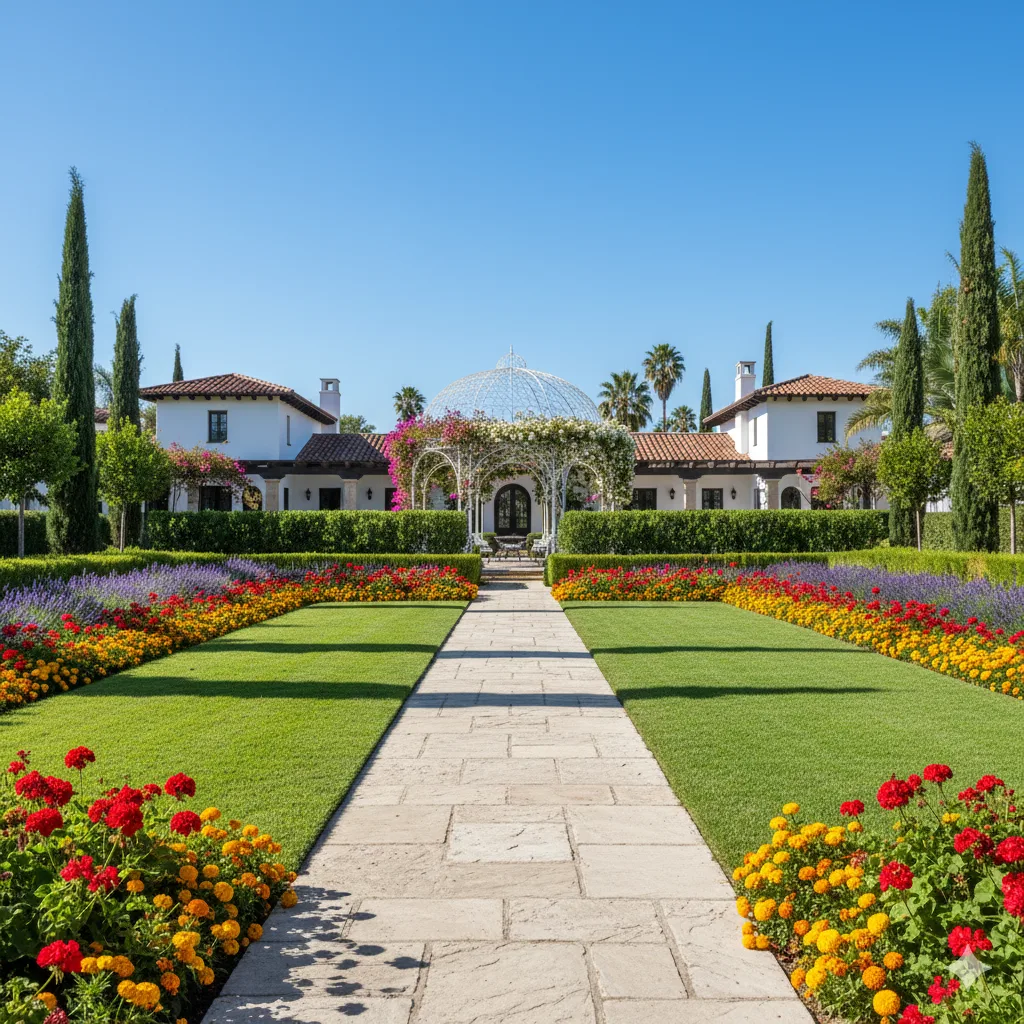
29. Expansive Lawn Layouts
When you have the space, an open lawn becomes the canvas for your entire landscape. Large lawns provide freedom — for picnics, gatherings, or just a peaceful view — but they work best when balanced with structure and purpose.
Begin by dividing the area into zones. You can create a central green space surrounded by curved planting beds, stone pathways, or trees. Border the edges with hedges, flowering shrubs, or mixed perennials for visual depth.
For large garden design ideas , layering is key. Keep taller plants and trees toward the back, medium-height plants in the middle, and shorter flowers or ground covers near the front. This creates natural perspective and flow.
If you live in warmer regions like Australia or the Philippines , choose drought-tolerant turf or native grasses that require less water. In cooler climates like the UK , mix traditional lawn areas with wildflower patches for pollinator support.
To make mowing easier, design your garden in sweeping curves rather than tight corners. You can also break up the green expanse with focal points — a gazebo, pond, or sculpture — to guide the eye.
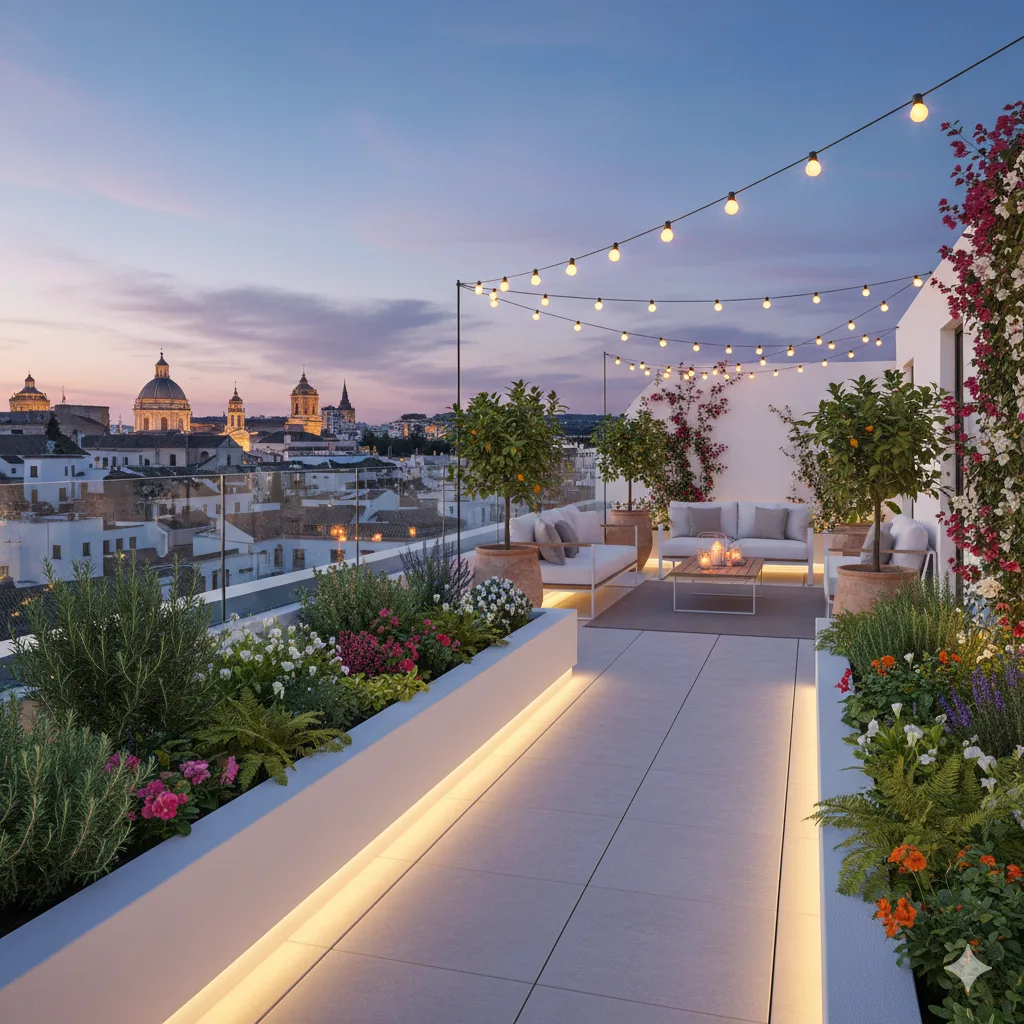
30. Roof and Balcony Gardens
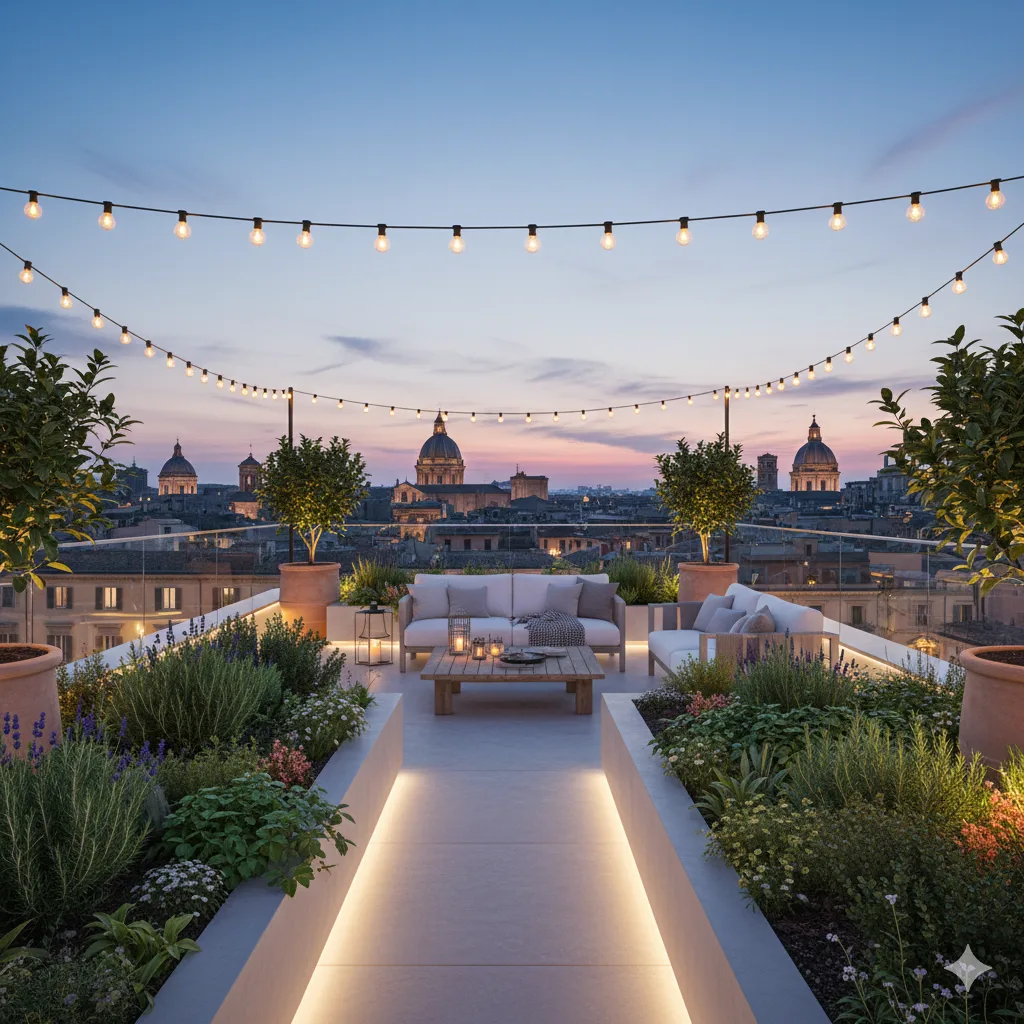
Rooftop and balcony gardens are ideal for urban living, where every square foot counts. These small roof garden design ideas create green oases in concrete environments and can help regulate building temperature while improving air quality.
Start with lightweight containers or raised beds made of fiberglass, aluminum, or treated wood. Make sure your structure can handle the extra weight and install waterproof membranes for safety. Use vertical planters and railing boxes to maximize growing space.
Focus on low-maintenance plants that tolerate wind and sun — succulents, grasses, and hardy herbs work perfectly. For a tropical look, add dwarf palms or ferns in shaded areas. You can mix in edible plants, too, like lettuce or cherry tomatoes in raised boxes.
Include seating, lighting, and small décor pieces to turn it into an outdoor living space. Rooftop gardens in the Philippines and Australia can include trellises for shade, while those in the UK may need windbreaks or taller screening plants.
According to the University of Sydney’s Urban Agriculture Research Centre , well-designed rooftop gardens can lower indoor temperatures by up to 5°C and significantly reduce rainwater runoff ( (7) ).
31. Garden House Additions
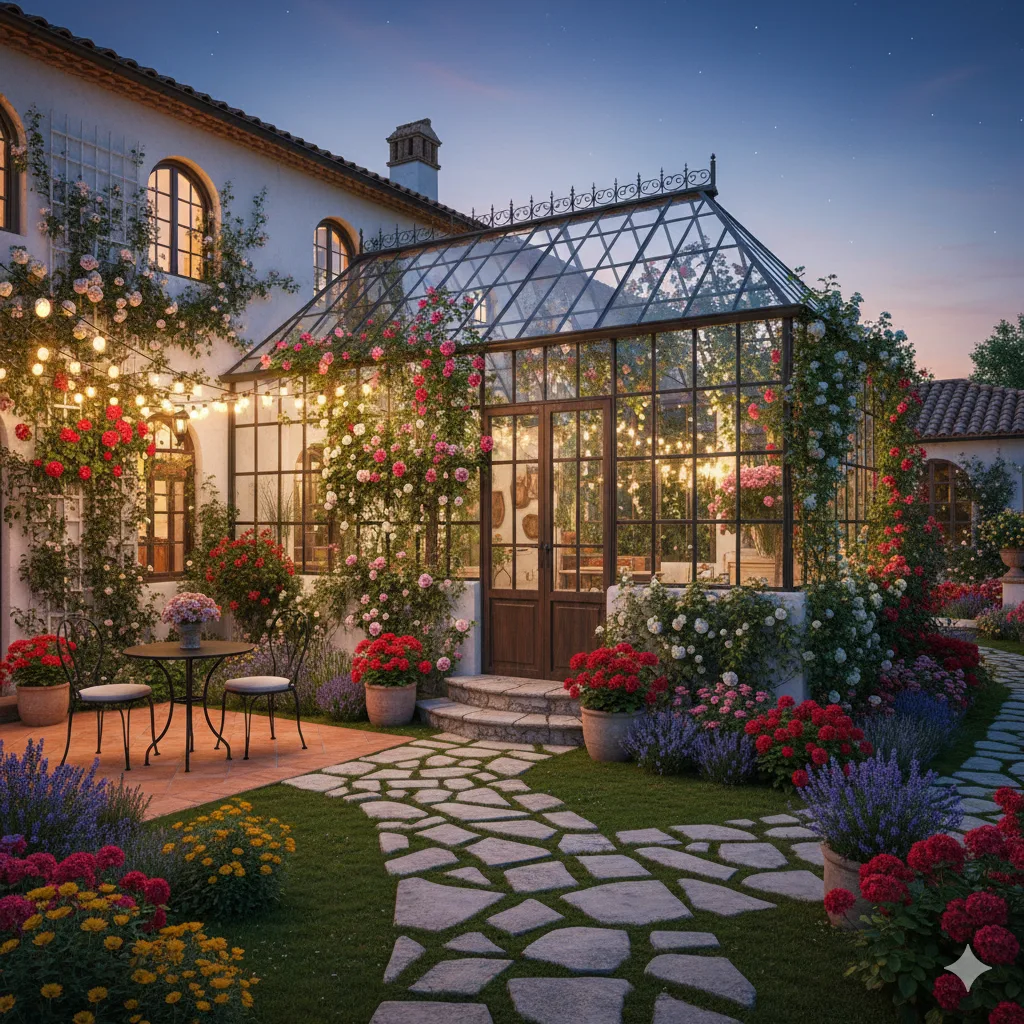
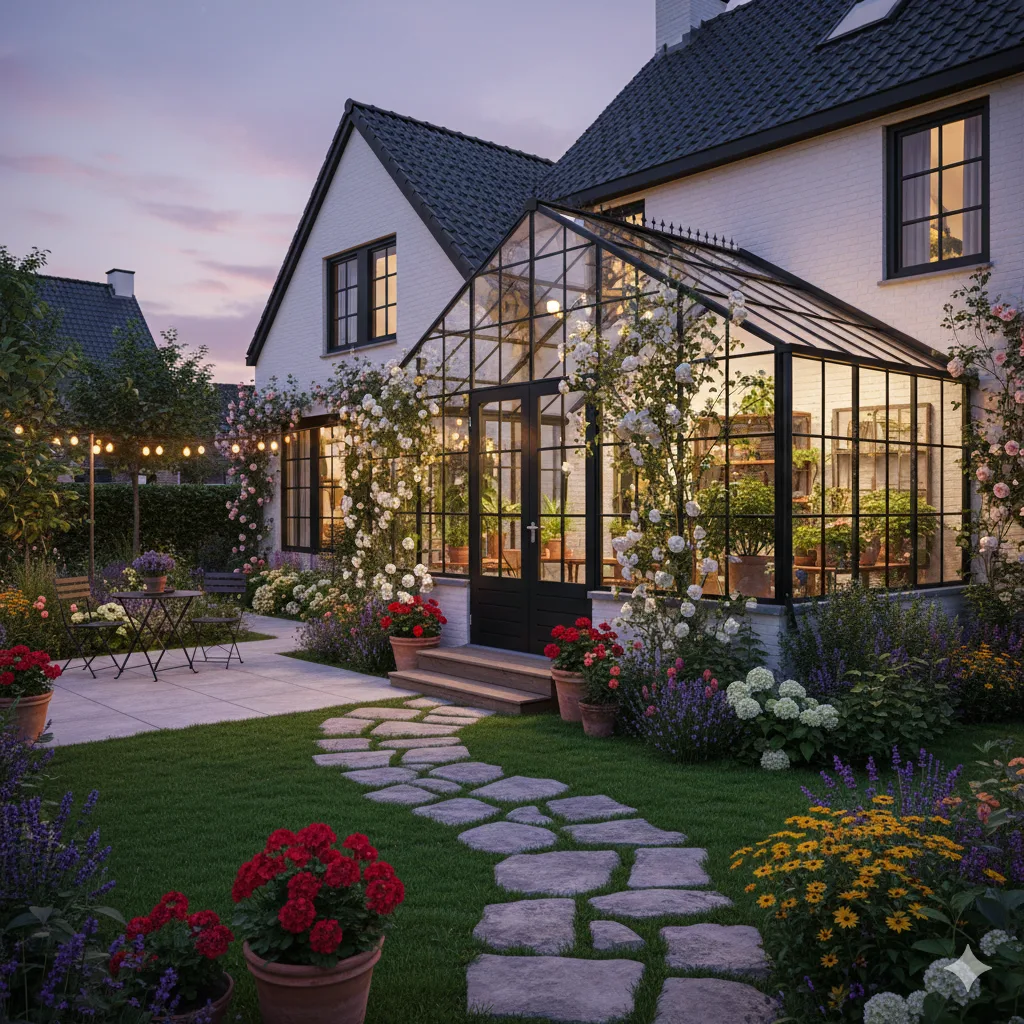
A garden house — whether it’s a greenhouse, studio, or tiny relaxation retreat — adds both charm and functionality to your outdoor space. Garden house design ideas can transform a plain backyard into a year-round destination.
If your goal is relaxation, build a small wooden or glass structure tucked among trees or flowerbeds. Add seating, bookshelves, and soft lighting to create a quiet reading or tea nook. For practical use, consider a greenhouse-style setup with clear panels that let in light while protecting delicate plants.
You can integrate your garden house with the overall landscape. Use climbing plants like jasmine or wisteria to soften the exterior and connect it visually to your garden. A small deck or stone path leading to it makes it feel like a secret hideaway.
For large garden design ideas , place the garden house as a focal point at the end of a path or near a water feature. In smaller gardens, use glass or light-colored materials to keep the structure airy and bright.
This type of addition not only increases the usable space on your property but also creates a timeless, peaceful retreat just steps from your home.
FAQs: Common Questions About Garden Design Ideas
What is the easiest type of garden to design?
The easiest gardens to start with are small, low-maintenance layouts using native plants and simple materials like gravel or raised beds. These need little watering or pruning, and they adapt easily to most climates. Simple garden design ideas with gravel paths and native borders are perfect for beginners who want quick results.
How can I make my small garden look bigger?
Use light colors, mirrors, and vertical elements. Mirrors reflect greenery and sunlight, creating the illusion of space, while tall trellises or vertical gardens draw the eye upward. Keep furniture slim and choose a consistent color palette. These small garden design ideas make compact spaces feel open and airy without adding clutter.
What are some low-cost garden design ideas?
Try recycled materials and DIY projects. Old bricks, pallets, and containers can be repurposed into raised beds or planters. Mulch paths, gravel beds, and native plants reduce costs and maintenance. These garden design ideas on a budget are great for families, schools, or renters who want beauty without overspending.
Which garden plants work best for different regions?
It depends on your location:
UK: Hardy perennials like lavender, foxgloves, and boxwood.
Australia: Drought-tolerant plants like kangaroo paw, grevillea, and succulents.
Philippines: Tropical favorites like hibiscus, santan, and palms.
Matching plants to your local climate ensures growth with minimal effort — an essential principle in garden landscape design ideas.
How can I design a garden that’s good for wildlife?
Include pollinator plants, water sources, and natural shelter. Native flowers attract bees and butterflies, while small ponds or birdbaths support local species. Avoid pesticides and add logs or rock piles for habitat. Wildlife gardens add life, movement, and balance to any landscape — even small ones.
Conclusion
Designing a garden is about more than plants — it’s about creating a living space that reflects your lifestyle, climate, and creativity. Whether you have a sprawling yard or a compact balcony, thoughtful planning turns any area into a functional, relaxing, and beautiful extension of your home.
The 31 garden design ideas in this guide prove that great gardens come in all shapes and sizes — from small garden design ideas and vegetable garden design ideas to modern, low-water, and rooftop layouts. Each one can be adapted to your region and budget.
According to the Royal Horticultural Society , homeowners who design gardens with local plants and sustainable features save up to 40% on water and maintenance costs while improving biodiversity ( (8) ).
Start small — even one raised bed, a few pots, or a gravel border can change how you experience your outdoor space. With creativity and consistency, your garden will evolve season after season into something uniquely yours.
About the Author
Landscaping Expert & Writer · Raleigh, North Carolina · North Carolina State University
Jennifer Hall is a professional landscaper and lawn care writer based in Raleigh, North Carolina. She studied landscape horticulture at North Carolina State University, home to one of the country's leading turfgrass programs, and went on to build a specialized landscaping service serving the greater Raleigh-Durham region. Jennifer's expertise spans the Southeast and Mid-Atlantic transition zone, where she advises homeowners on warm-season grass selection, seasonal lawn care calendars, landscape design, and water-efficient gardening. Her writing brings together professional horticultural training and real-world experience in one of America's most challenging grass-growing climates.