
How to Clean a Concrete Patio
A clean patio does more than look good — it protects your investment. Over time, dirt, algae, mold, and stains settle into the surface and make the area slippery and dull. Learning how to clean concrete patio properly keeps it bright, safe, and long-lasting.
Concrete is durable but porous. Dust, rain, and oil seep in and leave marks that won’t rinse off easily. That’s why it helps to know a few approaches:
- How to clean concrete patio without pressure washer using vinegar, baking soda, or a mild concrete cleaner.
- How to clean concrete patio with pressure washer for large, heavily stained areas.
- How to clean concrete patio with bleach or even muriatic acid when deep stains need stronger solutions.
Cleaning also protects nearby plants and walkways. Many homeowners want to know how to clean concrete patio without killing grass — and yes, that’s possible with careful rinsing and eco-safe ingredients.
Keeping up with routine cleaning makes your patio easier to maintain year after year. It also prevents buildup that can lead to cracks or discoloration later.
Inspect Your Patio Before Cleaning
Before mixing any cleaner, take five minutes to study the surface. This small step can save you from damage and wasted effort.
Know Your Surface
Is your space made of concrete patio slabs, concrete patio floor, or concrete patio stones? Smooth surfaces handle most cleaning methods well. Rough or patterned areas trap dirt and may need extra scrubbing.
Check for Cracks or Weak Spots
Avoid high pressure or harsh chemicals on chipped or crumbling areas. Seal small cracks before deep cleaning to stop water from sinking in.
Protect the Edges and Grass
If your patio borders a garden, soak the grass first. A wet lawn absorbs less cleaning runoff and protects roots. When scrubbing near a concrete patio door, keep towels handy to stop dirty water from running inside.
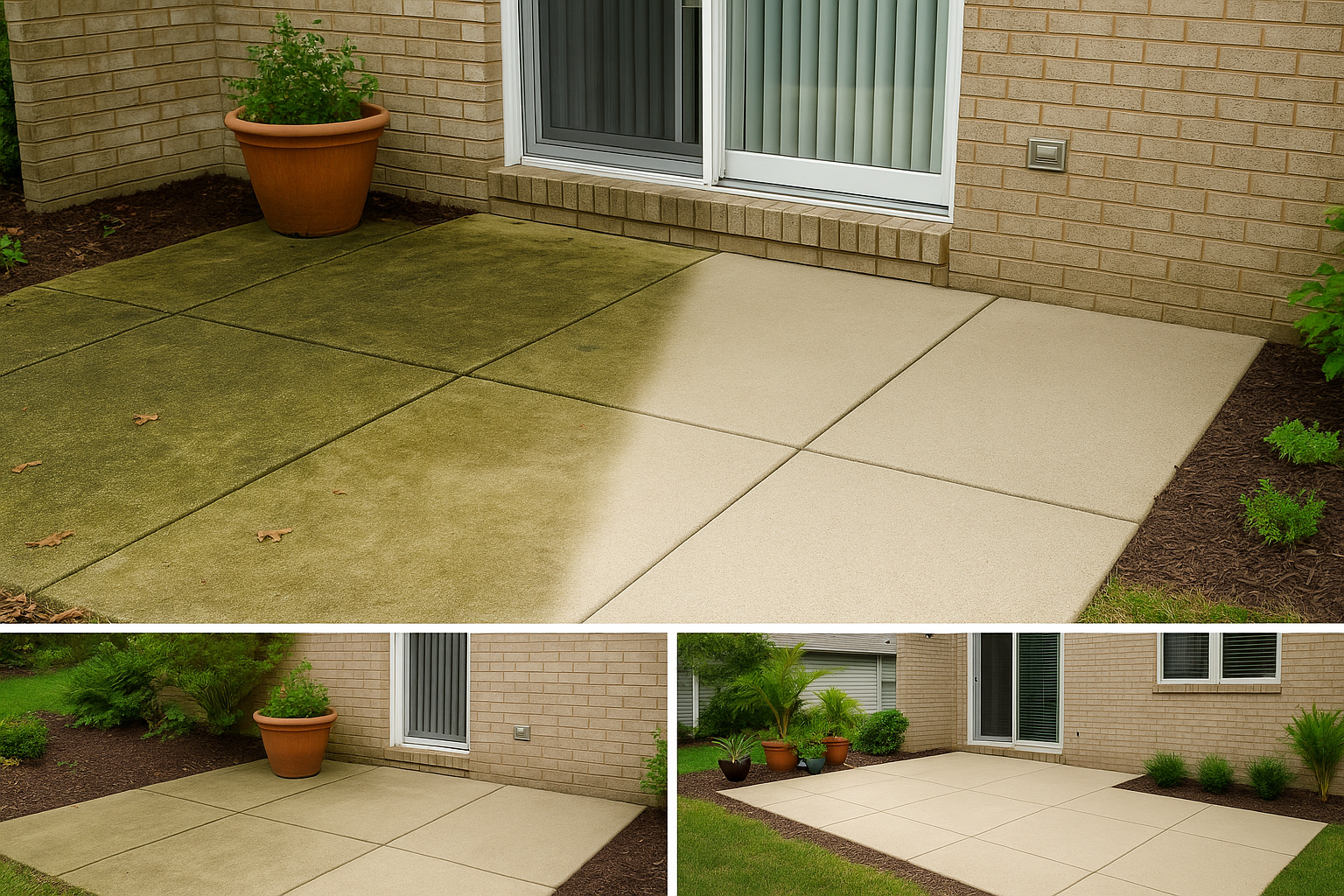
Identify Problem Areas
Different stains need different approaches:
- Green patches = algae or mold → vinegar or bleach.
- Dark spots = grease → baking soda or concrete cleaner.
- Rust = stronger options like diluted muriatic acid.
According to the University of Illinois Extension, inspecting and repairing cracks before cleaning concrete prevents deeper moisture damage and helps cleaners work more evenly ( (1) ).
Gather Tools and Materials
Before you start scrubbing, gather the tools and cleaners you’ll need. Having everything ready helps you work efficiently and avoid missing spots.
Basic Tools
- A stiff-bristle broom or deck brush
- Garden hose or bucket of water
- Protective gloves and eye protection
- Plastic sheeting or tarps (to protect nearby plants and grass)
Cleaning Agents
You have several options, depending on the dirt or stain type:
- Natural Cleaners:
- How to clean concrete patio with vinegar: Mix equal parts vinegar and warm water to remove algae and mildew.
- How to clean concrete patio with baking soda: Make a paste with water to lift grease or grime.
- Commercial Concrete Cleaner:
- Available at most home centers.
- Ideal for deep oil or rust stains.
- Choose one labeled safe for outdoor or “eco-friendly” use.
- Stronger Chemicals (for stubborn stains):
- Bleach: Useful for mold or algae.
- Muriatic acid: Best for deep rust or paint marks, but use cautiously with gloves and eye protection.
When choosing, consider your surroundings. If your patio is close to garden beds, learn how to clean concrete patio without killing grass by using diluted natural solutions first.
If you’re cleaning near sliding doors, sweep debris away from the frame to prevent buildup in the tracks. This makes how to clean concrete patio door areas simple and safe.
How to Clean Concrete Patio Without a Pressure Washer
If you don’t own a pressure washer, don’t worry. You can still achieve great results using common tools and household ingredients.
Step 1: Sweep and Rinse
Start by sweeping away leaves, dust, and debris. Rinse the surface with a hose to loosen dirt before applying cleaner.
Step 2: Choose a Natural Cleaner
For an eco-friendly approach, try how to clean cement patio without pressure washer using one of these methods:
- Vinegar Method: Mix equal parts white vinegar and warm water. Pour it on stains and let it sit for 10–15 minutes before scrubbing.
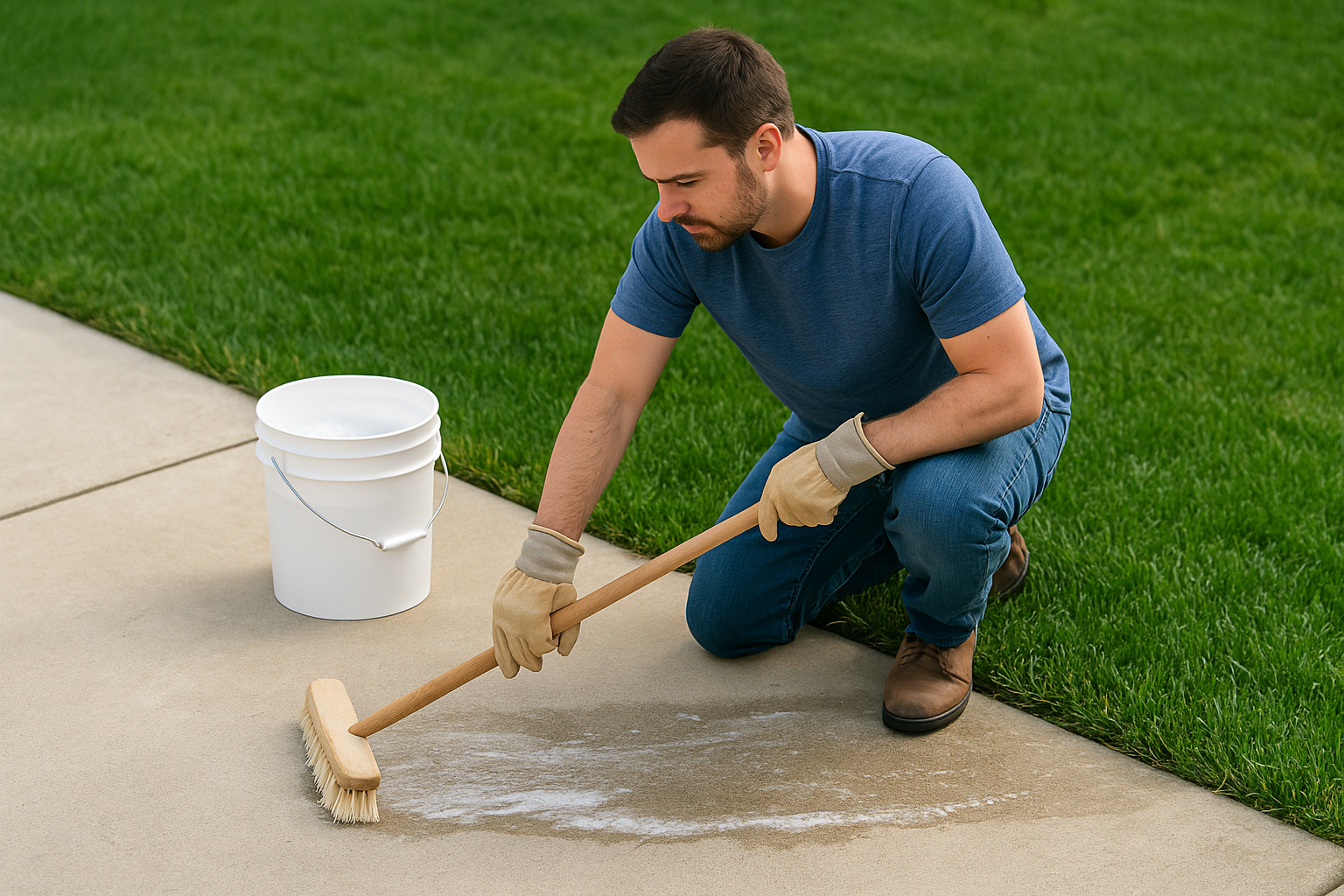
- Baking Soda Method: Sprinkle baking soda directly on greasy areas, spray lightly with water, and scrub until clean.
Both are safe and effective options for how to clean concrete patio without killing grass.
Step 3: Scrub and Rinse
Use a stiff brush to scrub the surface in circular motions. Rinse thoroughly with a hose until the water runs clear.
Step 4: Repeat for Stubborn Stains
If dirt remains, repeat the process or try a light commercial concrete cleaner. Avoid using metal brushes—they can scratch the surface.
According to Iowa State University Extension, vinegar and baking soda help break down surface grime without harming nearby vegetation or sealed concrete layers ( (2) ).
How to Clean Concrete Patio with a Pressure Washer
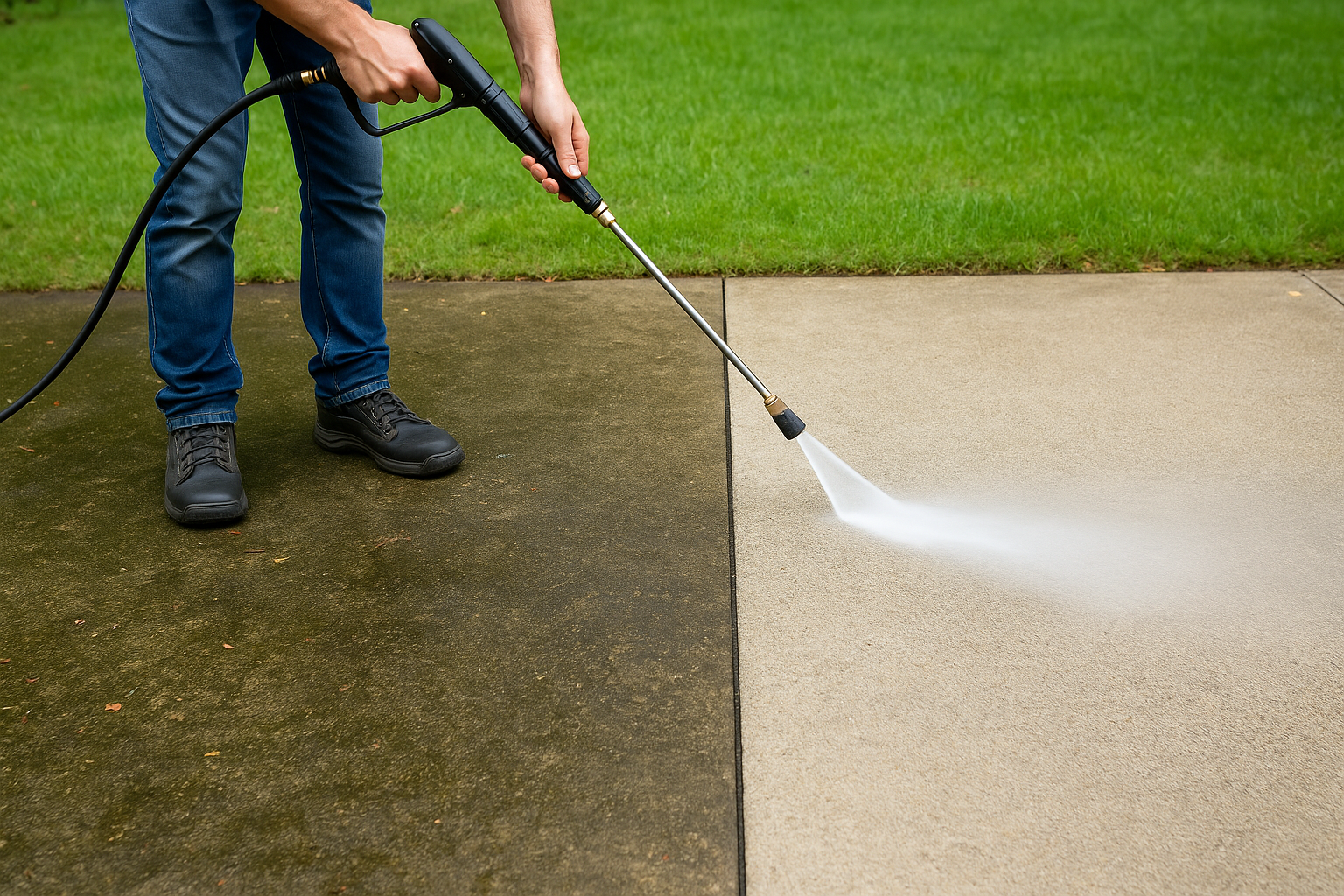
When the dirt and stains are deep, using a pressure washer is one of the fastest and most effective ways to restore your patio. It’s especially useful for large areas and heavily weathered concrete.
Start by clearing the surface. Remove furniture, planters, and rugs so you have full access to the patio. Sweep away loose debris before turning on your washer.
Choose the Right Pressure and Nozzle
If you’re wondering how much PSI to clean concrete patio, aim for a washer rated between 2500 and 3000 PSI. This strength is powerful enough to remove built-up grime but safe for most concrete surfaces. For delicate edges or decorative concrete patio slabs, reduce the pressure slightly to avoid etching.
Attach a 25-degree nozzle for general cleaning. It offers a wide fan that spreads pressure evenly. According to the University of Nebraska–Lincoln Extension, using a wider spray angle helps maintain surface texture while preventing pitting on older patios ( (3) ).
Use a Cleaner for Better Results
While plain water can work, adding a concrete cleaner boosts performance. Apply the cleaner evenly using a low-pressure setting or spray wand. Let it soak for 5–10 minutes to loosen stubborn dirt, but don’t let it dry completely.
Rinse thoroughly from one end to the other, keeping the nozzle about 12 inches from the surface. For tough stains, move closer—but test a small area first.
Protect the Grass and Plants
When learning how to clean concrete patio without killing grass, remember one simple rule: soak your lawn with plain water before starting. This dilutes any runoff and keeps roots safe. You can also lay down tarps or plastic sheeting for added protection.
Once done, give the surrounding area a final rinse to wash away leftover cleaner. This prevents any buildup or chemical burn on nearby greenery.
How to Clean Concrete Patio with Natural or Chemical Solutions
Sometimes stains are too deep for water alone. When that happens, you can use either natural or chemical cleaners depending on the level of dirt and the type of patio you have.
Natural Cleaning Methods
If you prefer a gentler approach, how to clean concrete patio with vinegar and how to clean concrete patio with baking soda are two proven options.
- Vinegar works well on mildew and algae. Mix one part vinegar to one part water, pour it directly onto the stained area, and let it sit for 15 minutes. Then scrub with a brush and rinse clean.
- Baking Soda is great for grease and grime. Sprinkle a generous layer, add a few drops of water to form a paste, and scrub in circular motions.
According to Iowa State University Extension, household acids like vinegar effectively dissolve organic stains while remaining safe for most soils and lawns when rinsed properly ( (4) ).
These methods are perfect for anyone looking for how to clean cement patio without pressure washer or how to clean concrete patio without killing grass. They’re affordable, safe, and environmentally friendly.
Chemical Cleaning Methods
For tougher jobs, such as oil, rust, or paint, you may need stronger options like bleach or muriatic acid.
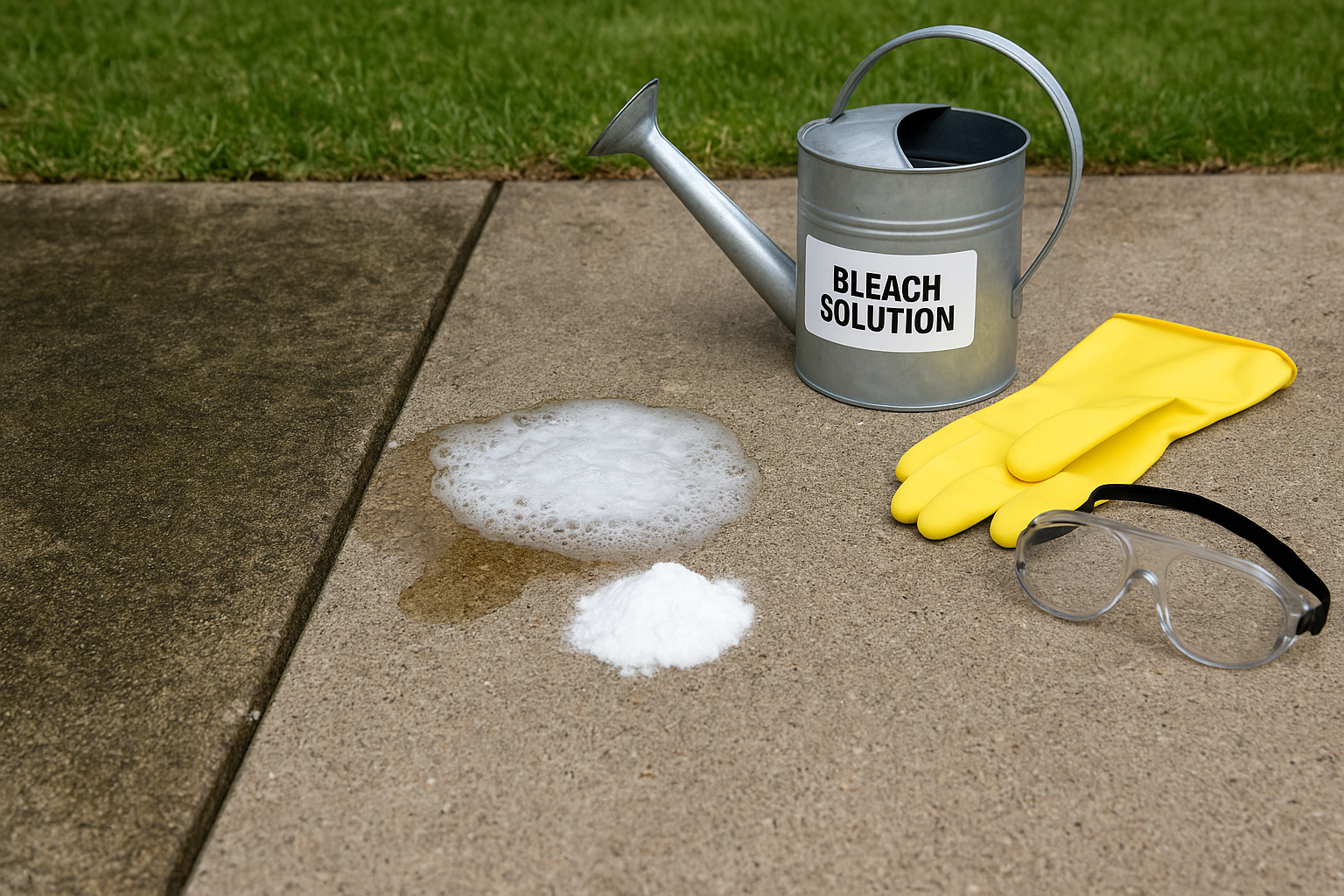
- To learn how to use bleach to clean concrete patio, mix one cup of bleach with one gallon of water. Apply it carefully to moldy areas using a watering can or sprayer. Let it sit for 10 minutes, scrub, and rinse well.
- How to clean concrete patio with muriatic acid should only be used as a last resort. Wear gloves, goggles, and long sleeves. Always dilute the acid—typically one part acid to ten parts water—and never mix it with other cleaners.
The University of Florida IFAS Extension notes that diluted oxidizing agents like bleach and mild acids such as muriatic acid are highly effective for removing algae, rust, and efflorescence, provided you rinse the surface thoroughly afterward ( (5) ).
If you’re worried about plants, hose down the area after cleaning to remove residue. That’s the safest way to manage how to clean concrete patio without killing grass.
By alternating natural and chemical methods as needed, you can keep your concrete patio floor, concrete patio slabs, or concrete patio stones looking clean all year without damaging the surface.
How to Clean Concrete Patio Roof or Vertical Surfaces
When cleaning, most people focus only on the ground, but your concrete patio roof and nearby walls collect dirt too. Dust, mildew, and cobwebs can drip down later and stain the clean floor you worked so hard on.
Start by sweeping loose dirt with a soft brush. Mix mild detergent and warm water in a bucket. Dip a sponge or mop and wipe the surface gently. If you see mildew or dark streaks, use a small amount of concrete cleaner or vinegar to loosen buildup.
Avoid using a pressure washer overhead or on walls. Too much force can chip concrete or strip paint. Use a garden sprayer on low setting instead. When working near edges, wear goggles and gloves. According to the University of California Agriculture and Natural Resources, low-pressure washing and mild soap are safest for concrete and masonry cleaning, especially around roof joints and painted coatings ( (6) ).
If your roof sits over plants, cover them with plastic or rinse them after cleaning to prevent detergent runoff — a simple tip for how to clean concrete patio without killing grass.
How to Prevent Future Stains and Maintain Your Patio
After all that work, it makes sense to keep your patio looking new. A few small habits will make how best to clean concrete patio easier next season.
Seal the Surface Once a Year
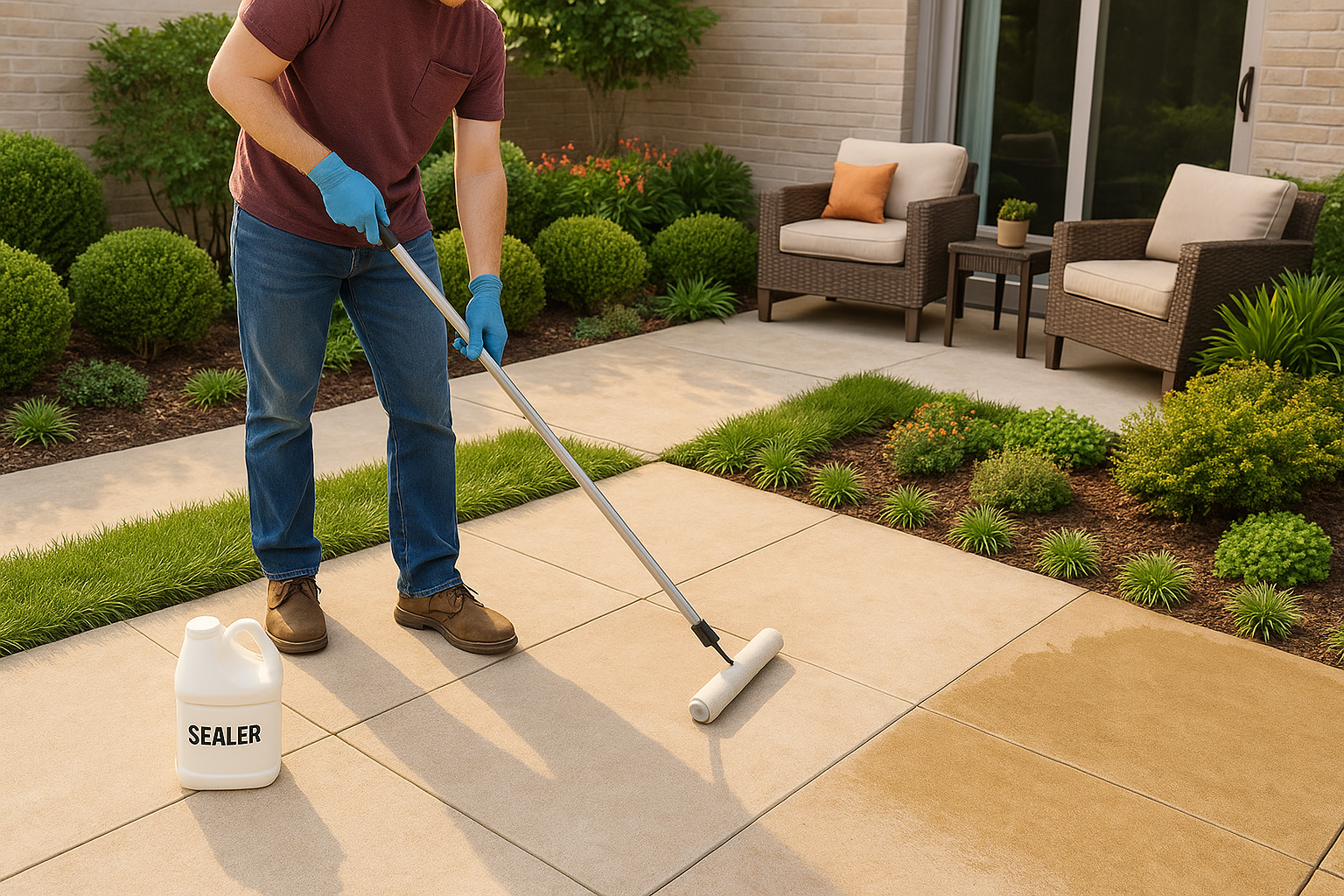
Once the patio dries, apply a penetrating sealer. It protects against moisture, oil, and stains. A sealed surface means dirt won’t soak in as fast, and most cleanup will just need soap and water.
Sweep and Rinse Regularly
Use a broom weekly and rinse with the garden hose monthly. For light stains, mix vinegar and water, or sprinkle baking soda before scrubbing. These natural cleaners are gentle and safe for lawns.
Mind the Entry Points
Place mats near concrete patio door areas to trap dust before it spreads. Keep flower pots slightly raised so water doesn’t leave dark rings on the surface.
As explained by the University of Minnesota Extension, sealing and regular rinsing help prevent moisture buildup and mold growth, which are the main causes of concrete staining ( (7) ).
FAQs: Cleaning a Concrete Patio
The best way to clean a concrete patio depends on the type of dirt and your available tools. For routine cleaning, mix vinegar and water or use a mild concrete cleaner. Scrub with a stiff brush, rinse well, and let the surface dry completely. If you have heavy buildup, use a pressure washer at around 2500–3000 PSI. Reseal once a year to prevent future stains.
Always wet your grass before cleaning. This creates a barrier that dilutes any cleaner runoff. Use eco-friendly methods like how to clean concrete patio with vinegar or baking soda instead of harsh chemicals. When using bleach or stronger cleaners, rinse the lawn thoroughly afterward.
For general dirt and algae, vinegar or mild dish soap works well. For mold or mildew, diluted bleach is effective. For oil or rust, use a commercial concrete cleaner or diluted muriatic acid. Always follow label directions and wear gloves and eye protection.
You can still get great results without power tools. Sweep, rinse, then scrub with vinegar or baking soda paste. Let it sit for 10–15 minutes before rinsing. This method is safe for concrete patio slabs, stones, and floors.
Mix one cup of bleach with one gallon of water. Pour or spray the solution on mildew or algae patches. Let it rest for about ten minutes, scrub lightly, then rinse with plenty of water. Avoid mixing bleach with other cleaners, especially acids or ammonia-based products.
For standard patios, 2500–3000 PSI is enough. For decorative or older concrete, reduce to 2000 PSI. Always test on a small area first and use a 25-degree nozzle to prevent etching.
A deep clean every spring and light rinsing through the year keep your patio fresh. Seal once a year if exposed to direct sunlight or heavy rain. Sealing keeps water out and prevents mold from growing.
Conclusion
Cleaning your concrete patio doesn’t need to be hard or expensive. With the right approach, you can restore its fresh look and protect it from future stains. Start simple—with vinegar, baking soda, or a mild concrete cleaner—before moving on to stronger products like bleach or muriatic acid if necessary.
Whether you choose to scrub by hand or use a pressure washer, the real key is consistency. Sweep and rinse often, seal once a year, and keep grass and plants protected during cleaning.
By following these steps, you’ll not only master how to clean concrete patio safely and effectively but also keep your outdoor space bright, sturdy, and welcoming for years to come.
Like this story? Get more like it.
We respect your privacy. Unsubscribe anytime.