
When to Fertilize Your Lawn: The Complete Seasonal Guide
Imagine spending money and effort feeding your lawn, only to see it turn pale or patchy a few weeks later. It happens to more homeowners than you think — not because they used the wrong fertilizer, but because they used it at the wrong time.
Fertilizing your lawn isn’t complicated, but timing is everything. Just like plants, grass has its own rhythm of growth and rest. Feed it when it’s ready to grow, and it rewards you with deep color, thick coverage, and sturdy roots. Feed it when it’s dormant, and most of those nutrients go to waste or, worse, stress the turf.
The best time to fertilize your lawn depends on three key factors:
- The type of grass you have (cool-season or warm-season).
- Your region and climate (north, south, mountain, or coastal).
- The season of the year (spring or fall feeding windows).
When fertilizer is applied too early, before the soil warms up, nutrients may wash away before the roots can use them. Apply too late, and the grass may start resting just when you expect a growth spurt. Getting the timing right helps your lawn stay green longer, survive heat and cold better, and bounce back quickly after stress.
Think of fertilizing as syncing with nature’s clock — not fighting it. Once you understand your grass’s growth cycle, you’ll know exactly when to feed, how much to apply, and how to keep your lawn thriving all year.
Understanding How Grass Grows
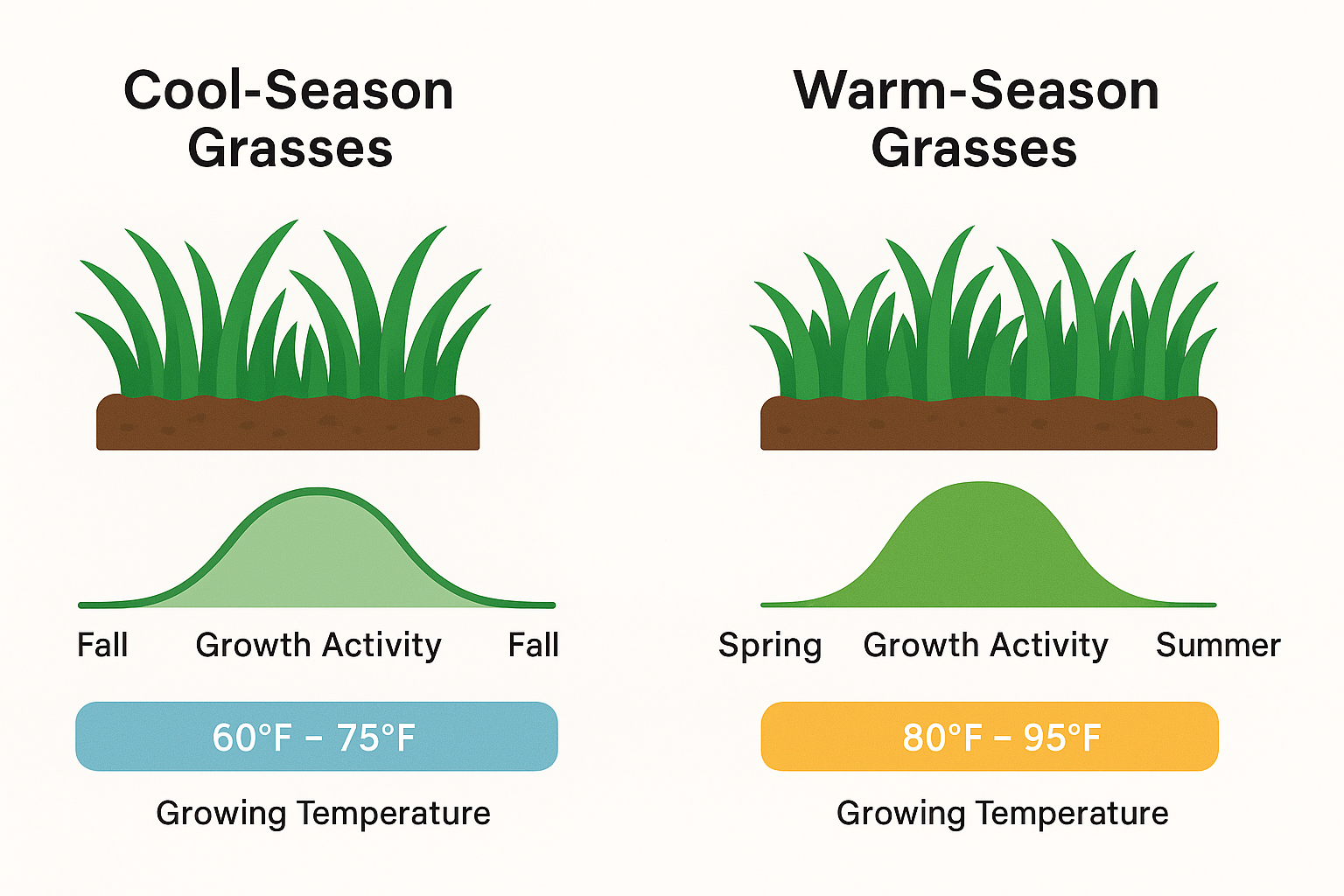
Before you decide when to fertilize, you need to understand how your grass actually grows. Every lawn follows one of two basic growth patterns — cool-season or warm-season — and each one behaves differently throughout the year.
Cool-Season Grasses
Cool-season grasses love mild weather. They grow best when temperatures stay between 60°F and 75°F, which makes them common in northern regions like Michigan, Ohio, Ontario, Massachusetts, and Connecticut.
You’ll usually see strong growth twice a year:
- Early spring, as soon as the soil warms up
- Early to mid-fall, when temperatures drop again
During the hot summer months, cool-season lawns slow down or go dormant. That’s why fertilizing them in spring and fall — when they’re actively growing — helps build strength and color before and after the summer stress.
Common cool-season grasses include:
- Kentucky bluegrass
- Perennial ryegrass
- Tall and fine fescue
Warm-Season Grasses
Warm-season grasses are the opposite. They love heat and sunshine and grow best between 80°F and 95°F. You’ll find them in southern or warmer areas like Texas, Florida, North Texas, and parts of Colorado.
These grasses rest through winter, then wake up in late spring once the soil warms up. Feeding them too early, while they’re still brown or dormant, wastes nutrients and can even trigger weed growth. The best time to fertilize is after they’ve fully greened up and are growing actively through late spring and midsummer.
Common warm-season grasses include:
- Bermuda
- St. Augustine
- Zoysia
Why Growth Cycles Matter
Understanding these growth cycles is the secret to a healthy lawn. Fertilizing when your grass is actively growing ensures nutrients move straight to the roots, creating:
- Deeper, stronger root systems
- Thicker coverage with fewer bare spots
- Better resistance to heat, drought, and stress
When you align feeding with nature’s rhythm, you’re not just adding nutrients — you’re giving your lawn exactly what it needs, right when it needs it most.
When to Fertilize in Spring
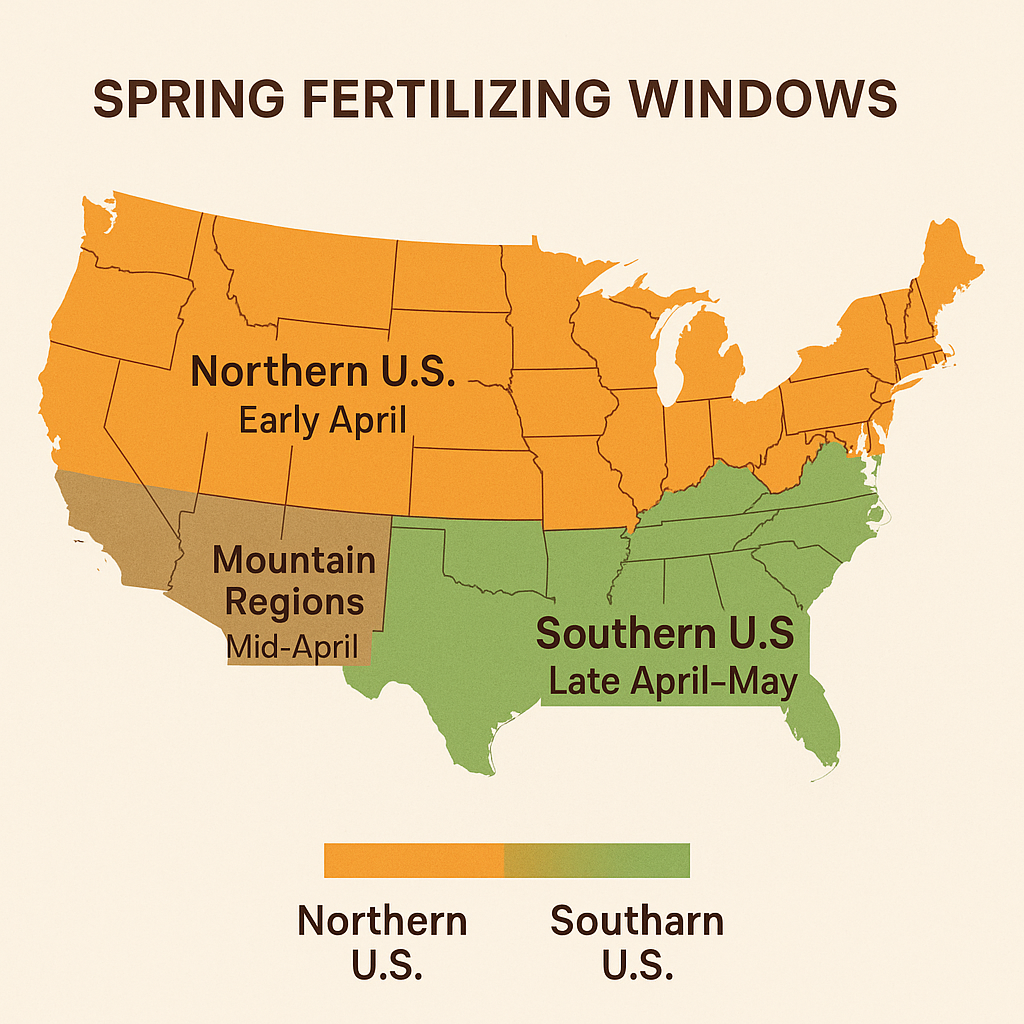
Spring is when most lawns wake up after winter. It’s the time to help your grass rebuild strength, repair cold damage, and thicken up before the summer heat. But applying fertilizer too early or too late can work against you. The goal is to feed your lawn only after it begins to grow again, not while it’s still resting.
According to the University of Minnesota Extension (1), the best signal that your grass is ready for fertilizer is when soil temperature reaches about 55°F and you see consistent new green growth. At that point, the roots are active enough to absorb nutrients efficiently.
For Cool-Season Lawns (Northern Regions)
If you live in northern areas like Michigan, Massachusetts, Connecticut, or Ontario, the right window usually falls between early and mid-April. Wait until your lawn starts to green up naturally before applying fertilizer. Feeding too early — when the soil is still cold — can waste nutrients or even encourage weed germination.
Timing tip:
Fertilize once the grass begins growing again, then water lightly to help nutrients reach the roots. A slow-release fertilizer with a balanced mix of nitrogen and potassium works well for this first feeding.
For Warm-Season Lawns (Southern Regions)
If you live in the Southern U.S. — including Texas, Florida, and North Texas — hold off until your grass has turned completely green. That’s usually late April through May, depending on your local climate. Applying fertilizer too soon, when the turf is still dormant or brown, simply feeds weeds and not your grass.
Texas Example:
In Texas, lawns with Bermuda or St. Augustine grass should be fertilized after the last frost and once daily temperatures stay consistently warm. Aim for late April or early May for best results.
For Mountain and High-Altitude Lawns
If you’re in places like Colorado, spring fertilizing depends on how fast the snow melts and the ground thaws. Most homeowners fertilize between mid and late April, right after the soil softens.
Why Spring Feeding Works
This first feeding helps your lawn:
- Rebuild nutrients lost during winter
- Recover from cold or foot traffic damage
- Encourage new shoots and root development
- Prepare for summer growth and stress
When to Fertilize in Fall
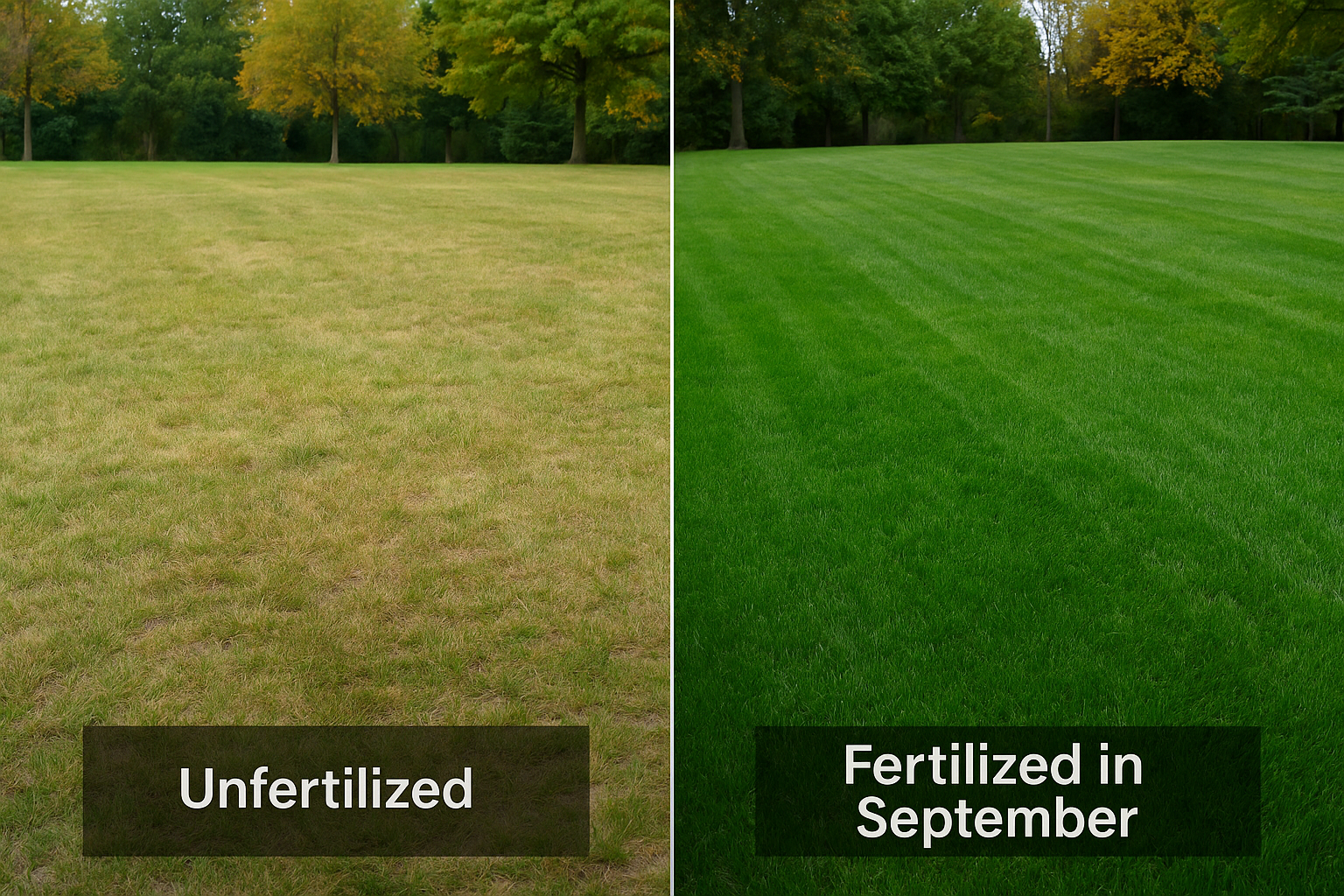
If spring feeding wakes your lawn up, fall feeding puts it to bed strong. This is when grass naturally shifts its energy from growing blades to building deeper roots. Applying fertilizer now helps your lawn recover from summer heat, store energy for winter, and come back thicker and greener when spring returns.
According to Michigan State University Extension (2), fertilizing in early fall gives grass the nutrients it needs to strengthen roots before cold weather arrives. It also improves color and density, reducing the need for heavy spring applications later.
For Cool-Season Lawns (Northern Regions)
Cool-season grasses like Kentucky bluegrass, fescue, and ryegrass grow best in cooler temperatures between 55°F and 75°F. That’s why September through early November is the prime feeding season in places such as Michigan, Massachusetts, Connecticut, and Ontario.
Apply fertilizer before the first hard frost, when the grass is still actively growing. A slow-release nitrogen blend or a “winterizer” fertilizer (with higher potassium) helps build root strength and improves cold resistance.
Pro Tip:
Avoid fertilizing once the soil freezes. Nutrients won’t reach the roots and may wash away with melting snow.
For Warm-Season Lawns (Southern Regions)
In warmer states like Texas, Florida, and North Texas, fertilize lawns in early fall — typically around September. This timing allows the grass to absorb nutrients while temperatures are still mild but before growth slows for winter.
Late applications should be avoided because they can cause new growth just before cold weather hits, making the grass more vulnerable to frost damage.
Texas Example:
For St. Augustine or Bermuda lawns, the last feeding should happen no later than mid-September. Use a balanced fertilizer or one slightly higher in potassium to strengthen roots before dormancy.
For Mountain Regions (Colorado and Similar Climates)
Mountain lawns benefit from a single fall feeding between late August and mid-September. Cooler nights and shorter days signal the grass to focus on roots. A fall feeding ensures strong recovery in spring.
Why Fall Feeding Matters
Fertilizing in fall supports long-term lawn health by:
- Rebuilding roots damaged by summer heat
- Improving nutrient storage for winter
- Encouraging faster spring green-up
- Strengthening turf against cold and disease
Regional Fertilization Quick Guide
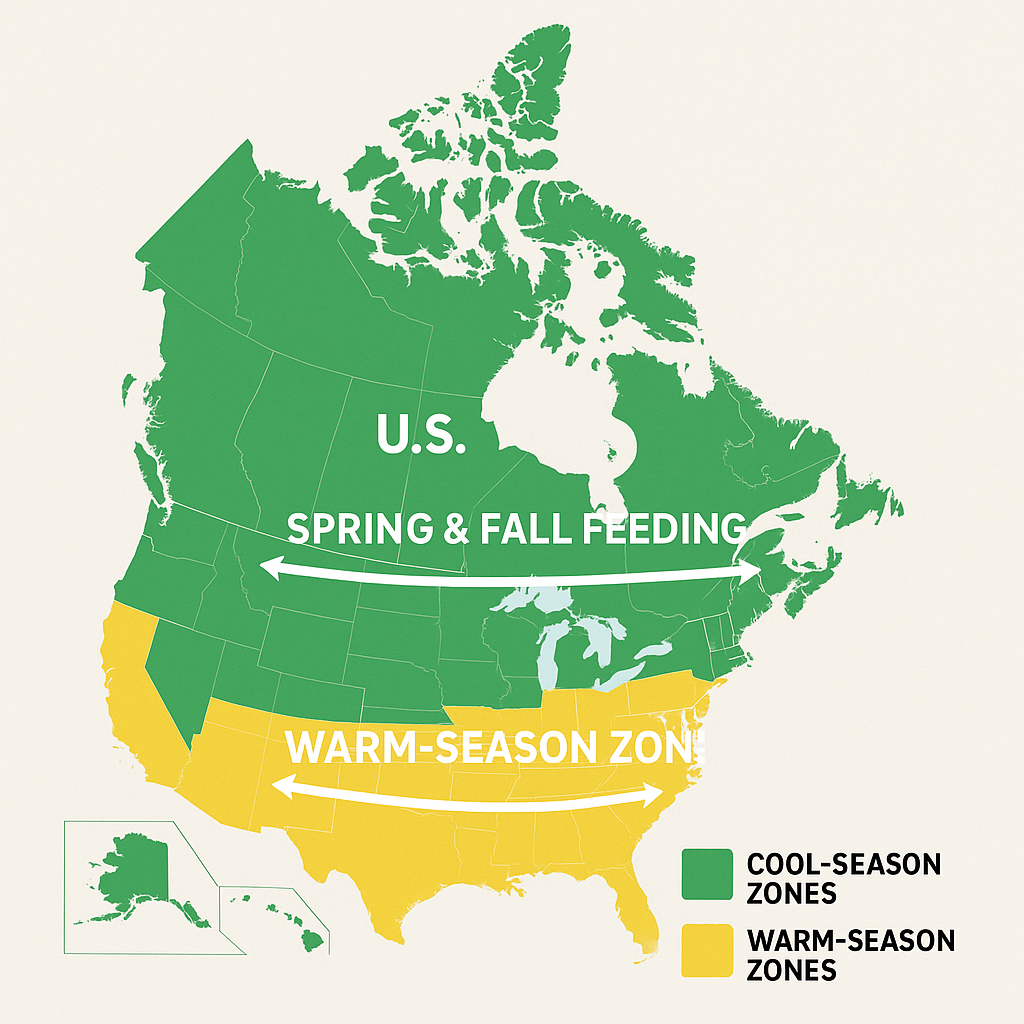
Fertilizer timing changes from place to place. What works in Michigan won’t work in Texas, and what’s right for Florida might be too late for Colorado. The key is to feed your grass when it’s actively growing — not when it’s stressed or dormant.
If you match your schedule to your local climate, your lawn will use every bit of fertilizer efficiently, producing stronger roots and deeper color.
Quick Rules to Remember
- Cool-season zones: Focus on spring and fall.
- Warm-season zones: Focus on late spring through summer.
- Always wait until soil temperatures reach about 55°F before the first application.
- Never fertilize frozen or dormant lawns.
By Region
| Region | Best Months | Common Grass Types | Notes & Tips |
|---|---|---|---|
| Texas (statewide) | May–August | Bermuda, St. Augustine, Zoysia | First feed after full green-up; skip winter feedings. |
| North Texas | Late April–August | Bermuda, Zoysia | Avoid early spring applications; soil warms later here. |
| Florida | April–September | Bahia, Bermuda, St. Augustine | Time around rainy season; avoid fertilizing before heavy storms. |
| Colorado (Front Range) | April–June & September | Kentucky bluegrass, Fescue | Cool nights favor spring and early fall feedings. |
| Michigan | April–May & September–October | Bluegrass, Fescue, Ryegrass | Fall feeding is most important for root strength. |
| Ontario | April–May & September | Bluegrass, Ryegrass, Fescue | Favor slow-release nitrogen; emphasize fall feeding. |
| Massachusetts / Connecticut | May & Late September | Bluegrass, Fescue | Keep summer fertilizing light to avoid stress. |
Pro Tips:
- Match fertilizer to the season: use slow-release for spring and summer, higher potassium for fall.
- Focus more on soil temperature than the calendar — nature sets the schedule, not the date.
- In dry or coastal areas, split feedings into lighter, more frequent applications to avoid runoff.
How Often to Fertilize
Fertilizing your lawn is about rhythm, not repetition. Feeding too often can harm the roots and cause weak, shallow growth. Feeding too little can leave your grass pale and thin. The goal is to maintain a steady supply of nutrients that match the lawn’s natural growth pattern.
According to Scotts Lawn Care (3), most lawns perform best with two to four feedings per year, depending on your grass type and climate. The schedule below gives a practical guide that fits nearly every region.
Cool-Season Grasses
Cool-season lawns — such as Kentucky bluegrass, fescue, and ryegrass — do best with two to four feedings per year, mainly in spring and fall.
- Early Spring: Light feeding to restore color after winter.
- Late Spring: Strengthen roots before heat arrives.
- Early Fall: Main feeding to build thick turf.
- Late Fall: Optional “winterizer” feeding to boost root storage before frost.
Tip: Avoid heavy fertilizing during the peak of summer. Grass often slows down to conserve energy, and excess nitrogen can cause burn or shallow roots.
Warm-Season Grasses
Warm-season lawns — including Bermuda, St. Augustine, and Zoysia — thrive on two to three feedings per year, starting in late spring and continuing through midsummer.
- Late Spring: First feeding after full green-up.
- Mid-Summer: Second feeding to maintain steady growth.
- Early Fall: Optional light feeding before dormancy begins.
Tip: Skip feeding during cool months or winter dormancy. The roots won’t absorb nutrients efficiently, and much of it will wash away.
New or Overseeded Lawns
If you’ve recently planted seed, wait six to eight weeks after germination before applying fertilizer. Feeding too early can burn tender roots or interfere with new growth. A mild starter fertilizer with more phosphorus than nitrogen helps young roots establish quickly.
Choosing the Right Type
For most lawns, slow-release fertilizers are the best choice. They feed gradually over several weeks, helping grass grow evenly without sudden spurts. They also reduce the need for frequent applications and minimize the risk of fertilizer burn.
If you prefer faster green-up, you can use a quick-release formula, but be careful to follow the label directions and water immediately after spreading.
Practical Feeding Rhythm
- Cool-season lawns: 3 times a year (spring, late summer, fall).
- Warm-season lawns: 2 to 3 times a year (late spring through mid-summer).
- New lawns: After 6–8 weeks, then follow your grass type’s schedule.
Keeping a consistent rhythm gives your lawn the best chance to stay healthy through heat, rain, and foot traffic — without wasting fertilizer or time.
Weather and Time-of-Day Tips
When you fertilize is just as important as how you fertilize. Temperature, moisture, and sunlight all affect how well your grass can absorb nutrients. Timing your application around the right part of the day and the right kind of weather can make the difference between a lush lawn and one that looks burned or washed out.
According to University of Florida IFAS Extension (4), fertilizers work best when the soil is slightly moist and the weather is calm. Too much heat or rain reduces the product’s effectiveness and can damage your grass.
Best Time of Day
The ideal time to fertilize is early morning or late afternoon. During these periods, sunlight is gentle, temperatures are mild, and moisture helps nutrients move into the soil.
Avoid fertilizing at midday when the sun is strongest. Heat causes fertilizer granules to dry and stick to the blades, which can scorch your lawn or lead to uneven coverage.
Best Weather Conditions
Fertilizing just before a light rain or after watering lightly is perfect. Moisture helps nutrients travel down to the root zone. However, heavy rain or storms can wash away fertilizer before it settles, wasting product and potentially harming nearby waterways.
Here’s a simple guide:
| Weather Forecast | What to Do | Why |
|---|---|---|
| Light rain or drizzle | Apply 2–24 hours before | Gentle rainfall activates fertilizer and carries nutrients to the roots. |
| Heavy rain or thunderstorms | Wait until it passes | Prevents runoff and wasted product. |
| Dry weather, no rain expected | Apply, then water lightly (¼–½ inch) | Helps dissolve fertilizer and push it into the soil. |
Tip: Always sweep stray fertilizer off sidewalks or driveways back onto the grass to prevent runoff into drains.
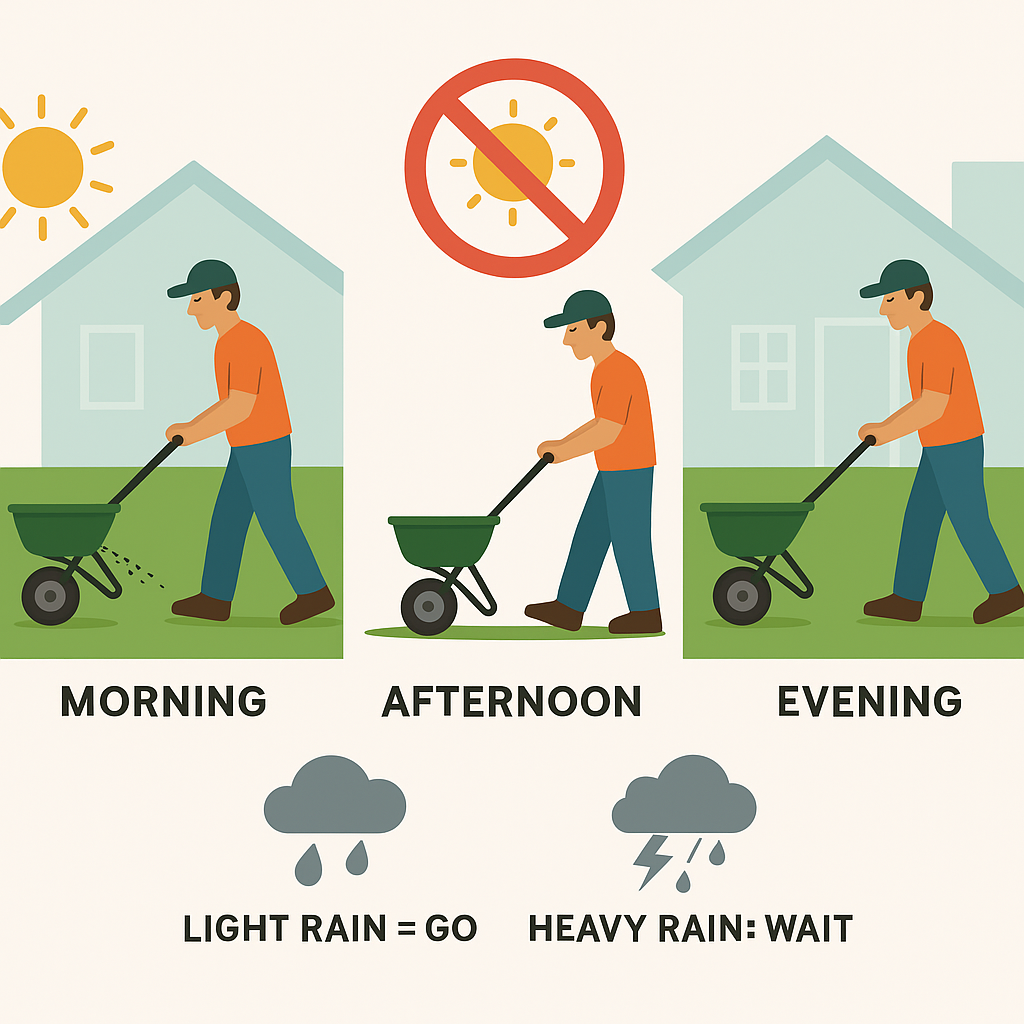
Timing your fertilizing around good weather and cooler parts of the day gives your lawn the best chance to absorb nutrients evenly and grow strong, without wasting effort or money.
Choosing the Right Fertilizer
Not all fertilizers are created equal. Choosing the right one for your grass type, soil, and region is what separates an average lawn from a great one. The good news is that once you understand the basics, picking the right product becomes simple.
1. Read the N-P-K Label
Every fertilizer bag has three numbers on the front — such as 20-5-10. These represent the ratio of:
- Nitrogen (N) for leaf color and growth
- Phosphorus (P) for root strength
- Potassium (K) for disease resistance and drought tolerance
For example, a 20-5-10 fertilizer contains 20% nitrogen, 5% phosphorus, and 10% potassium.
Use more nitrogen-heavy formulas in spring and summer for fast growth and color, and switch to potassium-rich blends in fall to prepare the lawn for winter.
2. Match the Fertilizer to Your Grass Type
- Cool-season grasses (Kentucky bluegrass, fescue, ryegrass) respond best to nitrogen-heavy fertilizers that promote leaf growth during spring and fall.
- Warm-season grasses (Bermuda, St. Augustine, zoysia) prefer balanced or slightly nitrogen-lean formulas that sustain steady summer growth.
If you’re unsure, choose a balanced formula like 16-4-8, which works well for most lawns.
3. Choose Between Synthetic and Organic
Synthetic fertilizers act fast, giving quick green-up results. They’re ideal if you want immediate improvement but require more frequent applications.
Organic fertilizers, such as compost or natural blends, release nutrients slowly and improve soil health over time. They’re a better choice for sustainable, long-term care.
A good middle ground is to start with synthetic for quick recovery, then switch to organic for maintenance.
4. Go for Slow-Release
For most homeowners, slow-release fertilizers are the easiest and safest option. They provide a steady supply of nutrients for 6–8 weeks, reducing the risk of burn and minimizing runoff.
Fast-release fertilizers can work well for professionals who monitor soil moisture closely, but for general lawn care, slow-release is best for consistent growth and lower maintenance.
5. Choose Based on Region
Your location plays a big role in selecting fertilizer:
- Texas and Florida: Use balanced formulas that handle heat and sandy soil.
- Michigan or Ontario: Go for high-nitrogen blends in spring and early fall for color and density.
- Coastal regions: Pick phosphorus-free fertilizers where local laws restrict phosphorus to protect waterways.
Tip: Always check your local regulations before applying fertilizer, especially near ponds or storm drains.
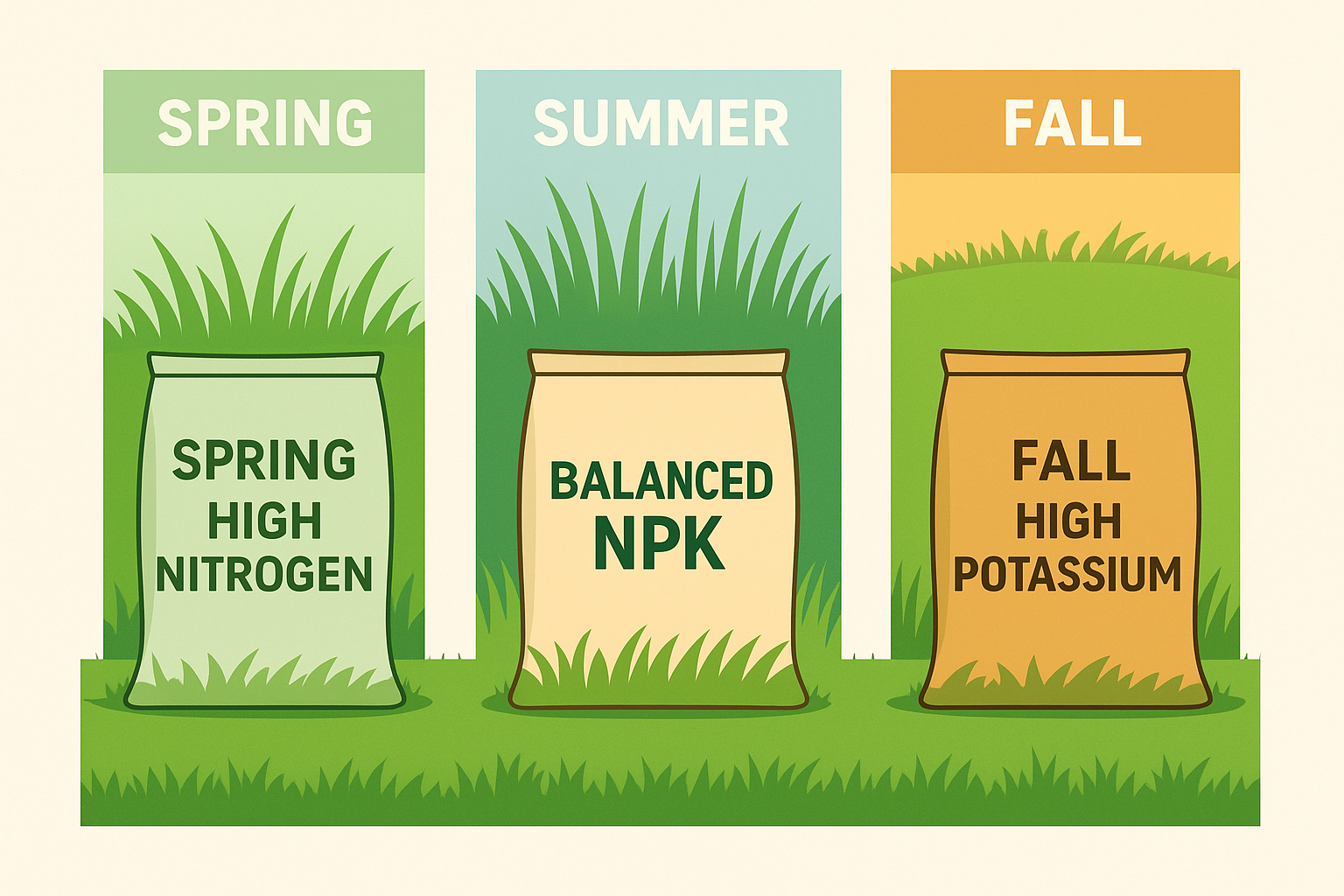
By choosing the right fertilizer and matching it to your grass’s growth cycle, you’ll get a greener, healthier yard that stays strong through every season — without overfeeding or wasting product.
Best Practices and Common Mistakes
Even with the right fertilizer and timing, many lawns struggle because of small but costly mistakes. Knowing what to avoid — and what to always do — can save you time, money, and effort while keeping your grass healthy all year.
Common Fertilizing Mistakes
1. Fertilizing Too Early or Too Late
Timing is everything. Feeding grass while it’s still dormant wastes nutrients and stresses the turf.
- For cool-season lawns, wait until soil temperature reaches about 55°F in spring.
- For warm-season lawns, don’t fertilize until the grass is fully green and actively growing.
2. Overapplying Fertilizer
More isn’t better. Applying too much fertilizer causes nitrogen burn, showing as yellow or brown patches. Follow label directions carefully, measure evenly, and never overlap when spreading.
3. Ignoring the Weather
Fertilizing before heavy rain washes nutrients away. Always check the forecast and follow the “light rain = go, storm = wait” rule.
4. Skipping Soil Testing
A soil test every 2–3 years helps you know what your soil already has and what it lacks. Without it, you’re guessing — and that often leads to overfeeding or nutrient imbalance.
5. Uneven Application
Uneven spreading leads to light and dark streaks. Walk at a steady pace and slightly overlap each pass with a broadcast or drop spreader.
6. Forgetting to Water After Feeding
Water activates most fertilizers. Lightly irrigate within 24 hours of applying unless the label says otherwise.
7. Fertilizing Right After Overseeding
If you’ve just planted new seed, wait six to eight weeks before fertilizing. Early feeding can burn seedlings or disrupt early root growth.
Best Practices for Healthy, Sustainable Lawns
1. Use Slow-Release or Organic Fertilizers
They feed steadily, reduce nutrient runoff, and support soil microbes.
2. Follow the “Less Is More” Rule
Most lawns need only two to four feedings per year. If your grass looks healthy, skip the extra feeding instead of overdoing it.
3. Combine Feeding with Aeration and Composting
Aerate your lawn once a year before fertilizing. It opens compacted soil, helps air and nutrients reach the roots, and allows fertilizer to work more efficiently.
4. Water Smart
Deep watering once a week is better than frequent light watering. Aim for about one inch of water weekly, including rainfall.
5. Protect Nearby Waterways
Always keep fertilizer at least 10–15 feet away from streams or drains. Sweep stray granules back onto the grass to avoid runoff.
6. Recycle Grass Clippings
Let your mower leave clippings behind. They naturally return nitrogen to the soil and can reduce fertilizer needs by up to 25%.
The Rule of Three
If you prefer a simple plan, remember this:
- Feed three times a year — spring, midsummer, and early fall.
- Water one inch per week (rain included).
- Mow high and often to encourage deep roots.
This rhythm works for most lawns and climates, giving you strong, healthy grass with minimal effort.
A thriving lawn doesn’t come from luck — it comes from timing, moderation, and care. When you feed your grass at the right time, use the right fertilizer, and follow these best practices, your lawn will reward you with deep green color, thick coverage, and lasting resilience through every season.
Conclusion
Feeding your lawn isn’t about using more fertilizer. It’s about giving the grass what it needs, exactly when it can use it. Once you understand your grass type and local climate, the rest becomes easy.
Cool-season lawns thrive when fed in spring and fall. Warm-season lawns need nutrients later, from late spring through midsummer. A consistent rhythm — timed around growth, weather, and soil temperature — keeps your grass healthy without wasting product.
Use a slow-release fertilizer whenever possible, water it in lightly, and let the season do the rest. Stay patient, because a strong lawn doesn’t happen overnight. Each feeding builds deeper roots, thicker blades, and more resistance to stress over time.
In short: feed wisely, not frequently. The right timing, matched with the right fertilizer, will turn any patchy yard into a strong, resilient lawn that stays green long after the season changes.
Frequently Asked Questions
The best month depends on where you live and your grass type.
For cool-season lawns (like fescue or Kentucky bluegrass), the best months are April–May and September–October.
For warm-season lawns (like Bermuda or St. Augustine), the ideal time is late April through July, once the grass is fully green.
The key is to fertilize when the soil is warm and the grass is actively growing — not while it’s dormant.
Always mow before fertilizing. Mowing removes tall growth and allows the fertilizer granules to reach the soil where roots can absorb nutrients faster. After fertilizing, wait 24–48 hours before mowing again so the fertilizer has time to soak in.
Yes, but only if light rain is expected. Gentle rainfall helps nutrients settle into the soil and prevents them from sitting on the surface.
If heavy rain or storms are in the forecast, wait until afterward — strong downpours can wash fertilizer away, wasting product and harming waterways.
Use different blends through the year to match your lawn’s needs:
Spring: Choose a high-nitrogen fertilizer for green-up and growth.
Summer: Go with a balanced NPK fertilizer to maintain color and strength.
Fall: Use a high-potassium or “winterizer” blend to build root resilience before dormancy.
Slow-release options are best for even feeding and reduced runoff.
Like this story? Get more like it.
We respect your privacy. Unsubscribe anytime.