
Lawn by Season Frequently Asked Questions
General Lawn Care
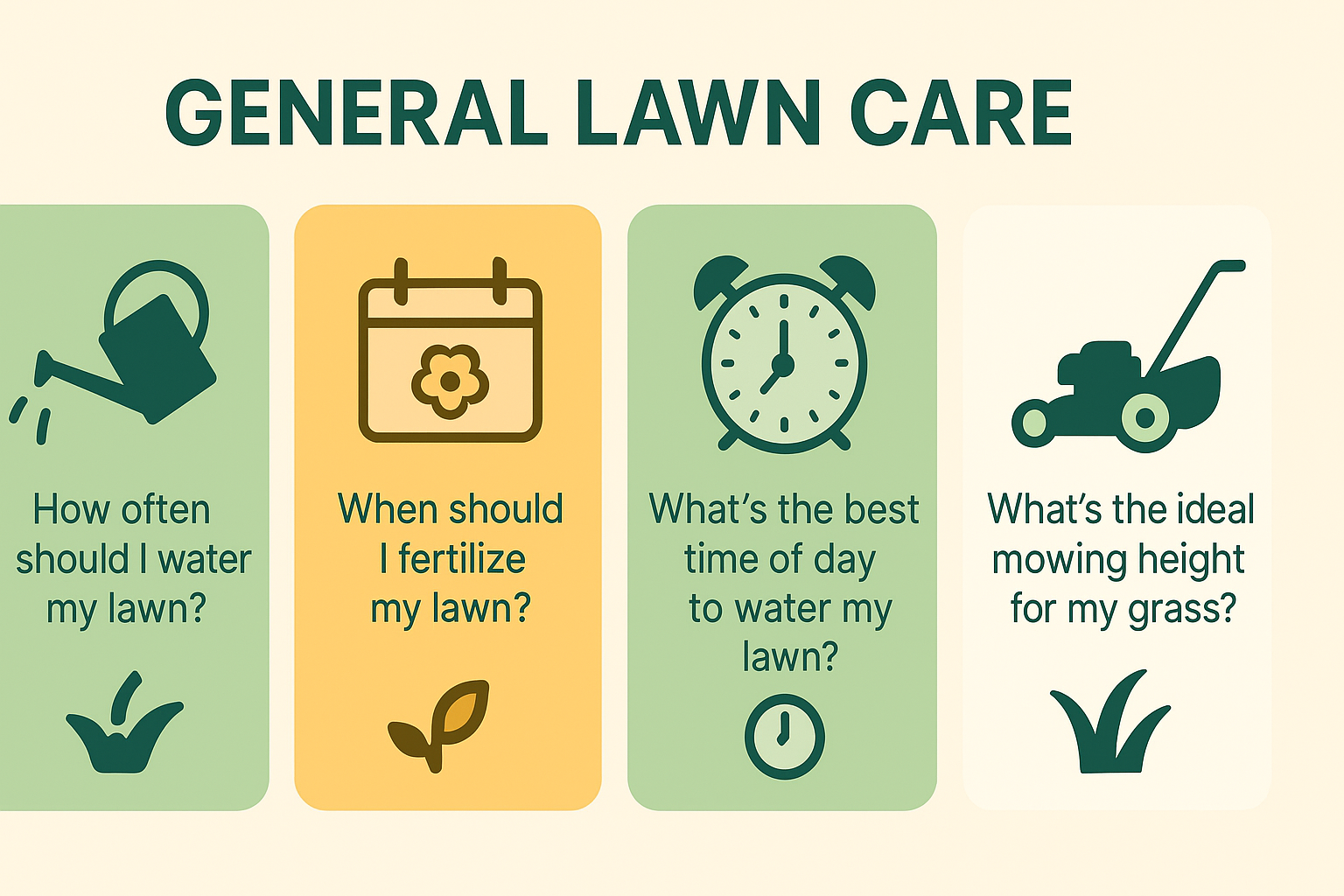
Most lawns need about 1 inch of water per week, including rainfall. Water deeply once or twice a week instead of frequent light watering to encourage strong root growth.
Fertilize 2–4 times per year, depending on your grass type. Cool-season grasses do best in spring and fall, while warm-season grasses thrive with summer feedings.
Water early in the morning — ideally between 5 a.m. and 9 a.m. — to reduce evaporation and prevent disease caused by overnight moisture.
If water pools on the surface or grass looks thin and patchy, your soil may be compacted. Aerate once a year, usually in spring or fall.
Follow the “one-third rule”: never cut more than one-third of the grass blade at once. For most lawns, keep grass between 2.5–4 inches tall.
Spring Lawn Care
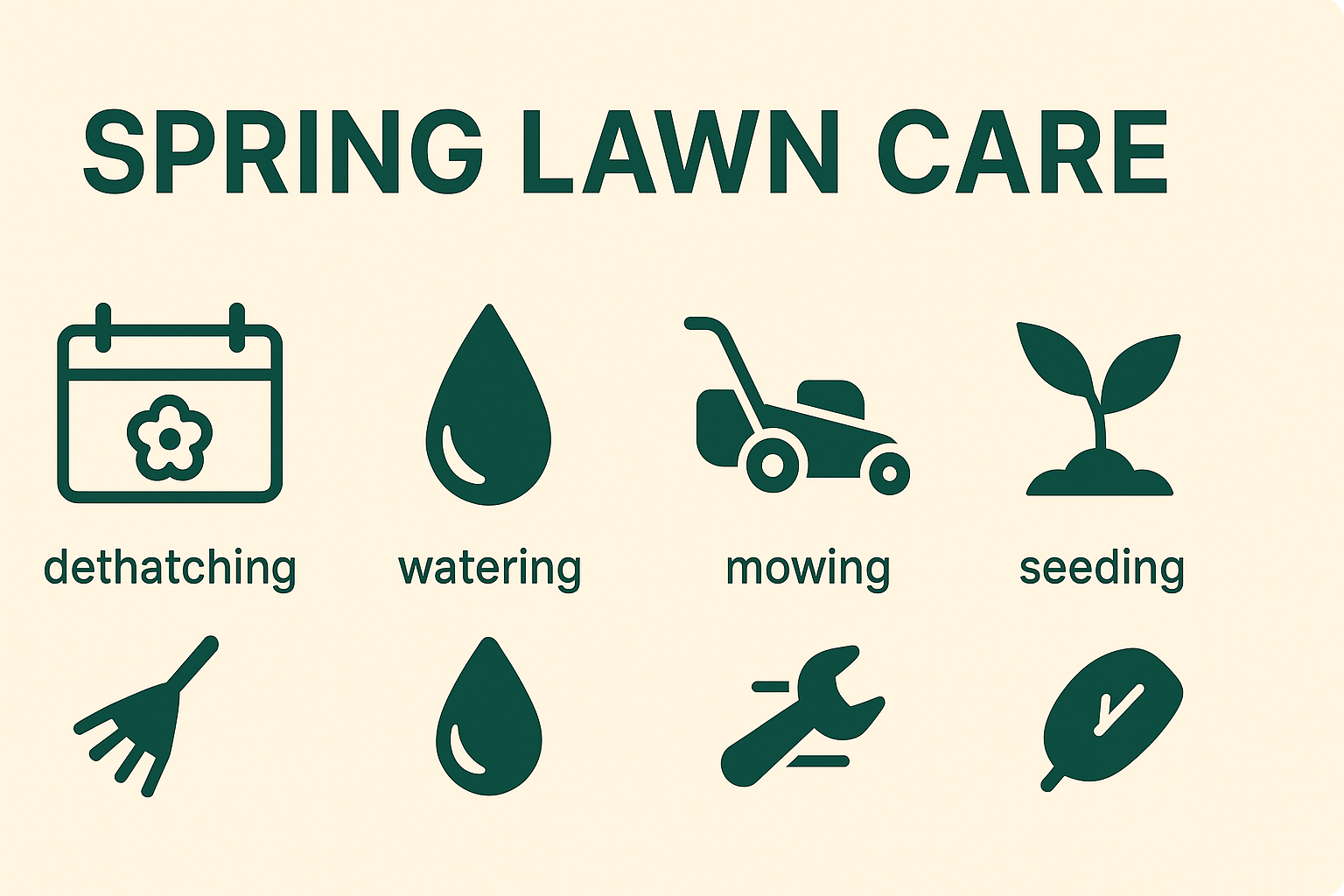
Start with light raking, remove debris, and test your soil. Overseed bare spots and apply a pre-emergent herbicide to prevent crabgrass.
Cool-season grasses: early spring or early fall.
Warm-season grasses: late spring when temperatures stay above 70°F.
Yes, but only if the thatch layer is thicker than ½ inch. Use a dethatching rake or power rake on dry, healthy grass.
Summer Lawn Care

Raise your mowing height to shade the soil, water deeply, and avoid fertilizing during extreme heat.
It’s often dormancy, a natural survival response. Continue occasional deep watering, and it will recover when temperatures cool.
Use smart irrigation controllers and focus on deep watering. Consider drought-tolerant grass types like Bermuda or zoysia.
Fall Lawn Care
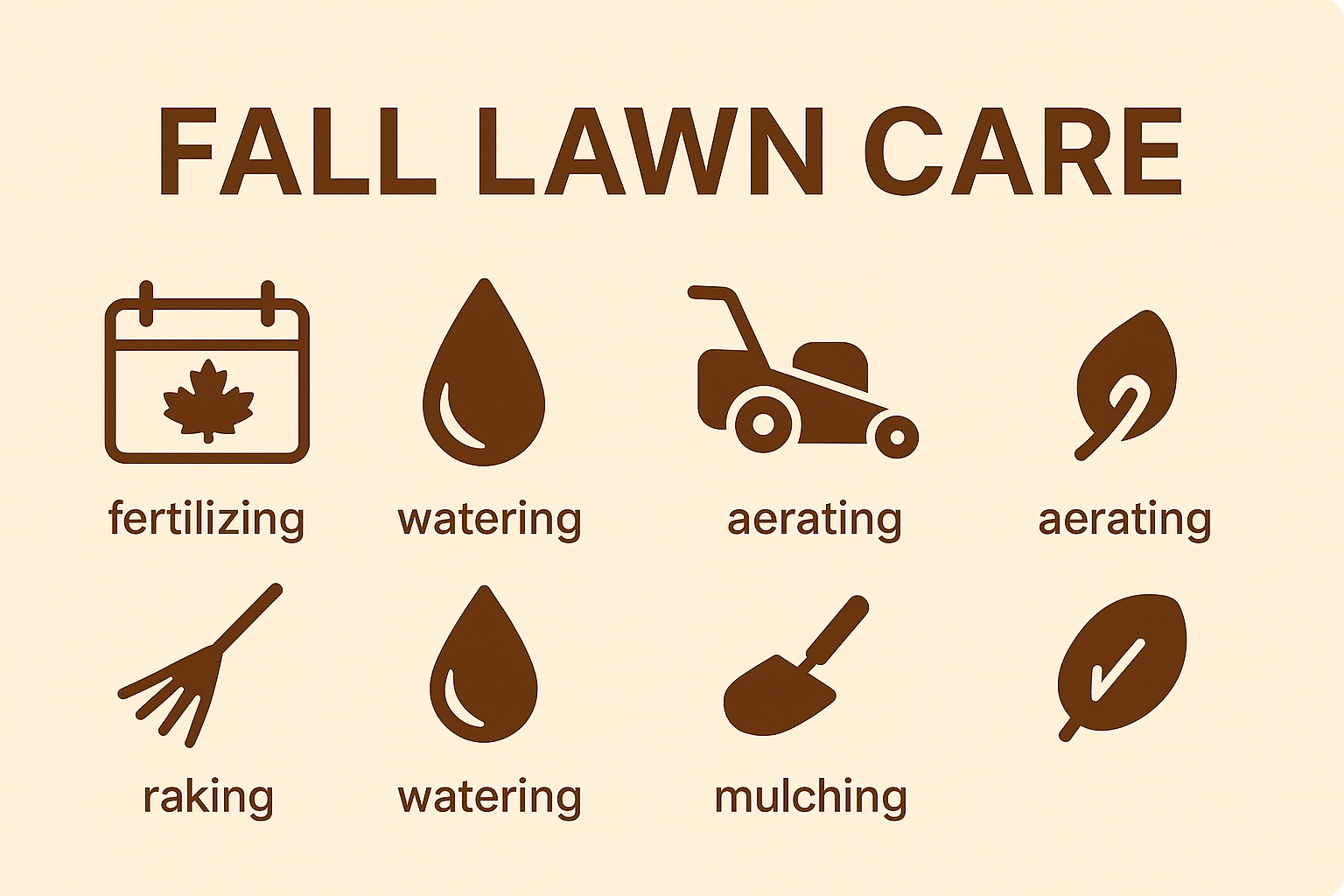
Cooler weather helps roots grow deeper. Fertilizing in fall strengthens your lawn for winter and gives it a head start in spring.
Rake or mulch leaves regularly. Thick layers can block sunlight and trap moisture, leading to mold and dead patches.
Yes. Overseeding fills bare spots, thickens turf, and helps crowd out weeds before winter dormancy.
Absolutely. Aeration opens pathways for fertilizer and water to reach the root zone more effectively.
Winter Lawn Care
Mow one last time before the first frost — slightly shorter than usual — to prevent matting under snow.
No. Grass growth slows or stops in cold weather, so fertilizer won’t be absorbed efficiently.
Limit foot traffic on frozen or snow-covered grass. Remove heavy snow piles to prevent smothering.
Grass and Soil Questions
Test your soil every 2–3 years. Ideal lawn pH is 6.0–7.0. Add lime to raise pH or sulfur to lower it.
Cool-season grass thrives in northern climates and stays green in mild cold. Warm-season grass grows best in southern regions with long, hot summers.
Topdress with compost, aerate annually, and fertilize based on soil test results to improve structure and nutrient content.
Weed and Pest Control
Apply pre-emergent herbicide in early spring and fall, mow regularly, and keep your grass thick to crowd out weeds naturally.
Prevent with a pre-emergent in spring. If it appears later, spot-treat with a post-emergent herbicide designed for your grass type.
Brown patches, thinning turf, or birds digging for grubs are telltale signs. Use beneficial nematodes or insecticidal products if infestation is confirmed.
Lawn Equipment and Maintenance
At least twice per season, or every 20–25 hours of mowing.
Mulching. It returns nutrients to the soil and reduces thatch when done properly.
After each mow, remove grass buildup from the deck and blades. Clean with a hose and mild detergent to prevent corrosion.
Eco-Friendly and Sustainable Lawn Care
Yes. Mix them with dry material like twigs or paper for balanced compost. Avoid composting chemically treated grass.
Try native grasses, clover lawns, or ground covers like creeping thyme — they need less mowing and water.
Use organic fertilizers, compost regularly, install rain gardens, and reduce chemical treatments.
Seasonal Quick Reference Chart
| Season | Key Actions |
|---|---|
| Spring | Rake, seed, fertilize, apply pre-emergent |
| Summer | Mow higher, water deeply, control pests |
| Fall | Aerate, fertilize, overseed, remove leaves |
| Winter | Limit traffic, clear debris, service tools |