
Leaf Blowers vs Rakes — What’s Best?
The air is crisp, the trees are glowing, and your yard looks like a golden carpet. But as the beauty builds up, one question returns every fall — should you rake or blow?
For some homeowners, raking is a satisfying ritual — quiet, precise, and eco-friendly. For others, leaf blowers are a back-saving, time-cutting essential that make cleanup fast and efficient. Each tool has its champions and critics, but which one actually works best for your yard?
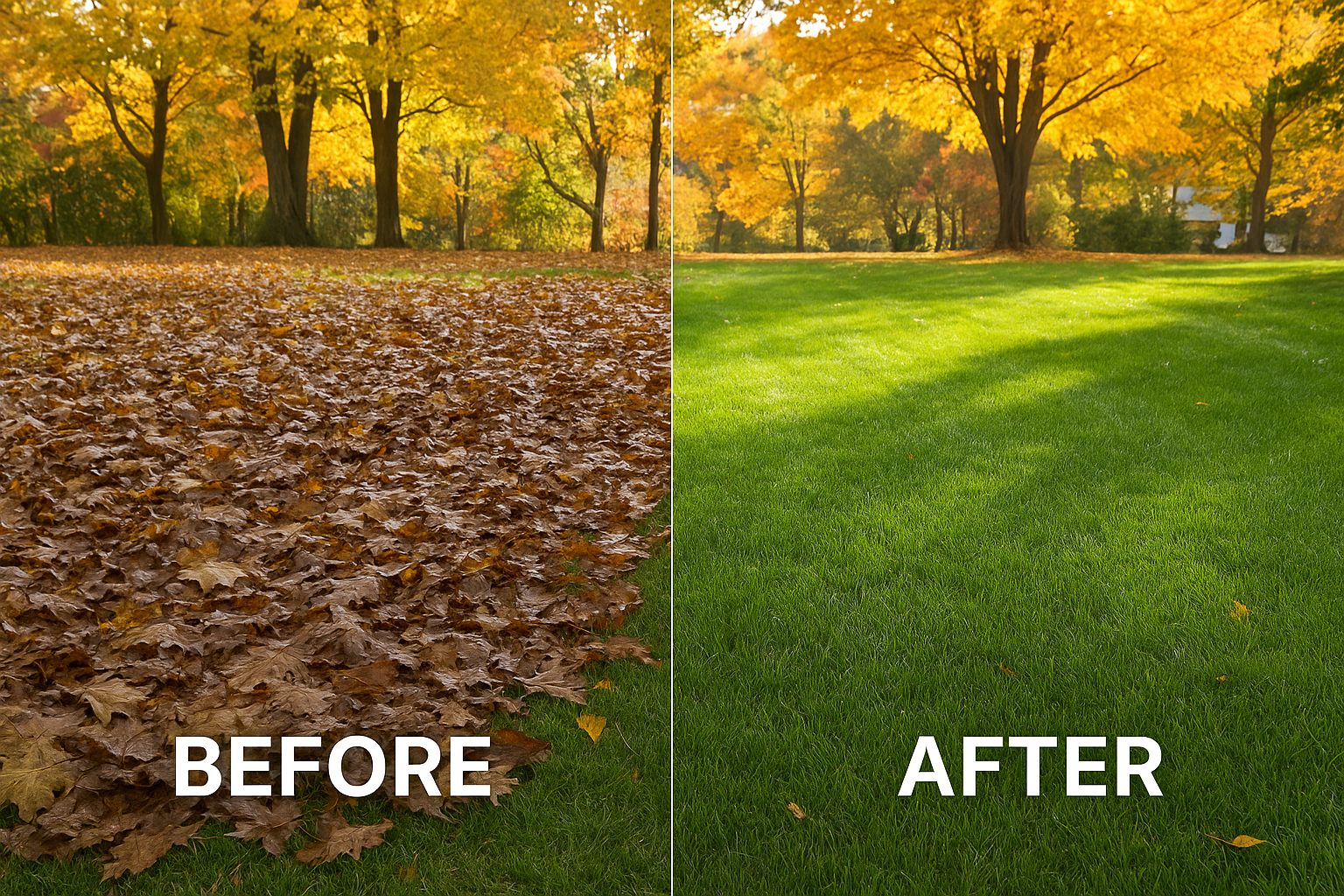
The University of Minnesota Extension notes that leaving thick layers of leaves on your lawn can block air and sunlight, leading to mold and grass suffocation. That makes removing them essential — but how you do it depends on your lawn size, time, and tolerance for noise or labor.
This guide breaks down both tools across speed, cost, impact, and comfort — so you can decide whether old-school elbow grease or modern horsepower wins in your yard this fall.
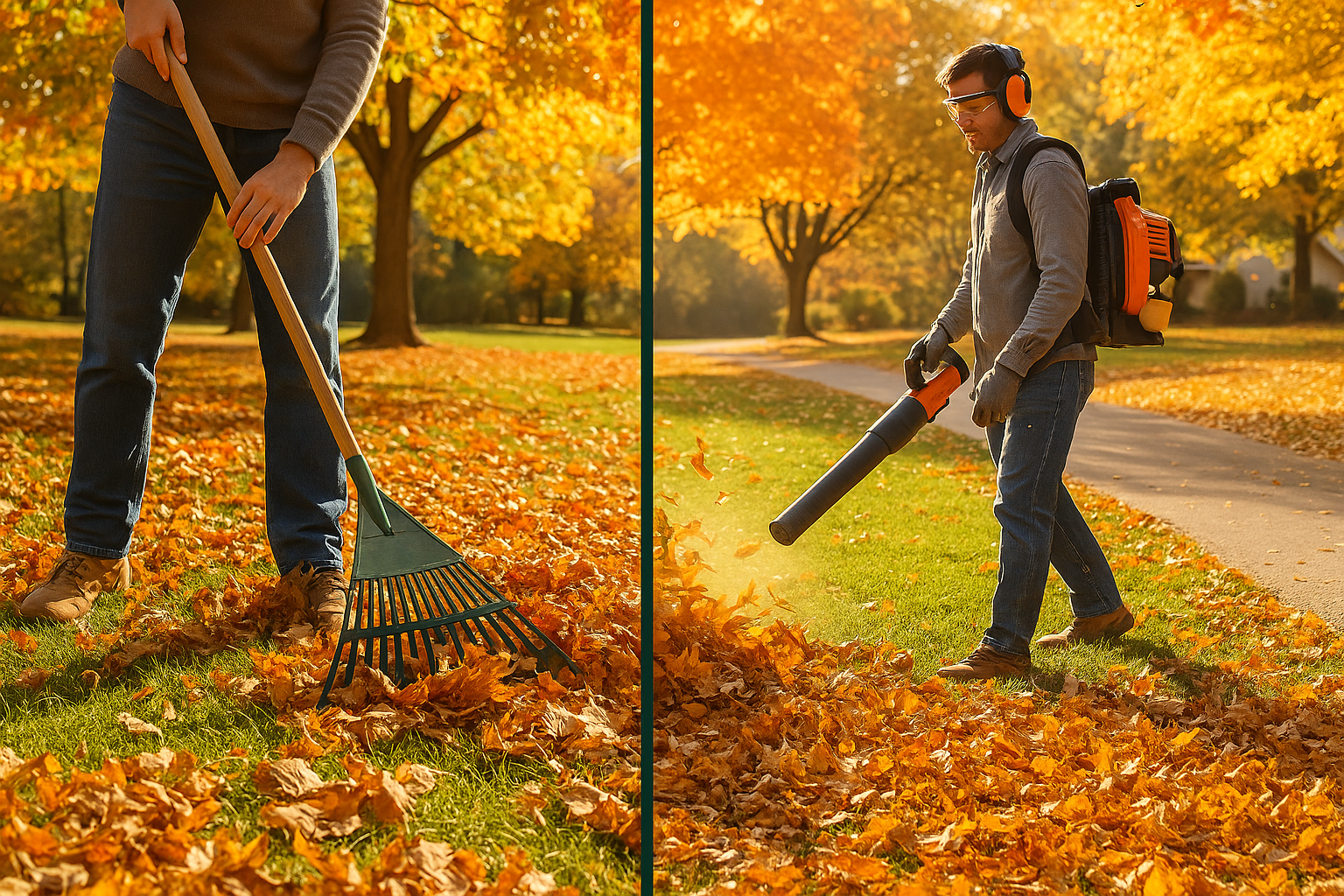
Efficiency — Which Clears Faster?
When it comes to speed, leaf blowers win on coverage, but not always on control. Rakes take longer but let you shape and gather piles precisely where you want them. The right choice depends on your yard’s size and the type of leaves you’re dealing with.
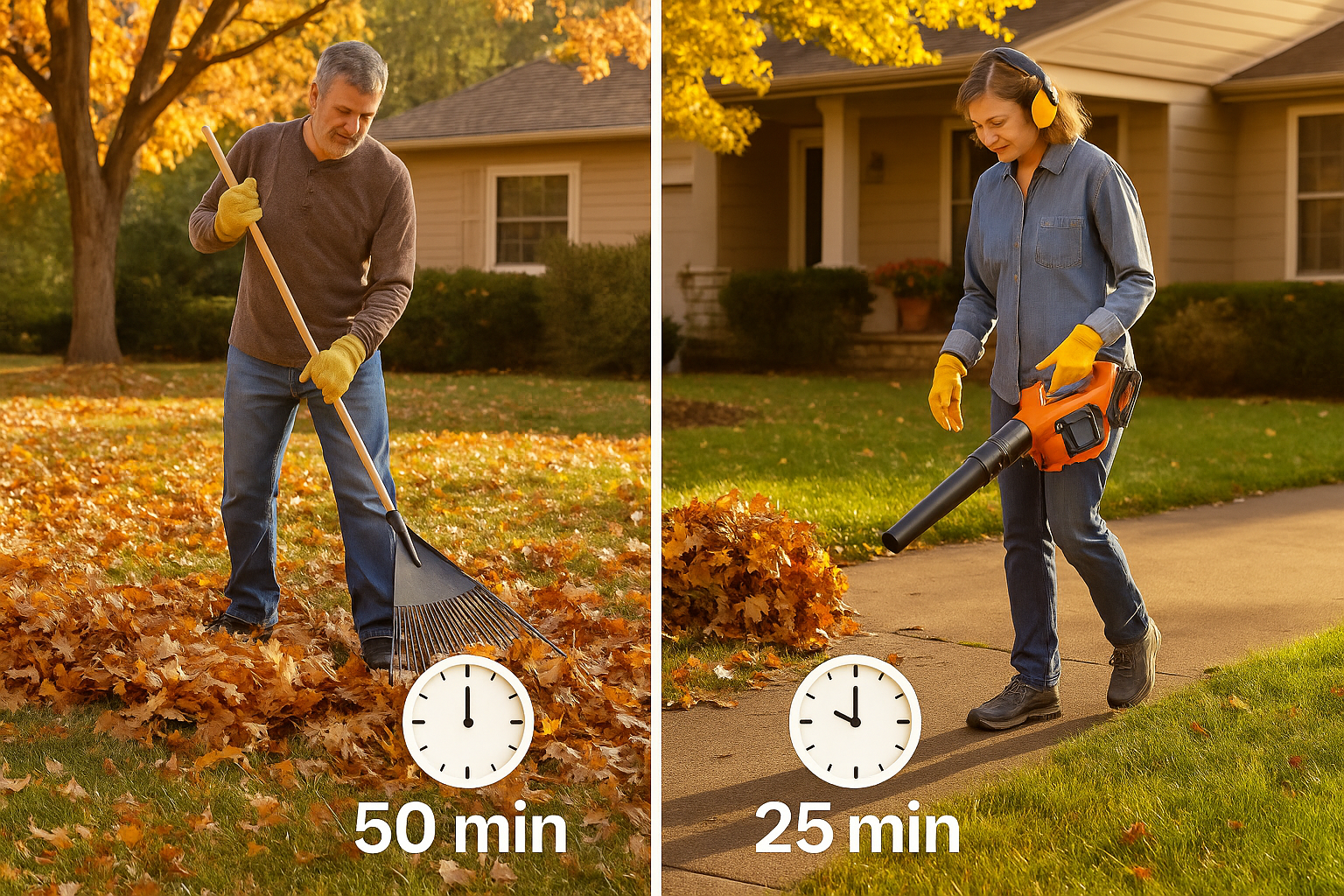
Leaf blowers can clear an average suburban yard in about 15–25 minutes, while raking the same area can take 45 minutes or more — especially if the leaves are damp or packed down. Wet leaves can weigh up to ten times more than dry ones, making them much harder to move manually.
Here’s a quick side-by-side look at average cleanup times:
| Yard Size | Leaf Blower | Rake |
|---|---|---|
| Small (under 1,000 sq ft) | 10–15 minutes | 25–30 minutes |
| Medium (1,000–5,000 sq ft) | 15–25 minutes | 45–60 minutes |
| Large (5,000+ sq ft) | 30+ minutes | 1–2 hours |
Blowers cover more ground faster but require follow-up raking or bagging to finish neatly. Rakes are slower but offer better precision along edges, garden beds, and walkways.
According to Consumer Reports, modern battery-powered blowers are now nearly as efficient as gas models and can move dry leaves across large lawns in a fraction of the time — without heavy noise or fumes.
Cost — What You’ll Really Spend
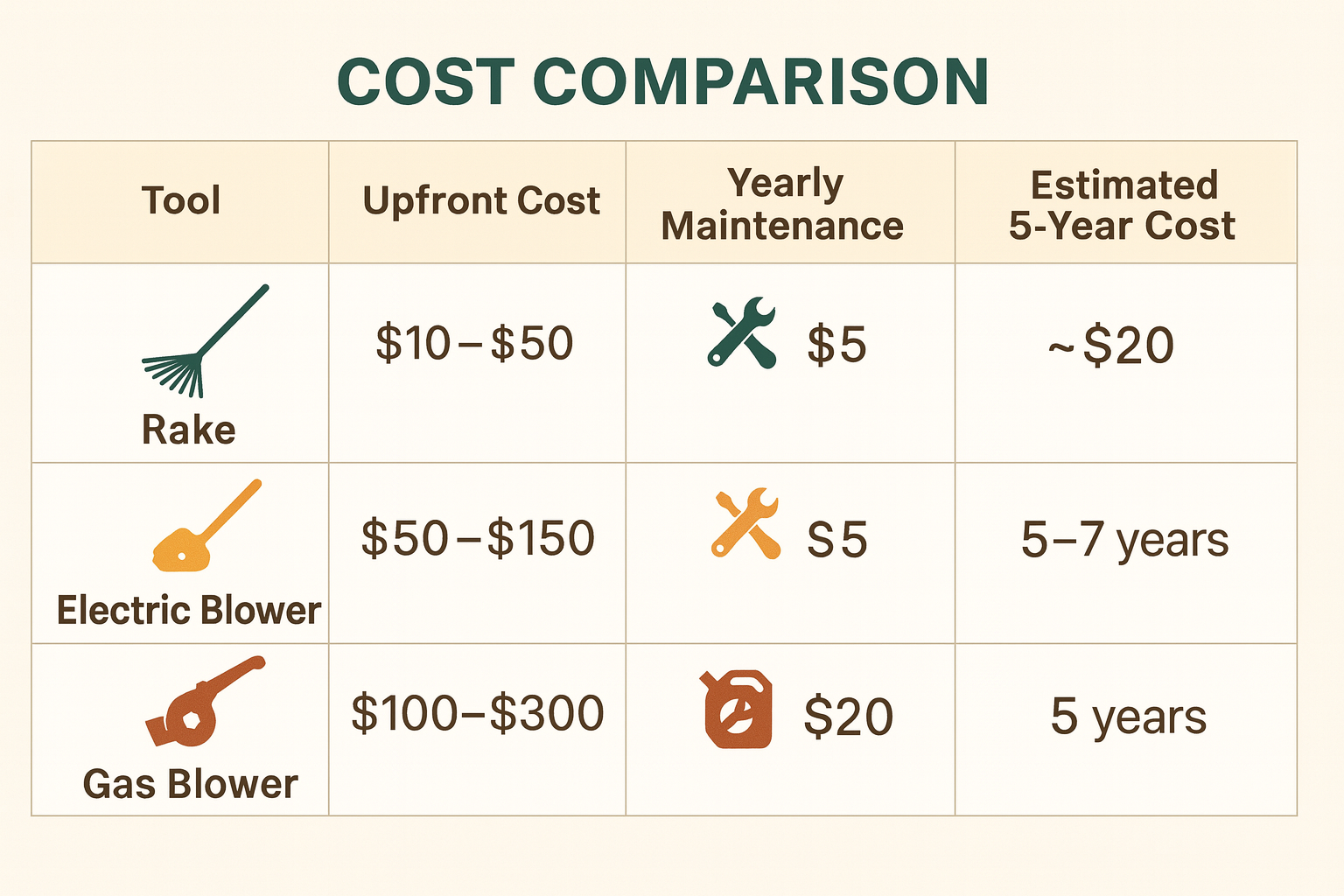
The price difference between rakes and blowers is huge, but so is their long-term value. Rakes cost almost nothing to maintain, while blowers come with power, convenience — and extra upkeep.
Upfront Costs
A good rake costs anywhere from $10 to $40, depending on material and handle type. In contrast, leaf blowers range widely:
- Corded electric: $50–$100
- Battery-powered: $120–$300
- Gas-powered: $150–$400
Ongoing Costs
Rakes have no fuel or battery replacement expenses. Blowers, however, need:
- Fuel or electricity for each use.
- Battery replacement every few years.
- Occasional maintenance (filters, spark plugs, oil).
Here’s how they stack up over time:
| Tool Type | Upfront Cost | Yearly Maintenance | Lifespan | Estimated 5-Year Cost |
|---|---|---|---|---|
| Rake | $20 | $0 | 5–10 years | ~$20 |
| Corded Electric Blower | $70 | $5 | 5–7 years | ~$95 |
| Battery-Powered Blower | $200 | $20 | 5 years | ~$300 |
| Gas-Powered Blower | $300 | $40 | 5 years | ~$500 |
The Home Depot leaf blower buying guide confirms that gas models remain the most expensive to own due to fuel, filters, and tune-ups, while battery options provide the best long-term balance of cost and performance (3).
Environmental Impact — Noise, Emissions, and Energy Use
Rakes are unbeatable when it comes to environmental impact — they use zero fuel, make almost no noise, and release no emissions. But when time and energy matter, blowers offer undeniable convenience, especially newer electric models that are much cleaner than their gas-powered counterparts.
Noise Levels
Gas blowers can reach 90 to 100 decibels, roughly the same as a motorcycle engine. Electric and battery-powered blowers are far quieter, averaging 60 to 70 decibels — similar to normal conversation at close range.
Rakes, of course, are silent and neighborhood-friendly.
Emissions
Gas blowers rely on two-stroke engines that emit carbon monoxide and unburned fuel into the air. The California Air Resources Board (CARB) estimates that one hour of using a gas blower can produce as much pollution as driving a small car over 1,000 miles (4).
Sustainability Factor
Electric and battery-powered blowers are far cleaner. They generate no direct emissions and are ideal for eco-conscious homeowners — especially when paired with renewable electricity sources. Rakes remain the greenest option overall but demand more time and energy from the user.
Quick Summary:
| Factor | Rake | Electric/Battery Blower | Gas Blower |
|---|---|---|---|
| Noise Level | Silent | Moderate | Loud |
| Emissions | None | Low | High |
| Energy Use | Manual | Electric | Fuel |
| Eco-Friendliness | ⭐⭐⭐⭐⭐ | ⭐⭐⭐⭐ | ⭐ |
Lawn Health — Which Is Gentler on Grass?
How you remove leaves can make or break your lawn’s health. Both rakes and blowers can keep grass in good shape — if used properly. The difference lies in control and consistency.
The Rake Advantage
Raking not only clears leaves but also loosens thatch — the thin layer of dead grass and roots that builds up near the soil surface. Removing this helps air, sunlight, and water reach the roots more easily. However, raking too aggressively can tear healthy grass or expose soil, leading to erosion or weed growth.
The Blower Advantage
Leaf blowers are gentler when used correctly. Keeping the nozzle slightly above the grass prevents turf damage while clearing debris evenly. Blowers are especially helpful for large lawns or when you need to avoid disturbing flower beds and mulch.
When Things Go Wrong
- Over-raking: Strips protective topsoil and stresses new grass.
- Over-blowing: Can dry out soil and displace mulch around plants.
- Neglecting cleanup: Smothers grass, inviting mold and pests.
The University of Illinois Extension advises homeowners to remove leaves promptly but carefully — using either tool with moderation — to prevent suffocation and disease while preserving grass health (5).
Pro Tip: After clearing, mow at a medium height (around 3 inches) to lift grass blades and keep them resilient through winter.
Comfort and Effort — What’s Easier on the Body?
Your cleanup tool should work with you, not against you. While both raking and blowing get the job done, the physical toll they take can differ depending on your age, strength, and yard size.
Raking: Exercise or Strain?
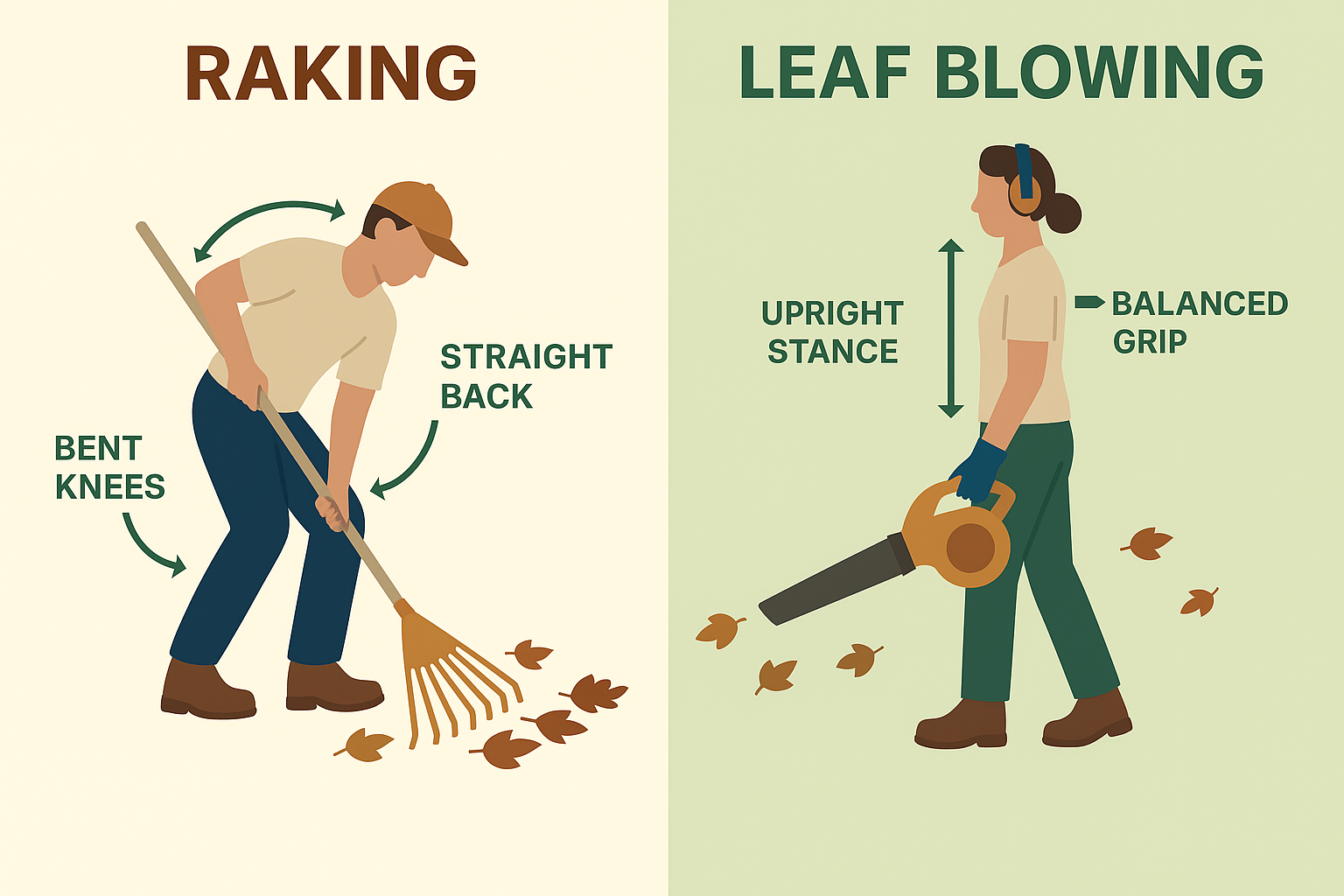
Raking is a great low-impact workout. It engages your core, shoulders, and legs while improving coordination. However, it can cause back or shoulder strain if your technique or posture is off. Long raking sessions can also lead to repetitive motion injuries, especially in colder weather when muscles are tight.
Tips for Safe Raking:
- Use a rake that matches your height.
- Keep your back straight and bend at the knees, not the waist.
- Switch sides regularly to prevent muscle fatigue.
Blowing: Power and Convenience
Leaf blowers are easier on your joints but can cause fatigue from vibration and weight, especially backpack or gas models. Corded and battery versions are lighter and quieter, making them ideal for smaller yards or longer sessions.
Tips for Safe Blower Use:
- Hold the blower close to your body for balance.
- Take breaks every 20–30 minutes.
- Use hearing protection and gloves to absorb vibration.
According to the Occupational Safety and Health Administration (OSHA), alternating tasks, maintaining good posture, and wearing protective gear reduce the risk of overuse injuries during yard work (6).
Quick Summary:
| Tool | Effort Level | Injury Risk | Best For |
|---|---|---|---|
| Rake | Moderate to High | Back, shoulder strain | Small yards, light leaves |
| Blower | Low to Moderate | Arm vibration, hearing strain | Medium to large yards |
Best Situations for Each Tool
Choosing between a rake and a blower isn’t about loyalty — it’s about what fits your yard, time, and goals. Both tools shine under the right conditions, and sometimes the best approach is using both in tandem.
When to Choose a Rake
Rakes are best for:
- Small yards (under 2,000 sq. ft.) where leaves can be gathered quickly.
- Tight areas around flower beds, trees, or fences where precision matters.
- Delicate lawns that need gentle handling.
- Noise-restricted neighborhoods where blowers aren’t permitted.
Best practice: Use short, consistent strokes and gather leaves into manageable piles. Compost them instead of bagging to improve soil quality.
When to Choose a Blower
Blowers are ideal for:
- Large yards with heavy or repeated leaf fall.
- Wet or dense leaves that are difficult to rake.
- Uneven terrain or gravel paths where rakes are less effective.
- Homeowners with mobility issues who need faster, less strenuous cleanup.
Best practice: Start from the farthest point of your yard and blow leaves into sections or windrows before collecting.
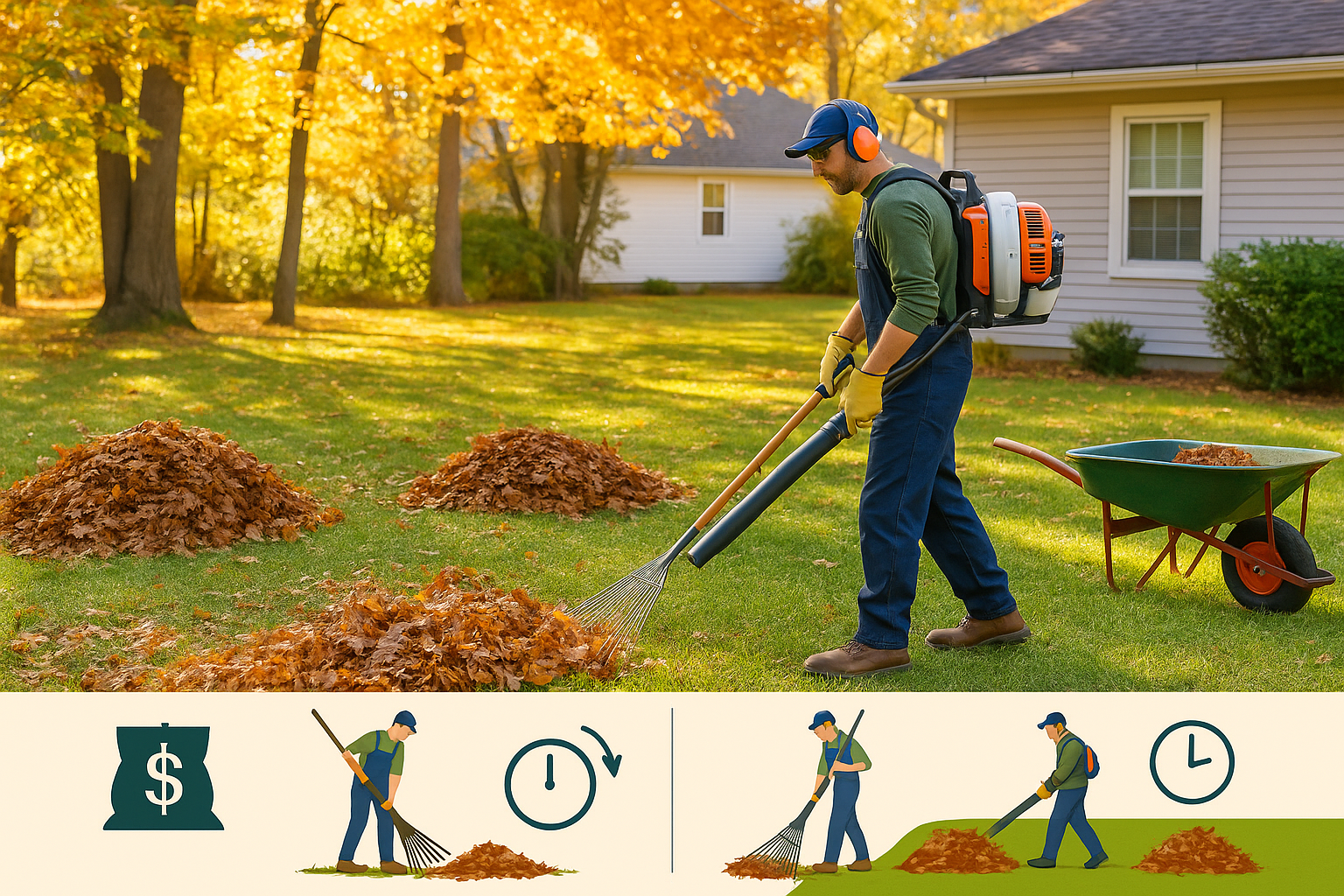
The Hybrid Approach
Many pros use both tools. A blower clears the bulk quickly, and a rake finishes the edges and garden beds. This combination saves time while giving a polished, professional look.
The National Association of Landscape Professionals (NALP) recommends a hybrid cleanup routine — blowers for volume removal, rakes for precision — to maximize efficiency while protecting turf and soil structure (7).
Quick Summary:
| Scenario | Best Tool |
|---|---|
| Small yard, light leaves | Rake |
| Large yard, heavy leaf fall | Blower |
| Tight garden beds | Rake |
| Wet or matted leaves | Blower |
| Eco-friendly, quiet cleanup | Rake |
| Quick weekly maintenance | Blower |
| Perfect finish | Both |
Expert Verdict — The Balanced Approach
When landscaping experts weigh in, the consensus is clear: both rakes and leaf blowers have a place in smart yard care. The key is knowing when and how to use each efficiently.
Professional landscapers often start with blowers to clear bulk debris fast, then switch to rakes for corners, gardens, and final touch-ups. This two-step method not only saves time but also prevents turf damage from over-blowing or aggressive raking.
What the Pros Say
- Speed: Blowers handle large areas quickly, ideal for heavy leaf fall.
- Precision: Rakes let you control cleanup near plants and mulch.
- Sustainability: Use blowers powered by batteries or electricity for quieter, cleaner operation.
- Finish: Rakes give a manicured, professional look every time.
The Better Homes & Gardens expert team notes that the most effective cleanup strategy blends both tools — a blower for coverage and a rake for detail — while encouraging composting or mulching instead of bagging leaves (8).
Pro Tip: If you only invest in one tool, choose based on your yard size. For half-acre or smaller lots, a rake works fine. Anything larger benefits from a blower — or a hybrid cleanup plan.
Conclusion
There’s no one-size-fits-all answer in the rake vs. blower debate. The right tool depends on your yard size, time, and preference for quiet simplicity or fast power. Both can keep your lawn healthy and clean when used with the right technique.
For small yards or eco-conscious homeowners, rakes remain a low-cost, zero-emission classic. For larger spaces or tight schedules, blowers deliver unbeatable speed — especially newer electric and battery-powered models that combine efficiency with environmental care.
Whichever you choose, consistency matters more than the tool itself. Removing leaves before they build up prevents disease, protects your turf, and keeps your property looking sharp. The University of Georgia Extension emphasizes that prompt leaf removal improves grass recovery, strengthens roots, and reduces winter stress (9).
In the end, the best yard is a maintained one — whether powered by muscle or machine.
Like this story? Get more like it.
We respect your privacy. Unsubscribe anytime.
Leave a Reply