
Fall Leaf Blowing Tips: Blowing leafs more efficiently
Fall leaves look stunning until they pile up on your lawn. That colorful carpet may be beautiful, but left alone, it can smother grass, invite mold, and make walkways slippery. The right approach to leaf blowing saves time, protects your turf, and keeps your yard looking crisp all season.
Whether you’re using a handheld blower for light cleanup or a backpack model for bigger jobs, technique matters more than power. A few smart habits — like watching the weather and planning your blowing pattern — can turn a tedious chore into a quick weekend routine.
According to the University of Minnesota Extension, removing leaves before they mat down helps prevent winterkill and disease in cool-season grasses (1). That means regular leaf cleanup isn’t just cosmetic — it’s essential lawn care.
In this guide, you’ll learn how to choose the right blower, time your work for the best results, and handle leaves efficiently without exhausting yourself.
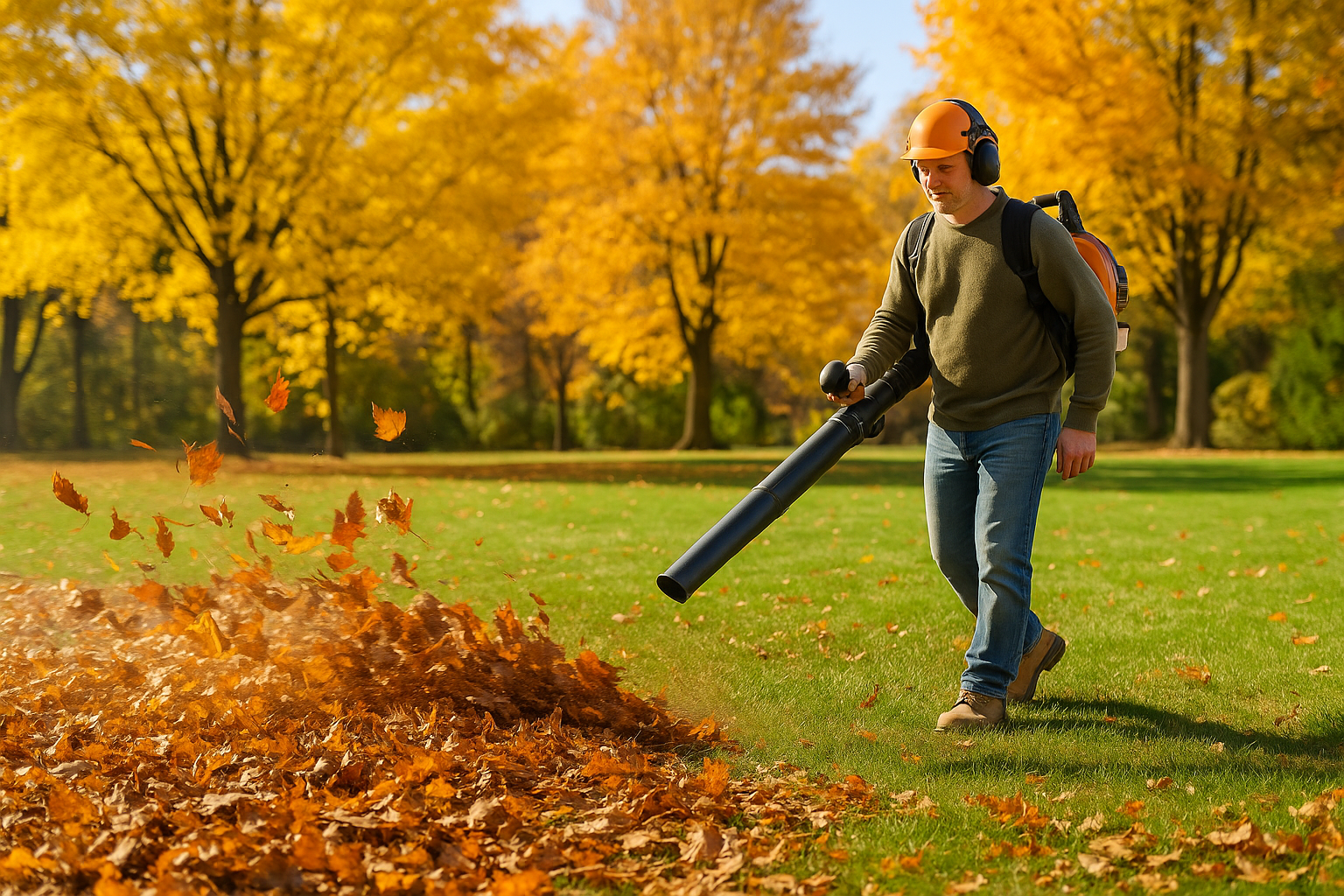
Step 1: Pick the Right Leaf Blower for Your Yard
The best leaf blower depends on your yard size, leaf volume, and noise tolerance. Choosing the right model makes cleanup faster and easier while saving energy and frustration.
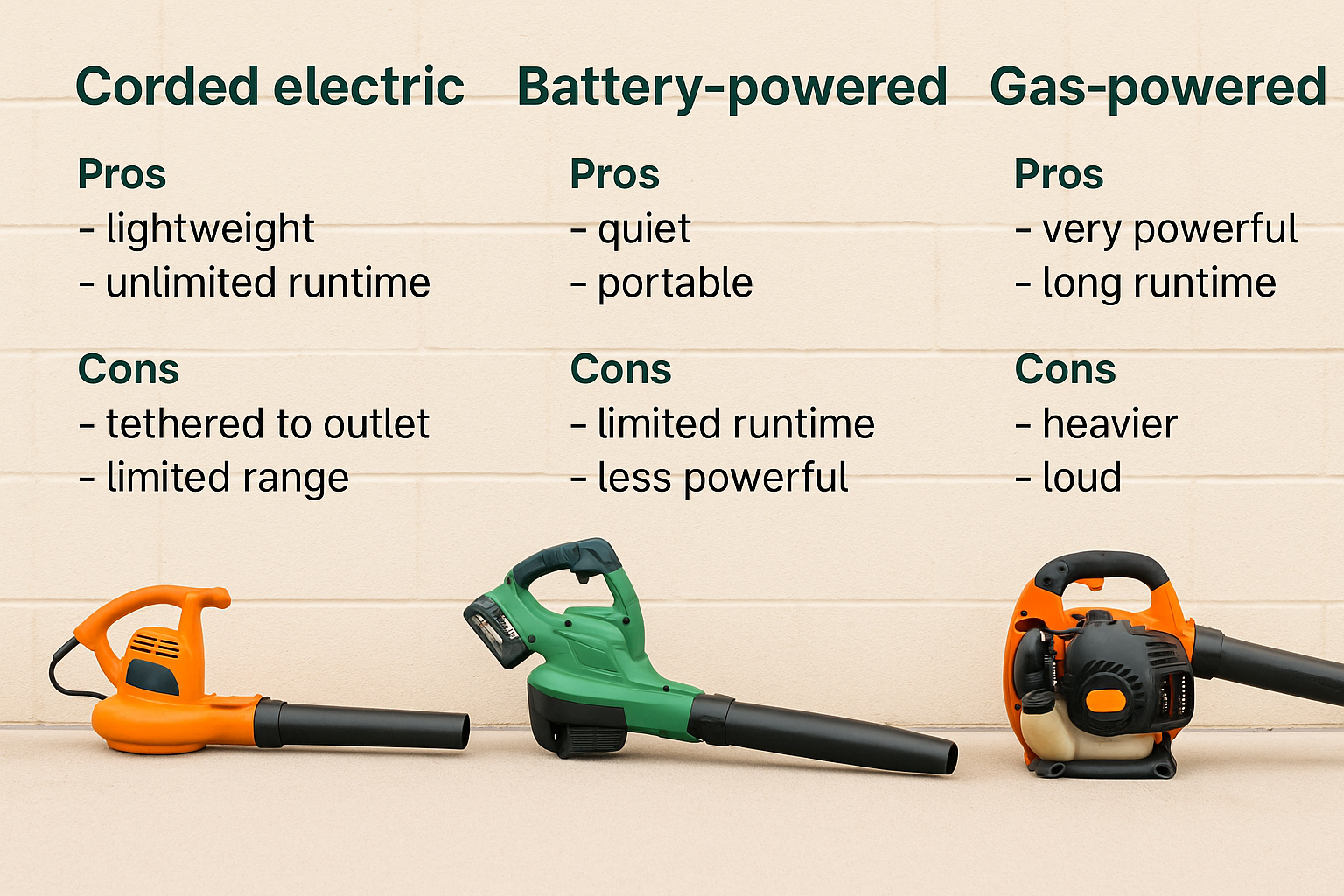
Compare the Main Types
| Type | Best For | Power | Noise Level | Maintenance |
|---|---|---|---|---|
| Corded Electric | Small yards near outlets | Moderate | Low | Minimal |
| Battery-Powered | Mid-sized yards | Moderate to High | Low | Low |
| Gas-Powered | Large areas, heavy leaves | High | High | Regular tune-ups |
Corded blowers are quiet and reliable but limited by extension length. Battery-powered models offer freedom of movement and good runtime, especially with modern lithium-ion batteries. Gas-powered blowers deliver maximum force for wet or heavy leaves but require more upkeep and fuel.
When shopping, pay attention to CFM (cubic feet per minute) for air volume and MPH (miles per hour) for speed. A good residential blower should push at least 400 CFM for efficient clearing.
Tests from Consumer Reports found that battery models now rival gas units in performance while producing far less noise and emissions (2).
Step 2: Check the Weather First
Timing is everything when it comes to leaf blowing. The best results come on dry, calm days. When leaves are wet, they clump together and become heavier, making your blower work twice as hard for half the results.
Avoid windy conditions too. Even a light breeze can scatter piles and undo hours of work. The ideal time to blow is late morning or early afternoon, once the dew has evaporated but before the evening chill returns.
If rain is in the forecast, wait it out. Blowing before a storm often just moves the problem around. Instead, plan your cleanup for a clear day so you can collect and dispose of leaves efficiently.
The National Weather Service recommends scheduling outdoor yard work during mild, dry periods to prevent strain and reduce dust exposure (3).
Step 3: Work Smarter, Not Harder
Leaf blowing is all about efficiency. A little planning before you start can cut your cleanup time in half and give you a neater finish with less effort.
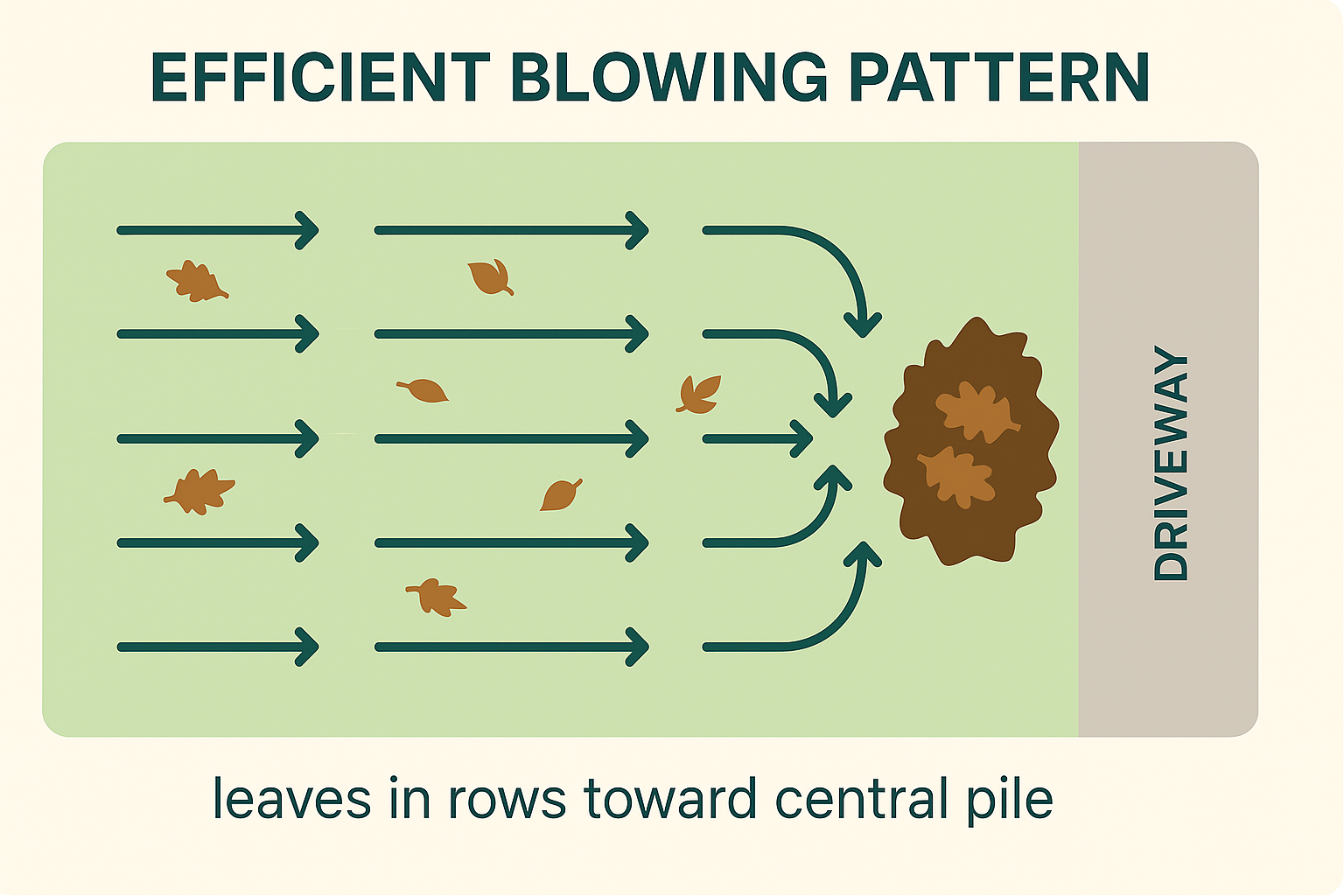
Plan Your Blow Pattern
Work with a plan, not in random bursts.
- Start at the farthest point from your collection area.
- Blow leaves in rows or sections, guiding them toward a central pile.
- Use fences, driveways, or garden borders as natural collection zones.
- For sloped yards, work across the hill, not uphill, to keep control of airflow.
Control the Airflow
Technique matters more than force.
- Hold the blower at a slight downward angle for better precision.
- Use short bursts rather than continuous blowing to direct leaves effectively.
- Overlap your passes like mowing a lawn to prevent scattering leftovers.
Work With Nature
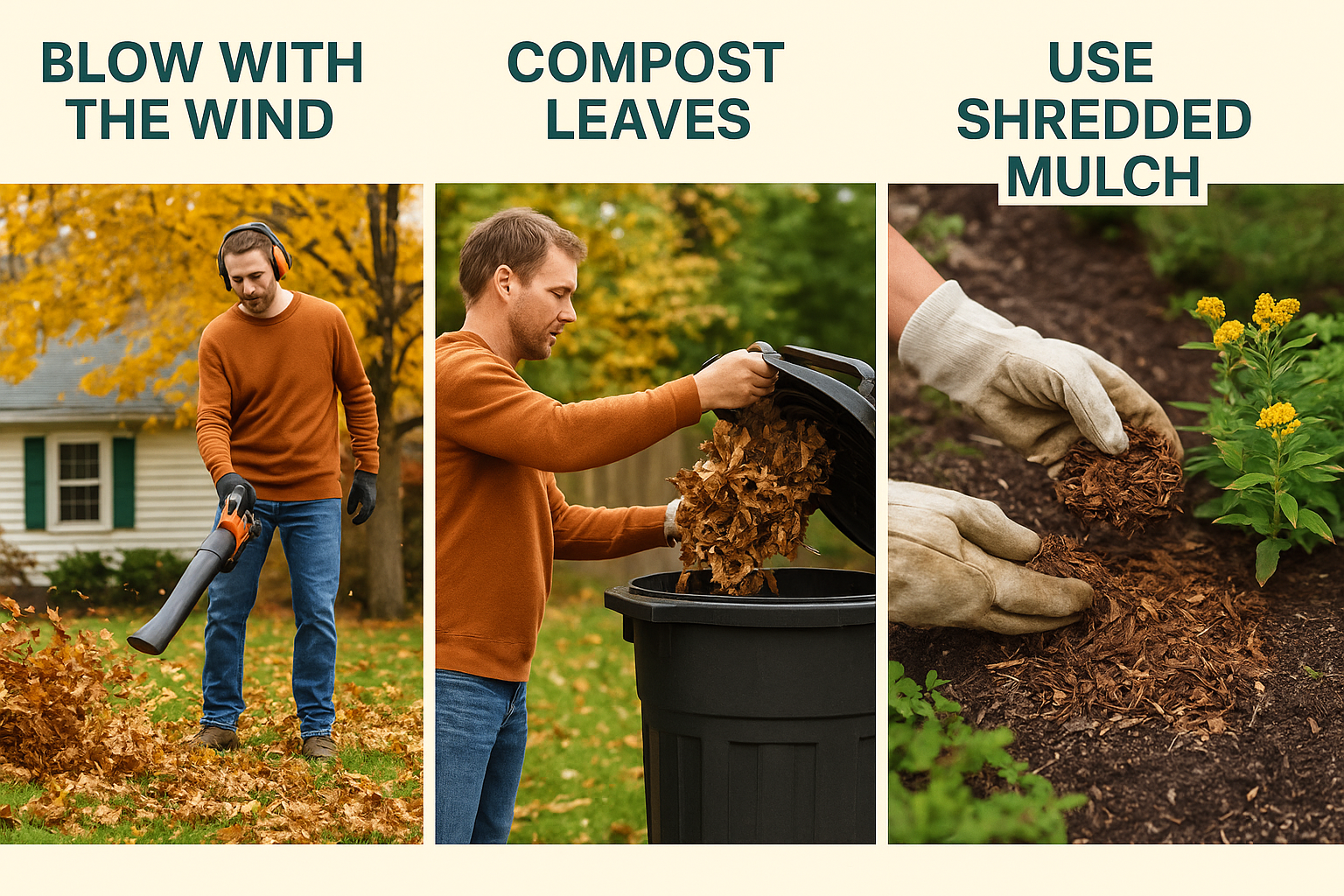
- Use the wind to your advantage — blow in the same direction it’s moving.
- Dry, crunchy leaves move easier than wet or damp ones.
- For faster cleanup, have someone rake or bag while you blow into piles.
The University of Illinois Extension notes that using controlled airflow and organized blowing patterns can reduce cleanup time by over 30 percent while minimizing turf damage (4).
Step 4: Make Collection Easy
Once the leaves are in piles, efficient collection makes all the difference. Whether you’re bagging, composting, or mulching, a few simple strategies can turn cleanup into a smooth process instead of a second round of hard work.
Smart Collection Tips
- Form windrows, not mounds: Long, narrow rows are easier to manage than big piles.
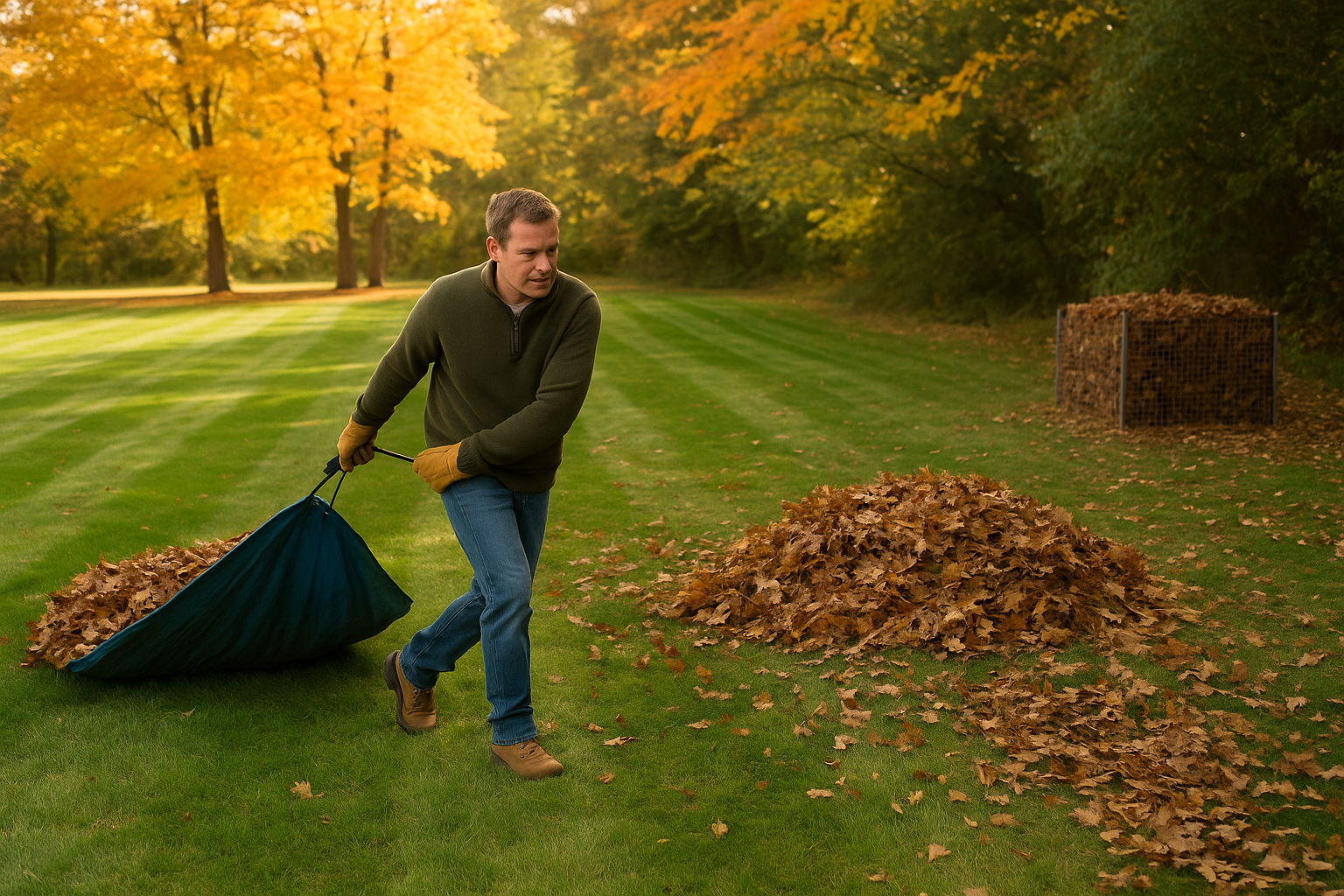
- Use a tarp: Blow leaves directly onto a large tarp, fold the corners, and drag them to your compost or pickup point.
- Work in stages: Clear one section completely before moving to the next. It keeps the process organized.
- Combine tools: Use a rake or leaf scoop to gather stragglers at the end.
If you plan to mulch, direct your blower toward your mower’s path so it can shred leaves evenly. Mulched leaves act as a natural fertilizer, returning nutrients to your lawn. Composting also helps reduce waste while improving soil quality.
The U.S. Environmental Protection Agency encourages homeowners to compost leaves and grass clippings instead of bagging, reducing landfill waste and boosting soil health (5).
Step 5: Prioritize Safety
Leaf blowing may look easy, but safety should always come first. The combination of powerful airflow, flying debris, and engine noise can cause accidents or long-term strain if you’re not careful.
Essential Safety Gear
- Hearing protection: Prolonged blower noise can exceed safe sound levels.
- Safety goggles: Keep dust, twigs, and small stones out of your eyes.
- Gloves: Protect your hands from vibration and cold air.
- Dust mask: Prevent inhaling mold spores or fine debris.
- Sturdy shoes: Avoid sandals or sneakers; wear boots with traction.
Worksite Awareness
- Inspect your area before you begin. Remove large sticks, rocks, or toys.
- Keep children, pets, and bystanders away from your working zone.
- Never aim the blower toward people, cars, or open doors.
- Watch your footing, especially on slopes or damp grass.
Respect Noise Rules
Many cities have noise restrictions for power equipment. Check your local ordinances and schedule your work for mid-morning or early afternoon to stay courteous and compliant.
The Occupational Safety and Health Administration (OSHA) recommends regular breaks, proper ear protection, and careful handling of outdoor power tools to prevent fatigue and injury (6).

Step 6: Maintain Your Blower for Peak Performance
Proper maintenance keeps your leaf blower running efficiently year after year. A few minutes of care after each use can prevent costly repairs and extend its lifespan.
After Each Use
- Wipe down the exterior to remove dust and debris.
- Check that air vents and nozzles are clear.
- Inspect the blower tube for clogs or damage.
Monthly or Seasonal Care
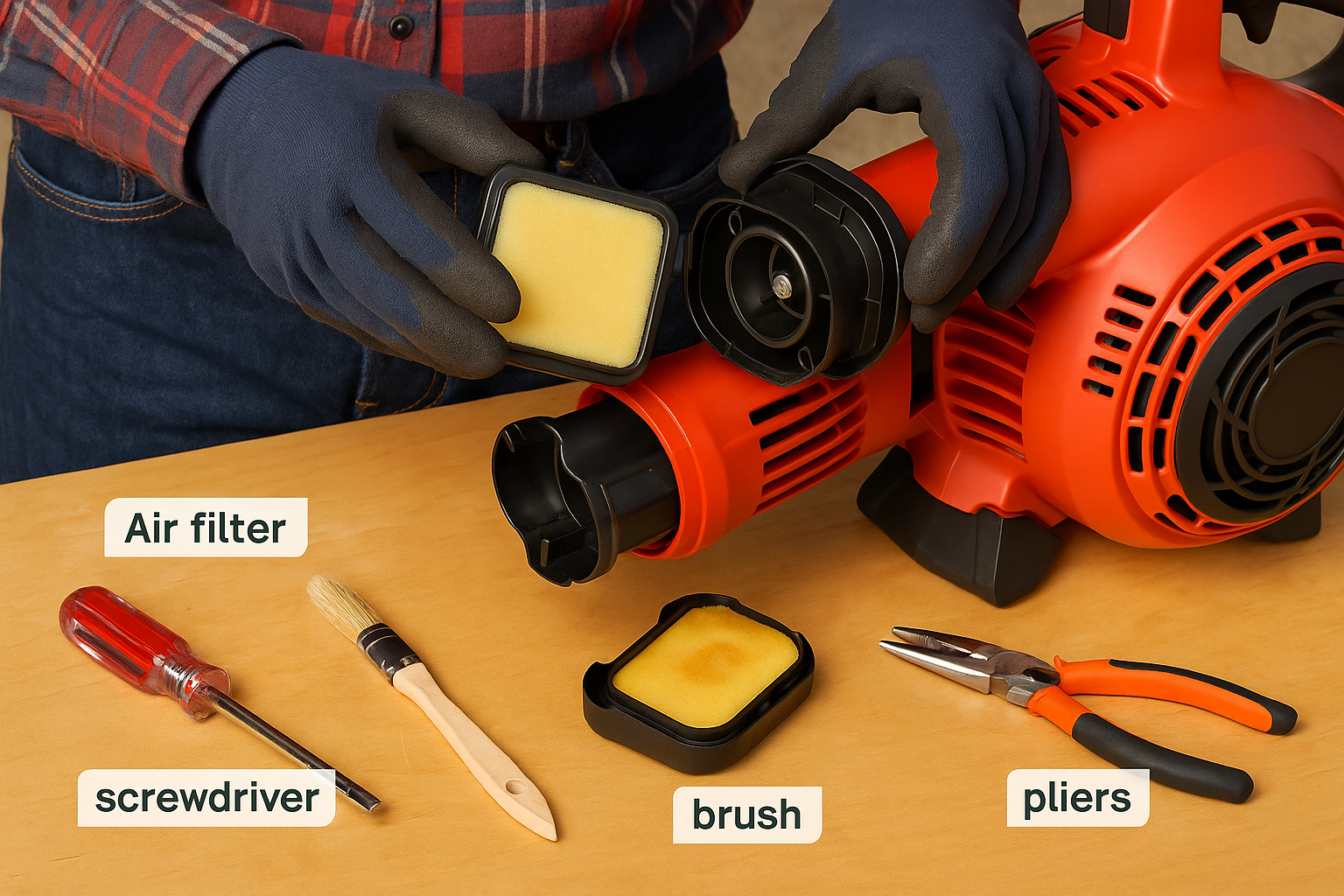
- Clean or replace air filters: Clogged filters reduce power and efficiency.
- Check spark plugs (gas models): Replace if the engine hesitates or starts hard.
- Recharge or rotate batteries: Store batteries in a cool, dry place when not in use.
- Tighten screws and inspect seals: Vibration can loosen fasteners over time.
Storage Tips
- Empty fuel from gas models before long-term storage.
- Store indoors, away from moisture and extreme temperatures.
- Keep cords untangled and battery packs separated from metal tools.
According to Popular Mechanics, regular filter cleaning, spark plug replacement, and proper battery storage can double the service life of most residential leaf blowers (7).
Step 7: Bonus Tips for Faster, Cleaner Results
Once you’ve mastered the basics, a few extra habits can make leaf blowing quicker, cleaner, and even more eco-friendly. Small adjustments in technique and timing can save hours over a full fall season.
Pro Tips for Efficiency
- Work with the wind: Always blow in the same direction as the breeze. Fighting it only wastes time and energy.
- Tackle dry leaves first: Wet leaves stick to the ground and take twice as long to move.
- Use low power near edges: Gentle air prevents mulch or gravel from scattering.
- Clean up weekly: Frequent, light blowing is easier than waiting for a thick buildup.
- Rake the final few feet: A quick rake gives your yard a polished finish.
Go Green
- Skip the plastic bags — compost leaves instead.
- Mix shredded leaves into garden beds as organic mulch.
- Share the job: coordinate with neighbors for community cleanup days.
The National Wildlife Federation suggests reusing shredded leaves as mulch or compost to enrich soil and support pollinators, reducing landfill waste by up to 50 percent during fall months (8).
Conclusion
Leaf blowing doesn’t have to be an exhausting fall chore. With the right equipment, a smart plan, and good timing, you can clear your yard quickly and protect your lawn’s health for the next season.
Keep it simple: wait for dry weather, blow with the wind, and maintain your blower regularly. Composting or mulching your leaves adds nutrients back into your soil — turning waste into a resource.
Remember, efficiency comes from consistency. Regular cleanup, safe technique, and proper maintenance make every job easier. As the University of Georgia Extension notes, removing leaves before they compact improves grass recovery and prevents winter smothering (9).
A clean lawn in fall is more than good looks — it’s the foundation for a greener spring.
Like this story? Get more like it.
We respect your privacy. Unsubscribe anytime.